
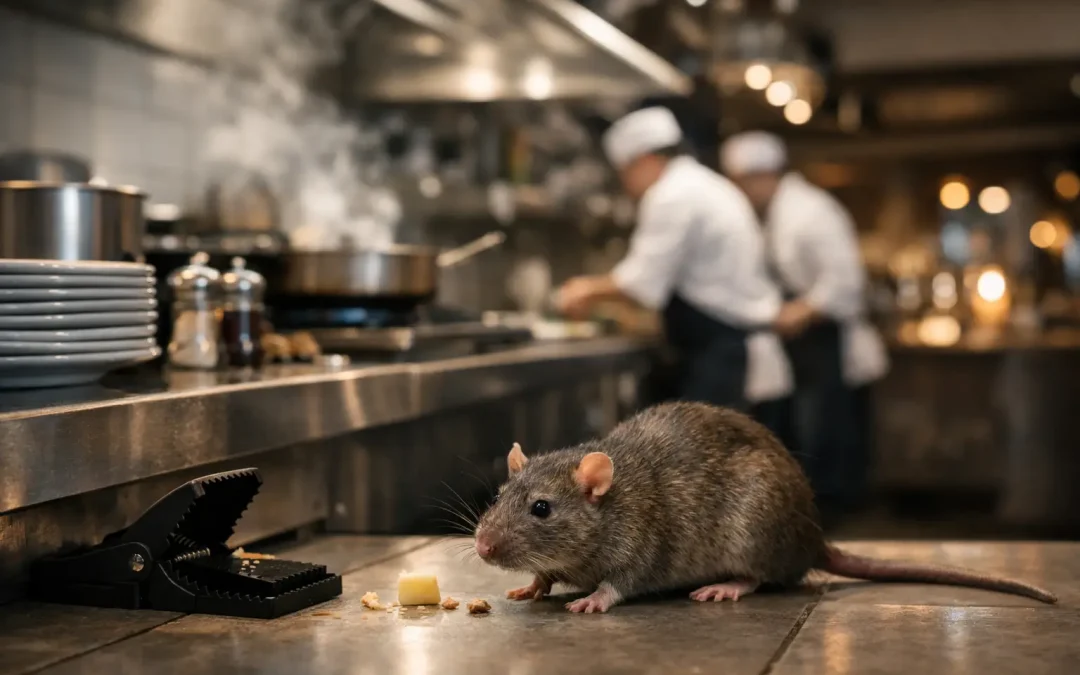
A single rat sighting in a restaurant can undo years of careful reputation-building. For owners, managers and head chefs, rat control for Dublin restaurants is not just about removing a pest. It is about protecting food safety, passing inspections, keeping staff confident and preventing a hygiene issue from becoming a public one.
Restaurants create exactly the conditions rodents look for – warmth, water, shelter and a regular food source. In busy city locations, especially where bins, service yards and older buildings are common, rats do not need much encouragement. The real risk is not only what customers might see. It is what happens behind the scenes: gnawed packaging, contaminated stock, damage to wiring, fouled storage areas and the serious compliance concerns that follow.
Why restaurants face a higher rat risk
Food premises are under constant pressure. Deliveries arrive through rear access points, external doors open repeatedly during service, waste builds up quickly, and staff are focused on speed. Even well-run kitchens can develop small vulnerabilities that rats exploit.
In Dublin, this risk can be amplified by dense urban layouts, neighbouring businesses, shared bin areas and older drains or structural gaps. A restaurant may do many things right internally and still experience rodent pressure because of what is happening outside the unit or next door. That is why effective control starts with a wider view of the site, not just the kitchen floor.
Rats are also cautious and adaptable. If there is regular activity, they often move along wall lines, under equipment, behind stored goods and through service voids where they are not immediately seen. By the time daytime signs appear, the problem is rarely new.
Rat control for Dublin restaurants starts with prevention
The most reliable approach is prevention first, treatment second. Waiting until there is visible activity creates unnecessary risk. In a restaurant setting, professional pest management should work as part of normal hygiene and maintenance, not as a last-minute response.
Proofing matters because rats only need a surprisingly small entry point. Gaps around pipes, damaged air bricks, worn door seals, broken drain covers and poorly fitted rear doors are all common access routes. Internal housekeeping also plays a major role. Food debris under cooking lines, cluttered dry stores, leaking pipework and unmanaged waste all increase harbourage and feeding opportunities.
This is where many businesses get caught out. Cleaning standards in visible areas may be excellent, but pest pressure often builds in less obvious places – ceiling voids, bin compounds, basement stores, external plant areas and service corridors. A proper survey looks at the whole environment and identifies the conditions that are allowing activity to continue.
The warning signs staff should not ignore
Most infestations are detected first through signs rather than sightings. Droppings, smear marks along walls, gnaw damage, disturbed waste sacks, scratching sounds and unusual odours all need immediate attention. Staff may also notice nesting material in storage areas or see evidence around drains and external doors.
These signs should never be treated as minor or handled informally. In a restaurant, delays increase risk. The right response is to record the issue, protect any exposed food or packaging, review the affected area and bring in professional support quickly.
Why DIY rodent control is risky in food premises
Some restaurant operators are tempted to deal with early rodent activity themselves. That can seem cheaper in the moment, but it often creates a bigger problem. Over-the-counter products may be used incorrectly, placed in the wrong location or fail to deal with the source of the infestation.
In food environments, there is also the issue of safety and compliance. Any treatment needs to be suitable for a commercial premises where food is stored, prepared or served. Improper control measures can put staff and customers at risk, interfere with audits and leave no clear reporting trail if the issue is later questioned by an inspector or client.
Professional rat control is more than setting bait. It involves inspection, species identification, route analysis, harbourage assessment, proofing advice, safe treatment selection and documented follow-up. If a restaurant only addresses the visible symptom, the underlying access points and behavioural patterns remain in place.
What professional rat control should include
A proper service begins with a detailed inspection of internal and external areas. That includes kitchens, stores, waste zones, staff facilities, service entries, drainage points and the building perimeter. The goal is to understand not only whether rats are present, but why the site is vulnerable.
Treatment plans should then be tailored to the premises. In some restaurants, proofing and trapping may be the priority. In others, external monitoring, drain investigation or changes to waste handling may be more urgent. There is no single fix that suits every site, especially in mixed-use or high-footfall locations.
Documentation is just as important as treatment. Commercial food businesses need clear reporting on findings, actions taken, recommendations and follow-up results. This helps management demonstrate due diligence and gives environmental health officers or auditors confidence that the issue is being handled correctly.
For many operators, ongoing monitoring is the most sensible option. A one-off call-out can solve an immediate problem, but restaurants with regular deliveries, shared service areas or historical rodent pressure are better protected by scheduled inspections and preventative control.
Rat control for Dublin restaurants and compliance
For a restaurant, rodent activity is not only a cleanliness concern. It is a compliance issue. Food businesses are expected to maintain premises in a condition that prevents contamination and supports safe operation. Evidence of rats raises serious questions about pest prevention, stock protection, waste management and structural maintenance.
That does not mean every incident leads to enforcement action. Much depends on the scale of the problem, how quickly it is addressed and whether the business can show that appropriate controls are in place. This is where a professional, documented pest management programme becomes especially valuable.
A compliant approach typically includes routine inspections, site-specific recommendations, treatment records, trend monitoring and clear communication with site management. Where there are recurring issues, a more technical review may be needed, including drainage defects, neighbouring site impact or weaknesses in the building fabric.
Restaurants that operate with this level of control are in a stronger position. They are less likely to face disruption, and if a problem does arise, they can demonstrate that it has been managed responsibly and without delay.
Practical measures that reduce risk between visits
Day-to-day standards make a measurable difference. Waste should be removed regularly and kept in secure bins with close-fitting lids. External areas need to be kept clean, especially around grease stores, bottle zones and rear yards. Deliveries should be checked, stock rotated properly and food stored off the floor where possible.
It also helps to reduce hiding places. Overfilled storage rooms, unused equipment and cardboard build-up all make inspection harder and create shelter for rodents. Staff should know how to spot signs early and who to report them to. A simple internal reporting habit often prevents a small issue from becoming a major one.
Drainage deserves particular attention. If there is repeated rodent pressure with no obvious internal cause, drains may be part of the problem. This is one of those situations where it depends on the site. A city centre basement restaurant has different vulnerabilities from a suburban unit with a large rear yard, so control measures need to reflect the building and its surroundings.
Choosing the right pest control partner
Restaurants need more than a reactive contractor. They need a pest control provider that understands food premises, works discreetly and can support hygiene standards as well as pest removal. That means clear reporting, practical recommendations and the ability to respond quickly when an issue threatens service or compliance.
For some businesses, a basic monitoring plan is enough. For others, especially larger sites or restaurants with repeated external pressure, a more bespoke contract is the safer route. The right level of service depends on footfall, layout, waste volume, location and previous history. A professional survey should make that clear rather than pushing a one-size-fits-all package.
Pest Pure Solutions supports commercial clients with preventative pest management, proofing advice and reporting that helps businesses stay protected and inspection-ready. In restaurant settings, that combination matters because the real objective is not simply to remove rats. It is to protect the operation around them.
When rodent activity appears in a restaurant, speed matters, but control matters more. The best result is not a quick fix that looks good for a week. It is a safer premises, a clearer reporting trail and a business that can keep serving customers with confidence.
Recent Comments