
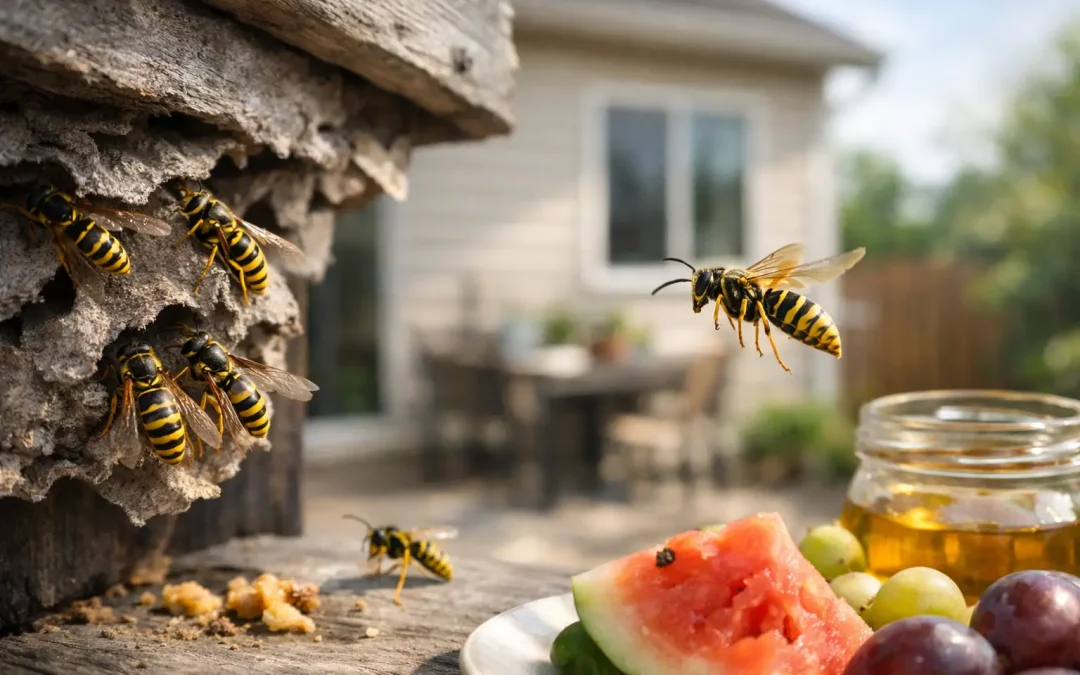
A few wasps around a garden table can be normal in summer. A regular flight path into your soffits, attic vents or wall gaps is different. Once workers are repeatedly entering the same point, there may already be an established nest inside or close to the property.
Understanding what attracts wasps to houses helps homeowners act early, before a minor nuisance becomes a safety issue for children, pets, visitors or staff. It also helps commercial premises protect food areas, waste storage and customer-facing spaces from an avoidable hygiene concern.
What attracts wasps to houses?
Wasps are drawn to three basic things: food, water and shelter. A house can offer all three, particularly during warm, dry weather when nesting activity increases. The attraction is not always a sign of poor hygiene. Even a clean, well-kept home can have the protected gaps and food sources a queen needs to begin a nest.
The timing matters. In spring, fertilised queens emerge from hibernation and search for a dry, sheltered location to build a new nest. In early summer, activity can seem modest while the colony develops. By late summer and early autumn, a mature nest can contain thousands of workers, and wasps often become much more noticeable as they seek sugary foods.
Sheltered nesting spaces
Wasps favour locations that are dry, enclosed and protected from wind and rain. Roof voids, eaves, soffits, sheds, garages, wall cavities, chimneys, porches and gaps around pipework are all common nesting sites. A small opening is enough. The visible entry point may be no larger than a coin, while the nest itself is hidden well inside a loft or cavity.
Properties with damaged fascia boards, loose roof tiles, unsealed vents or gaps around services can be particularly inviting. This does not mean the building is in poor condition. Many nests begin in ordinary structural openings that are difficult to spot from ground level.
Some houses are repeatedly affected because they offer the same favourable conditions each year. Social wasps do not normally reuse an old nest, but a new queen may choose a similar sheltered area nearby if access remains available.
Sweet foods and outdoor eating areas
In late summer, wasps are strongly attracted to sugar. Open cans of fizzy drinks, fruit juice, jam, fallen apples, ripening fruit and dessert leftovers can all bring workers close to the house. Outdoor dining areas, bins near patios and compost areas containing fruit waste are common hotspots.
This is why wasp activity often appears to increase around barbecues, children’s parties and garden gatherings. The food itself may not cause a nest in the roof, but it can encourage foraging wasps to remain around the property and make an existing nest far more apparent.
Protein, food waste and recycling
Earlier in the season, worker wasps also seek protein to feed developing larvae. Meat scraps, pet food, fish waste and overflowing rubbish bins can attract them. Commercial kitchens, cafés, care settings and staff canteens need particular attention, as food handling and waste collection areas can create repeated foraging opportunities.
Recycling bins deserve equal care. Residue in drinks bottles, cans and food containers can attract wasps even when a bin appears closed. Rinsing containers before disposal and keeping lids secure reduces the available food source without relying on sprays or improvised traps.
Water and damp conditions
Wasps need water, especially during warm weather. Bird baths, leaking outdoor taps, uncovered water butts, pet bowls and poorly draining areas may attract them. They can also be drawn to moisture around blocked gutters, damaged pipes or condensation-prone areas.
Water is rarely the sole reason for a serious wasp problem, but removing standing water and addressing leaks makes a property less appealing. It can also reveal maintenance issues that may otherwise lead to other pest or hygiene concerns.
Gardens that provide natural food
Flowering plants, ivy, fruit trees and aphid activity can support wasp foraging. Wasps feed on nectar and will hunt insects, including aphids, to support their colony. In this respect, they can play a useful role in the garden.
The practical aim is not to remove every flowering plant or strip a garden of wildlife. Instead, keep fruit cleared from the ground, prune dense vegetation away from entrances where practical, and avoid positioning outdoor food or uncovered bins beside heavily flowering areas. A balanced approach protects the garden while reducing close contact with wasps.
Why some properties experience more wasp activity
Wasp activity depends on the surrounding environment as much as the building itself. Homes beside mature trees, parks, farmland or large gardens may see more foraging insects. Warm south-facing roof spaces can provide excellent nesting conditions, while older properties may have more small gaps around eaves, air bricks and external services.
Detached sheds and garden rooms are also frequent targets because they are quieter than the main house and may remain undisturbed for long periods. A nest can grow unnoticed until people begin using the space more often in summer.
For businesses, the risk can be more operational. Loading bays, external staff areas, waste compounds, outdoor seating and delivery entrances all create possible food and shelter points. In catering, care, logistics and pharmaceutical settings, wasp activity can affect hygiene controls, staff safety and public confidence as well as day-to-day comfort.
Signs that wasps may be nesting at your property
A single wasp indoors does not necessarily mean there is a nest. Consistent patterns are more significant. Watch for frequent wasp traffic around one gap in the roofline, wall, shed or vent, especially when insects are flying in and out rather than simply passing through the garden.
You may also hear a faint scratching, buzzing or rustling sound from a ceiling void or wall during quiet periods. Indoors, repeated wasps appearing near a loft hatch, light fitting or window can indicate that a nest is in a cavity and that workers are finding routes into occupied rooms.
Do not assume a nest is inactive because activity is less visible on a cool or rainy day. Wasps can remain inside and become defensive if their nest is disturbed.
Prevention that makes a practical difference
The best prevention combines good housekeeping with sensible building maintenance. Once the season has ended and professionals have confirmed that no active nest remains, repair openings around fascia boards, soffits, vents, pipes and roof edges. Fit suitable mesh to vents where it will not affect ventilation, and keep shed doors, windows and wall gaps in good condition.
Around the property, keep external bins closed, clean up spills promptly and avoid leaving pet food outside. Clear fallen fruit regularly, rinse recyclable drinks containers and move food waste away from doors, windows and outdoor seating where possible. Check gutters and outdoor taps for leaks, particularly before warmer weather arrives.
For commercial sites, prevention should form part of a planned pest management and hygiene programme. This may include routine inspection of building perimeters, documented checks of waste areas, monitoring around food-handling zones and clear reporting on actions required. The right approach depends on the site, its sector and the level of compliance required.
What not to do with an active wasp nest
Avoid blocking the entrance to an active nest. This can trap wasps inside a wall or roof void and encourage them to find a different route into the house. It can also make the colony more agitated.
Do not knock down a visible nest, pour water into an opening or use domestic aerosols in enclosed areas such as lofts and cavities. These methods may not reach the nest properly, create exposure risks and can provoke defensive behaviour. This is particularly risky for anyone with a known allergy to wasp stings.
If the nest is in a high roof space, wall cavity, chimney, school, care setting, food premises or area used by the public, professional treatment is the safer option. A technician can identify the likely nest location, use an appropriate treatment method and advise when the area can be used normally again.
When professional wasp control is needed
Professional help is advisable whenever wasps are entering a building, the nest is close to a doorway or living area, or there is a credible risk of stings. It is also appropriate when a business needs a controlled response that protects staff, customers and hygiene standards.
Pest Pure Solutions provides professional wasp control for homes and commercial premises across Dublin and surrounding counties. A proper assessment considers the nest location, access, activity level and risks around the site rather than treating every report in the same way.
A wasp nest is easiest to manage when it is dealt with before the colony reaches peak size. If you are seeing a steady stream of wasps using one entry point, keep clear of the area, prevent others from disturbing it and arrange a professional assessment promptly.
Recent Comments