
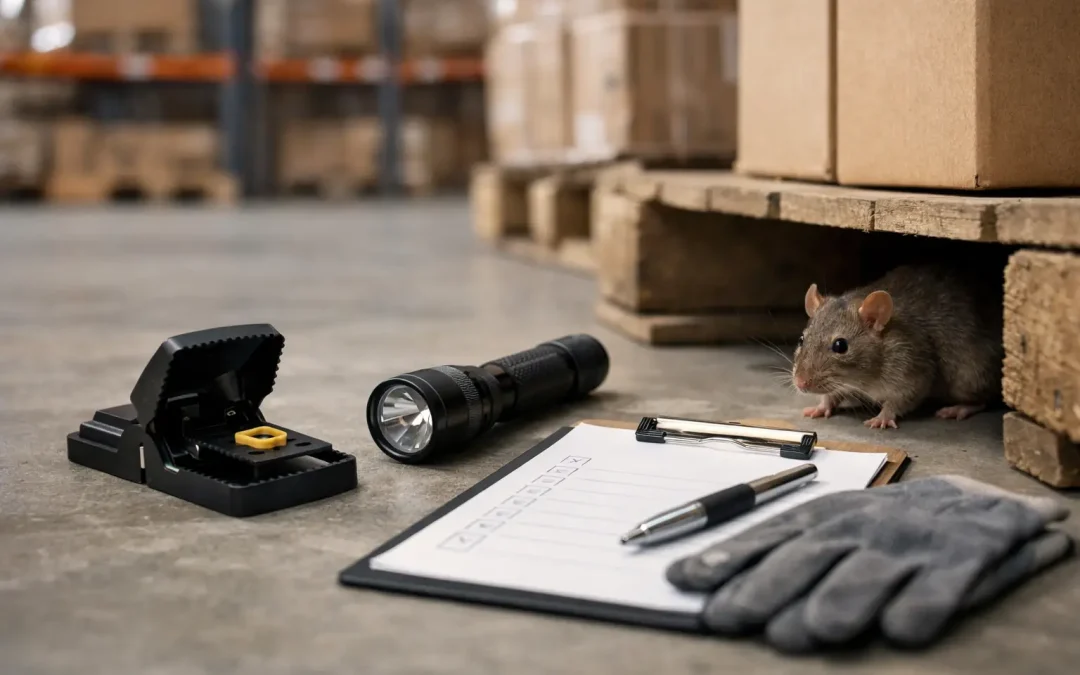
A single gnawed pallet, droppings beneath a racking bay or a damaged cable can quickly become more than a maintenance issue. For logistics, food handling, pharmaceutical and care-related operations, rodents can compromise stock, disrupt audits and create a serious hygiene risk. This rodent proofing guide for warehouses sets out how site managers can reduce that risk through practical exclusion, disciplined housekeeping and documented monitoring.
Proofing is not the same as placing bait stations after activity has been found. It is the work of making a warehouse harder for rodents to enter, feed, nest and move around unnoticed. The most effective programmes combine building maintenance with professional pest control, because even small defects can defeat an otherwise well-managed site.
1. Start with a site-specific rodent risk survey
Warehouses vary widely. A dry goods distribution centre with frequent lorry movements has different pressure points from a cold store, a catering warehouse or a facility beside waste handling operations. The first step is to inspect the entire site, including external boundaries, loading bays, plant rooms, roof lines, staff areas and storage zones.
Look for evidence of current activity such as droppings, rub marks, gnawing, burrows, nesting material and unusual odours. Also identify the conditions that make activity likely: vegetation against walls, open drains, damaged cladding, food spillages, standing water or goods stored too close to the building perimeter.
A professional survey should distinguish between mice and rats where possible. Mice can enter through gaps of around 6 mm and often establish themselves inside wall voids, ceiling spaces and racking. Rats require larger openings but can cause more extensive damage and may be linked to drainage defects or external harbourage. The findings should lead to a prioritised proofing plan, rather than a generic checklist.
2. Seal access points before they become infestations
Rodents do not need an obvious hole in a wall. They exploit gaps around pipes, conduits, doors, vents, cable routes and damaged panels. Check low-level external walls carefully, but do not overlook roof-level service entries, especially where pipework rises through the building.
Use materials that rodents cannot easily chew through. Depending on the opening, this may include galvanised mesh, metal plates, concrete repair materials and purpose-made brush strips. Expanding foam on its own is rarely a long-term rodent-proofing solution, as it can be gnawed or degrade when exposed to weather.
Pay close attention to loading doors. Dock levellers, roller shutters and personnel doors are repeatedly opened, struck and worn through daily use. Door sweeps should sit tightly against the floor, and any daylight visible around a closed door should be investigated. Where operational traffic makes a perfect seal impractical, monitoring and frequent inspections become even more important.
3. Control the loading bay and goods-in area
Loading bays are often the highest-risk point in a warehouse because they connect the internal environment to yards, vehicles and incoming deliveries. Rodents can enter while shutters are open, shelter beneath pallets or arrive within damaged packaging and returnable transit items.
Keep the area beneath dock equipment clean and accessible for inspection. Avoid leaving loose shrink wrap, cardboard, damaged pallets or rejected stock around the bay, as these materials provide shelter and nesting opportunities. Goods awaiting collection should be kept organised and off the ground where possible.
It is not realistic to keep loading doors shut during every delivery. The practical aim is to reduce the time they are open, maintain good seals when closed and ensure the area is monitored closely. Staff should know that signs of pest activity around goods-in require immediate reporting, not removal without record.
4. Protect stock through storage discipline
Racking can conceal rodent activity for weeks if stock is dense and inaccessible. Maintain clear inspection gaps between stored goods and walls, particularly in low-turnover locations. A clear perimeter allows staff and pest technicians to spot droppings, gnawing and debris before rodents reach a larger population.
Rotate stock properly and avoid allowing obsolete, returned or damaged goods to accumulate. Food products, animal feed, scented goods and packaging materials need particular attention, but rodents will also damage paper, insulation, textiles and electrical components. Their presence is not limited to sites that store food.
Any product contamination procedure should be clear before an incident occurs. Quarantine affected stock, record its location and consult the relevant quality, hygiene or compliance lead. In regulated premises, a traceable response matters as much as the immediate clean-up.
5. Remove food, water and harbourage
Exclusion works best when the site offers little reward to a rodent that gets inside. Review canteen areas, vending points, lockers, cleaning cupboards and waste storage, not just the warehouse floor. Spilt food beneath vending machines and unsecured staff food can sustain mouse activity in otherwise clean premises.
External waste requires equal care. Bins should be closed, maintained and positioned away from building entrances where site layout permits. Waste compactors, skips and recycling areas should be routinely checked for spillages, damaged lids and harbourage beneath or behind units.
Outside the warehouse, keep vegetation cut back from walls and remove clutter from the perimeter. Stored pallets, redundant machinery and building materials can provide cover for rats. Drainage gullies should be clear, and any damaged drain covers or suspected defects should be assessed promptly. Proofing a wall is of limited value if rodents can gain access through compromised drainage.
6. Make inspections part of daily operations
A warehouse pest programme cannot rely solely on monthly visits. Warehouse operatives, cleaners, maintenance teams and supervisors are often the first people to see evidence, so they need a simple reporting route and confidence that reports will be acted on.
Build quick checks into normal routines. This may include checking loading bays at opening and closing, looking beneath racking during stock movements, inspecting waste areas and reporting door damage as soon as it appears. The purpose is not to turn every employee into a pest controller. It is to prevent small warning signs from being overlooked.
Keep a record of findings, corrective work and any trends. Repeated droppings in one area may indicate a hidden access point, poor stock rotation or an issue in a neighbouring unit. Clear records allow managers to prove action has been taken and help pest professionals target their work effectively.
7. Use monitoring as evidence, not a substitute for proofing
Professional monitoring devices can show where rodents are active and whether control measures are working. Their placement should reflect the site survey, likely travel routes and the risks associated with the operation. Devices should be tamper-resistant, clearly mapped and routinely serviced.
However, monitoring alone will not solve an access problem. If activity is repeatedly recorded near one loading bay or plant room, the response should include investigating the structure, doors, drainage and housekeeping around that point. Bait may reduce immediate numbers, but exclusion prevents the same issue returning.
For sites operating under strict quality standards, reports should provide more than a device count. They should show observations, trend analysis, corrective actions, proofing recommendations and service history. This supports internal reviews, customer audits and GDP-focused compliance requirements where applicable.
8. Give proofing defects an owner and deadline
Many warehouse proofing failures are not caused by a lack of knowledge. They happen because a defect is noted but remains on a maintenance list for months. Assign each action to a named person, set a realistic completion date and confirm the repair has been checked afterwards.
Prioritise defects according to risk. An open gap beside a food storage area, a failing dock seal or evidence of rats near drainage should be addressed urgently. Cosmetic damage in a low-risk external area may be scheduled differently, but it should still be recorded and reviewed.
Pest Pure Solutions can support warehouse operators across Dublin and surrounding counties with surveys, proofing recommendations, monitoring and detailed reporting designed around the demands of the site. A tailored programme is particularly valuable where hygiene, stock protection and audit readiness cannot be left to chance.
A warehouse stays protected when proofing is treated as an operating standard, not a one-off repair. Review vulnerable areas after building works, seasonal weather, changes in stock profile or altered delivery patterns, and act on the first sign that rodents may be testing the site.
Recent Comments