
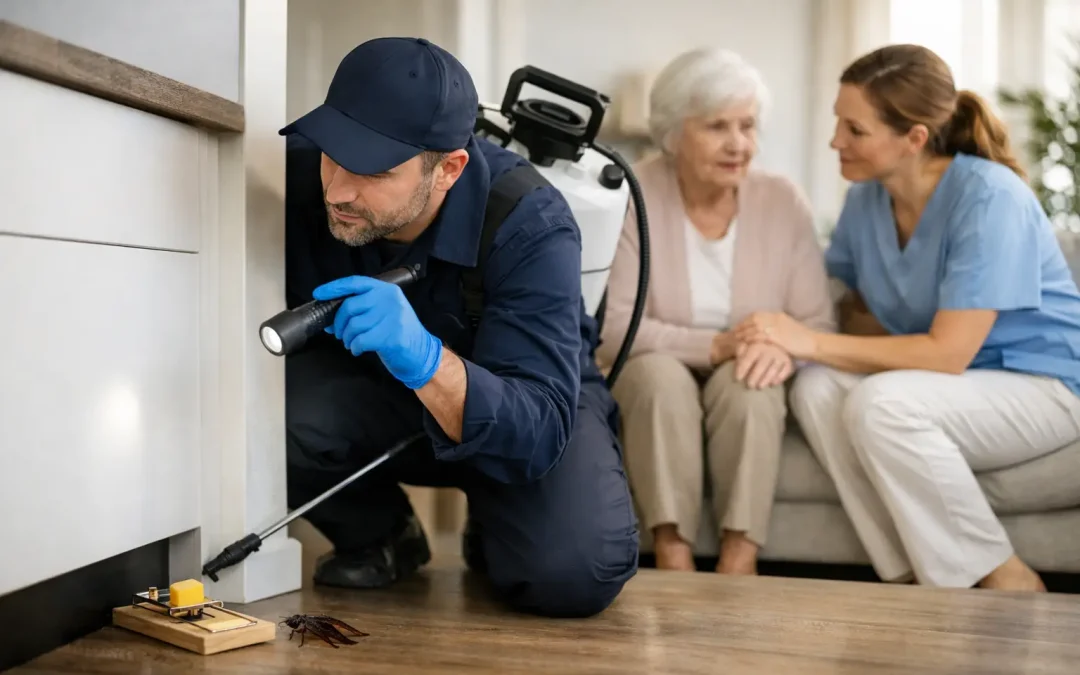
A care home pest control example is rarely just about removing a mouse, treating a fly problem or placing a monitor. In a care setting, even a small sign of pest activity can affect resident wellbeing, food hygiene, staff confidence and the home’s ability to demonstrate that risks are being properly managed. The response has to be calm, discreet and documented from the first report.
Consider a realistic scenario: a member of the night team notices rodent droppings in a dry-store cupboard beside the kitchen. No resident has seen a rodent and there is no evidence of contamination in food preparation areas. Still, this is not an issue to leave until the next routine visit. The home needs a controlled response that protects people, identifies the source and creates a clear record of what was found and what was done.
Care home pest control example: a controlled response
The first step is a professional inspection, not an assumption. Rodent droppings can indicate current activity, but their location, age and quantity matter. A trained technician would inspect the dry store, kitchen perimeter, bin storage, service ducts, external doors and nearby plant areas. They would also look for signs such as gnawing, rub marks, damaged packaging, gaps around pipework and access points at low level.
In this example, the inspection finds a small gap around a pipe entry behind stored goods and evidence that a rear bin-store door is not closing tightly. The dry store is orderly, but several cardboard deliveries have been left on the floor awaiting breakdown. This creates cover and makes inspection more difficult. The findings suggest that rodents may be entering from outside and using the service route rather than living within the main kitchen.
That distinction matters. Treating only inside the cupboard might reduce activity temporarily, but it would not deal with the route of entry. Effective care home pest management combines targeted treatment with proofing, housekeeping improvements and ongoing monitoring.
Immediate actions that protect residents and food areas
The technician and care home manager should agree immediate controls based on the level of risk. In a sensitive environment, treatments must be selected and positioned with resident safety, food safety and access control in mind. Any necessary baiting or trapping must be secured, tamper-resistant and placed only where it can be safely managed by authorised personnel.
The affected cupboard is emptied and inspected. Food or packaging that may have been compromised is isolated and disposed of in line with the home’s food safety procedure. The area is cleaned using an appropriate method, with staff avoiding dry sweeping or vacuuming droppings, which can disturb contaminated dust. The store is then reorganised so stock is kept off the floor and away from walls where practical, making future checks easier.
At the same time, the external bin-store door is adjusted or repaired, and the pipe-entry gap is scheduled for pest proofing. This is a vital part of the response. Rodent control without exclusion work can become an expensive cycle of repeat activity.
Communication should be proportionate. There is no benefit in alarming residents or visitors with unnecessary detail, but relevant staff need to know what to do. Kitchen staff, domestic teams and maintenance personnel should understand the temporary controls, who is responsible for checks and how to report any further signs. A discreet, professional approach protects dignity while ensuring the issue is not missed.
Monitoring turns a one-off visit into prevention
Following the initial treatment, the home should receive a documented monitoring plan. In this example, the technician installs secured monitoring points in agreed non-resident areas, focusing on the dry-store perimeter, service access route and bin storage. The number and placement of devices depends on the size, layout and risk profile of the site. More is not automatically better. Devices need to be purposeful, accessible for inspection and clearly recorded on a site plan.
A follow-up visit confirms whether activity is reducing and whether the proofing work has been completed. If monitoring shows continued activity, the investigation widens. This may include checking drainage defects, neighbouring refuse areas, loading routes or structural voids. A care home cannot rely on a fixed timetable alone when evidence suggests an active issue. Visit frequency should increase until control is established.
Once activity has stopped, routine servicing helps prevent recurrence. For many homes, this includes scheduled inspections of high-risk areas, trend analysis, condition reports and recommendations for maintenance or hygiene improvements. Seasonal pressures also matter. Rodent activity often increases as temperatures fall, while flying insects may become more noticeable around kitchens, laundry areas and waste handling points during warmer months.
Why reporting is central to care home pest control
In regulated settings, a verbal assurance is not enough. Managers need a clear service record that supports internal audits, food hygiene procedures and governance responsibilities. A useful pest control report records the date and time of visit, technician findings, devices checked, treatment used where applicable, evidence of activity, proofing recommendations and required actions.
For the scenario above, the report would show the initial evidence in the dry store, the likely entry points, immediate cleaning and stock-control measures, and the dates by which the door and pipe gap should be addressed. It would also record follow-up findings. This gives the registered manager a practical audit trail rather than a vague statement that the problem has been handled.
Bio-reports can add further value for larger or higher-governance care operations. They help identify patterns, such as repeated fly activity near a specific waste area or recurring rodent signs around a service entrance. These trends make it easier to direct maintenance budgets towards the cause of the problem, rather than repeatedly paying for reactive treatment.
The hygiene factors behind the infestation
Pests are often a symptom of a wider site condition, not simply an isolated event. In care homes, the usual pressure points include food deliveries, waste storage, laundry handling, staff break areas, drainage, landscaped grounds and gaps created by ongoing building maintenance. A clean home can still experience pests if access points are open or external waste arrangements are poor.
In this example, the cardboard left on the dry-store floor did not create the original access route, but it gave rodents a more sheltered route and made early detection harder. The solution is not to blame staff. It is to create a workable process: deliveries are checked, outer cardboard is removed promptly where feasible, stock is rotated, and stores are kept clear enough for inspection.
The same thinking applies to flies. A flying insect issue may relate to door discipline, damaged screens, overflowing waste, drains or unsuitable external lighting. Bed bugs require a different approach again, involving sensitive communication, room inspections and treatment plans that minimise disruption. The correct response depends on the pest, location and risk. A professional survey prevents a generic treatment from being used where it does not fit.
Choosing a pest control partner for a care setting
Care providers should look beyond the promise of a quick call-out. Fast action is valuable, especially where there is active pest evidence, but the service should also include competent inspection, safe treatment selection, practical proofing advice and reports that managers can use.
Ask how treatments are risk assessed around vulnerable residents, how technicians communicate with site teams, what documentation is supplied and how repeat activity is investigated. It is also sensible to confirm that the provider can support related hygiene needs, such as sanitisation, washroom services or bird proofing, where these form part of the site’s wider risk picture.
Pest Pure Solutions provides tailored commercial pest management for care homes across Dublin and surrounding counties, combining discreet treatment, preventative monitoring and compliance-led reporting. The aim is not simply to remove the immediate pest, but to help the home maintain a safer, cleaner environment for residents, visitors and staff.
A dropped crumb, a damaged door seal or an unnoticed pipe gap can become a bigger issue when left unaddressed. The most reassuring care home pest control example is therefore one where staff know how to report concerns early, managers have clear evidence of action, and prevention remains part of everyday site care.
Recent Comments