
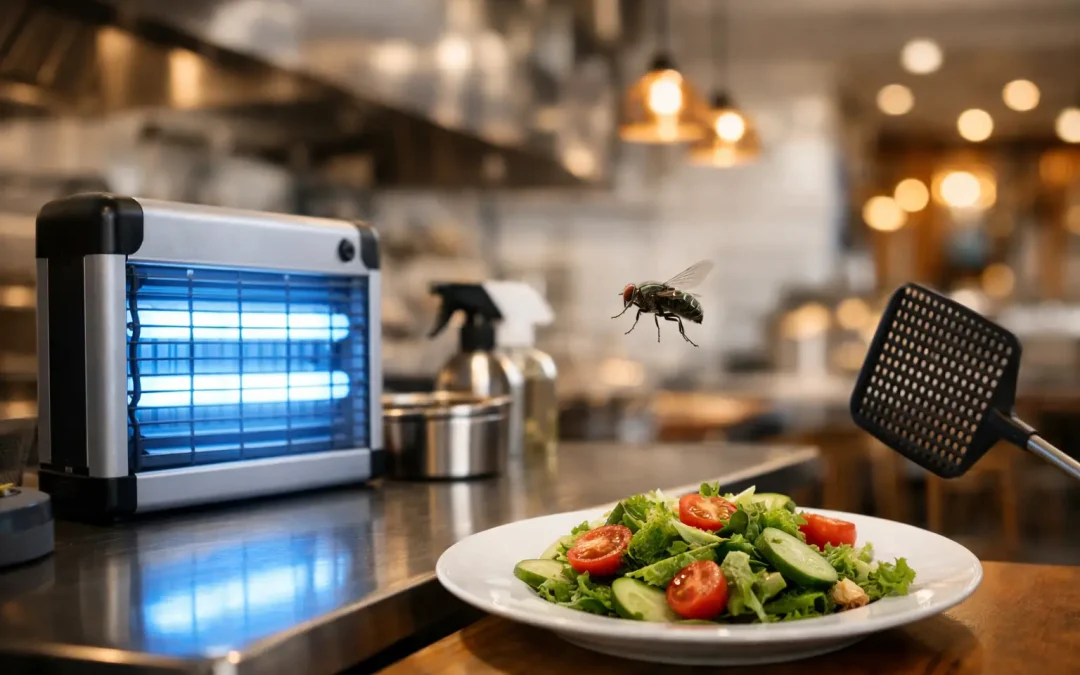
A single fly behind the bar can do more damage than most restaurant teams realise. Guests notice it immediately, staff lose time chasing the problem, and an inspector will see it as a hygiene warning rather than a minor nuisance. The best fly control for restaurants is never one product on its own. It is a combination of housekeeping, proofing, monitoring and targeted professional treatment that stops flies breeding, entering and settling in the first place.
What makes the best fly control for restaurants?
Restaurants are different from many other commercial sites because they offer exactly what flies need – warmth, moisture, food residue and frequent access points. Kitchens, bin stores, drains, delivery doors and wash-up areas all create ideal conditions. That is why quick fixes rarely hold up in a live food environment.
The most effective approach is layered. Good fly control starts with identifying the species involved, because fruit flies, house flies and drain flies behave differently and breed in different places. If you treat the visible adults without dealing with the source, numbers often drop briefly and then return within days.
For restaurant operators, the right solution must also fit around service, food safety and compliance. A method that works in a warehouse may be unsuitable in an open kitchen or customer-facing dining room. The best result is one that reduces activity quickly while supporting hygiene standards and keeping disruption low.
Why flies become a recurring restaurant problem
Flies are not appearing by chance. In most cases, a recurring issue points to one of three conditions – access, breeding or poor waste control. Sometimes all three are present at once.
Open rear doors are a common factor, particularly during deliveries and warmer months. Staff may need ventilation or easy movement between kitchen and yard, but every minute that a door remains open gives flying insects an invitation. If bins are stored close to those access points, the risk increases further.
Internal breeding is often overlooked. Fruit flies can breed in sugary residue under equipment, in empty bottle storage, around syrup stations and in floor gullies. Drain flies are strongly associated with organic build-up inside pipework and wet drainage channels. House flies may be drawn in from external waste areas, but once they find food preparation and disposal points, they remain active.
Cleaning standards can still appear good on the surface while hidden hotspots continue to support breeding. That is why a professional inspection matters. The issue is often not general cleanliness, but small inaccessible areas where residue has been allowed to build up over time.
The main fly control methods and where each works best
Electric fly killers are widely used in restaurants, but placement matters as much as the unit itself. In the right location, they provide excellent monitoring and control for flying insects moving through back-of-house areas. In the wrong location, they can be ineffective or unsuitable. Units should support the wider pest plan, not replace it.
Insect light traps are generally better in food premises than simple zapper-style units. They attract flies and retain them on a glue board, which supports more hygienic capture and easier species identification. This is useful for trend monitoring, especially where repeated activity needs to be documented and managed.
Fly screens on windows and doors can be highly effective where ventilation is needed, but they only work if they are fitted properly and kept in good condition. A damaged screen with gaps around the frame can create false confidence while allowing pests straight through. Air curtains may also help at busy entrances, though they depend on correct specification, installation and maintenance.
Chemical treatments have a place, but they must be chosen carefully in restaurant environments. Surface sprays, residual insecticides and targeted treatments can reduce active infestations, but they are not a substitute for sanitation and proofing. Over-reliance on chemical control usually means the root cause has not been resolved.
For drain flies and fruit flies, biological and sanitation-led treatments are often the better option. These target the organic matter where larvae develop rather than focusing only on adult insects. In practice, this is where many long-term results are won.
Best fly control for restaurants starts with prevention
The strongest restaurant fly control programmes are built around prevention because prevention is what protects service continuity. Once flies are active during trading hours, the issue has already become visible to guests and staff.
Waste handling needs close attention. External bins should be lidded, clean and positioned as far from access doors as practical. Internal bins should be emptied regularly and not allowed to sit with food-soiled liners overnight. Bottle bins deserve special attention because residual sugars create ideal conditions for fruit flies.
Drain management is another common weak point. Floor drains, grease traps and wet processing areas need scheduled cleaning that removes build-up rather than just masking odours. If drains are producing a persistent smell, there is often enough organic material present to support fly development.
Housekeeping around equipment matters just as much. Gaps behind fridges, under shelving, beneath counters and around dishwashers can collect grease, liquid spills and food particles that routine cleaning misses. These are exactly the areas where a site can look clean in daily operation yet still support pests.
Staff habits also make a measurable difference. Keeping doors closed, reporting sightings early, rotating stock properly and cleaning spillages immediately all reduce risk. A restaurant does not need every member of staff to become a pest specialist, but it does need everyone to understand what attracts flies and how quickly a small issue can become a larger one.
When professional fly control is the right step
A few flies on a warm day do not always indicate a major infestation, but repeated sightings, customer complaints or activity around drains and bins should not be ignored. The longer the issue continues, the more likely it is that breeding sites are established somewhere on the premises.
Professional assessment is especially important when the source is unclear. Different species point to different causes, and treating the wrong one wastes time. A competent pest professional will look beyond visible activity and inspect structural entry points, hygiene conditions, external waste areas and hidden breeding zones.
For restaurants operating under strict audit or compliance requirements, documented monitoring is also essential. It is not enough to say the problem has been dealt with. You need evidence of inspection, findings, treatment recommendations and follow-up. This is particularly relevant for multi-site operators and businesses in tightly governed sectors.
A bespoke service contract is often the most reliable option for restaurants with ongoing exposure to flying insects. Seasonal pressure, high footfall and constant food handling mean risk never fully disappears. Regular inspections, trend analysis and prompt corrective action are usually more cost-effective than repeated emergency call-outs.
Choosing the right provider for restaurant fly control
If you are comparing providers, look beyond the promise of a quick treatment. The best fly control for restaurants comes from a contractor who understands food environments, hygiene risk and the operational reality of service-led businesses.
That means asking practical questions. Can they identify the species involved? Do they provide site-specific recommendations rather than generic advice? Can they support compliance records and reporting where required? Do they understand how to work discreetly during or around trading hours?
Experience in commercial and regulated settings matters. A restaurant needs more than pest removal. It needs a service that protects hygiene standards, reduces reputational risk and supports management teams with clear, documented actions. In areas such as Dublin and the surrounding counties, where restaurants face high customer expectations and busy trading conditions, responsiveness is just as important as technical knowledge.
What a realistic result looks like
Good fly control does not always mean zero sightings from day one. In an active infestation, adult numbers may take time to drop after breeding sources are removed and treatment begins. What matters is whether the plan addresses the cause, shows measurable progress and reduces the chance of recurrence.
The strongest results usually come from combining immediate control with operational improvements. You may need treatment for current activity, deeper sanitation in problem areas, changes to waste handling, and minor proofing work at doors or vents. There is some effort involved, but that effort is what turns a recurring nuisance into a controlled risk.
For restaurant managers, the real goal is not simply killing flies. It is maintaining a clean, compliant environment where staff can work confidently and customers never have reason to question standards. If your current approach only reacts when flies become visible, it is probably time for a more structured plan.
A fly problem rarely improves through waiting. Early action is usually simpler, less disruptive and far more effective than trying to recover from an issue once customers have started to notice.
Recent Comments