
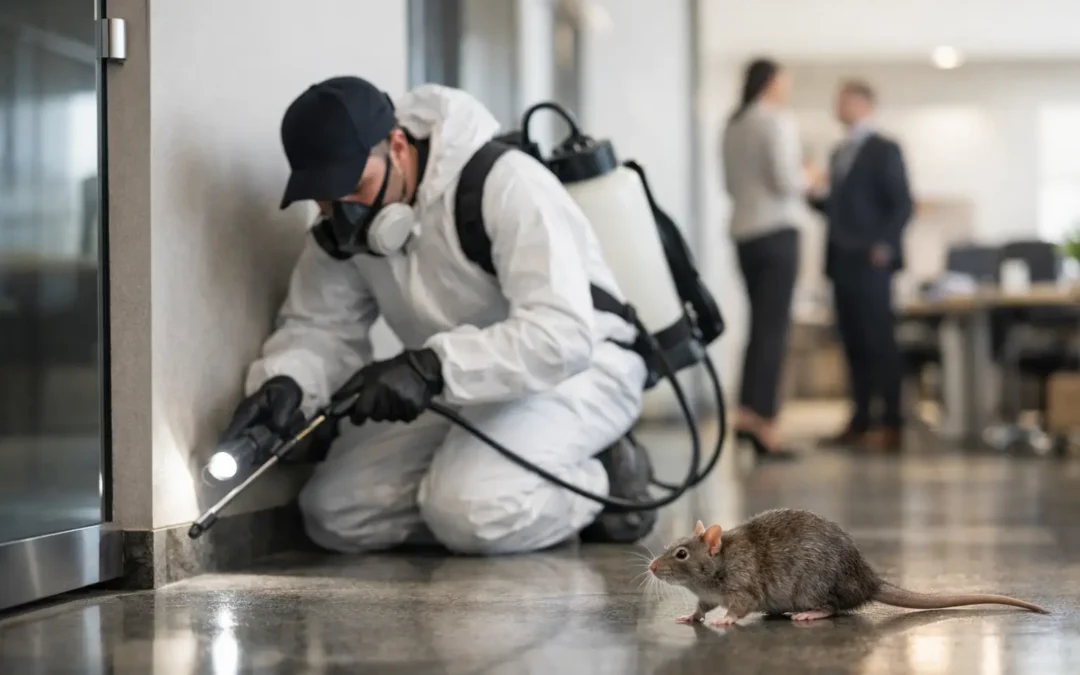
A pest sighting in a commercial premises is rarely just a nuisance. In a warehouse, it can interrupt audits and stock movement. In a care setting, it raises immediate hygiene concerns. In food handling or pharmaceutical environments, it can quickly become a compliance issue. That is why commercial pest control needs to be treated as an operational safeguard, not a last-minute reaction.
For most businesses, the real cost of pests is not the treatment itself. It is the downtime, the failed inspection, the damaged stock, the staff concern, or the reputational harm that follows. A professional approach focuses on prevention, rapid response, clear reporting, and practical measures that reduce the chance of repeat activity.
What commercial pest control should actually cover
Effective commercial pest control is wider than trapping or spraying. It starts with understanding how a site operates, where the pressure points are, and what level of monitoring is needed. A catering premises has different risks from a logistics depot. A care home needs a different service structure from a waste facility. One-size-fits-all contracts often miss that reality.
A proper commercial programme usually combines routine inspections, treatment where needed, proofing recommendations, monitoring points, trend analysis, and documented service records. In more tightly governed sectors, that reporting is not a bonus. It is part of the service. If a business cannot show what was found, what action was taken, and what risks remain, it may struggle to satisfy internal standards or external auditors.
This is where technical support matters. Businesses in pharma, healthcare, catering, logistics, and waste management often need more than a technician visit. They may need site-specific reporting, risk-based recommendations, and evidence that pest activity is being managed in a controlled and accountable way.
Why reactive treatment is rarely enough
Many companies first seek help after spotting rodents, cockroaches, flies, stored product insects, or birds around access points. By then, the issue has usually been developing for some time. Pests favour warmth, food sources, shelter, clutter, and overlooked entry routes. Commercial buildings often provide all five.
A reactive call-out has its place. If there is urgent activity, immediate treatment is essential. But emergency action alone does not address why the problem occurred. If gaps around doors remain open, waste handling is inconsistent, deliveries are not checked, or staff kitchens are poorly managed, the infestation pressure returns.
That is the main difference between basic extermination and a managed service. The first deals with what is visible. The second looks at conditions, habits, structural weaknesses, and reporting standards. For businesses that need continuity, managed prevention is usually the safer investment.
The pests that cause the biggest commercial risk
Rodents are one of the most serious concerns because they contaminate surfaces, damage stock, and can gnaw through materials and cables. Even minor activity can cause major concern in food, healthcare, and regulated production settings. Mice are especially problematic in commercial buildings because they can access small voids and spread quietly.
Cockroaches are another high-risk pest because they are closely associated with poor hygiene in the minds of staff, customers, and inspectors, even when the source is structural rather than behavioural. They are also difficult to eliminate without a thorough treatment plan and follow-up.
Flying insects such as flies and moths can be a persistent issue in premises with waste, food handling, drains, or high traffic at entry points. They may seem less serious at first, but repeated activity can undermine hygiene confidence very quickly.
Birds create a different kind of commercial problem. Roosting and nesting can lead to fouling, blocked gutters, slip risks, and damage to building fabric. In warehouses, service yards, and industrial sites, bird proofing is often as important as direct pest control.
Then there are the pests that affect staff welfare and accommodation, such as bed bugs, fleas, and ants. These may be more common in residential or hospitality settings, but they can also affect care environments, managed properties, and staff facilities.
What good reporting looks like
Commercial clients often judge a pest control provider by what happens after the visit as much as during it. Clear reporting should show findings, treatment completed, pest pressure levels, recommendations, and any actions needed from site management. Vague notes are not enough when there is an audit trail to maintain.
For some sectors, especially those with strict hygiene and governance requirements, the standard should be higher still. Bio-reports, trend analysis, and risk-based recommendations help decision-makers understand whether a problem is isolated, seasonal, or linked to a wider site issue. That level of visibility supports compliance and helps prevent repeat failures.
A good provider should also be realistic. Not every recommendation can be implemented overnight, especially in large or ageing premises. What matters is prioritisation. If urgent proofing, drain review, sanitation changes, or storage controls are needed, those should be documented clearly so the site can act on them.
Choosing a commercial pest control partner
The right provider is not simply the cheapest quote or the fastest call-out. For commercial settings, especially sensitive ones, reliability and competence matter more. Businesses should look for a service that can respond quickly, work discreetly, and tailor the programme to the site rather than forcing a standard visit pattern.
It also helps to ask practical questions. Can the provider support high-governance environments? Are service records detailed and inspection-ready? Is there qualified technical oversight behind the field work? Can they advise on proofing and hygiene issues as well as treatment? If the answer is no, the service may solve today’s problem but leave the wider risk in place.
This is particularly relevant across Dublin and surrounding counties, where commercial sites range from city-centre food operations to large industrial and logistics premises. The pressures are different, and the service should reflect that.
The link between hygiene and pest prevention
Pest control and hygiene should never be treated as separate conversations. Poor waste storage, neglected washroom areas, drain issues, food residue, and uncontrolled entry points all affect pest pressure. In many businesses, improvements in hygiene management reduce infestation risk more effectively than repeated treatment alone.
That does not mean every pest issue is caused by poor standards. Sometimes the problem comes from adjoining units, external harbourage, seasonal changes, or the nature of the goods being handled. But hygiene-led thinking still matters because it reduces opportunity. The fewer food, water, and shelter sources available, the less chance pests have to establish themselves.
This broader view is one reason some businesses choose providers who can also support washroom services, sanitation measures, proofing, and disinfection support. It creates a more joined-up approach to site standards.
When bespoke service contracts make sense
Not every business needs the same frequency of visits. A low-risk office may only need periodic inspections and proofing advice. A catering site, waste operation, care home, or pharmaceutical facility is likely to need a more structured programme with regular monitoring and detailed documentation.
Bespoke contracts are useful because they align service levels with actual risk. They also allow for seasonal changes. Flying insect pressure may rise in warmer months. Rodent pressure often increases when outdoor conditions worsen. A rigid annual plan can miss those shifts, while a tailored contract can adjust monitoring and treatment accordingly.
For many operators, the value of a contract is not just cost control. It is predictability. They know who to call, what records will be provided, and how issues will be handled if pest activity appears between scheduled visits.
Commercial pest control is about continuity
The best commercial pest control is usually the least visible. Staff can work normally, inspections proceed without drama, customers see a clean and well-managed environment, and management has confidence that risks are being tracked properly. That is the outcome most businesses actually want.
Pests may be a fact of commercial life, but recurring disruption does not have to be. With the right mix of monitoring, treatment, proofing, hygiene support, and reporting, businesses can reduce risk in a practical and defensible way. If your site is under pressure, the sensible next step is not to wait for the issue to grow. It is to put control measures in place early, while the problem is still manageable.
Recent Comments