
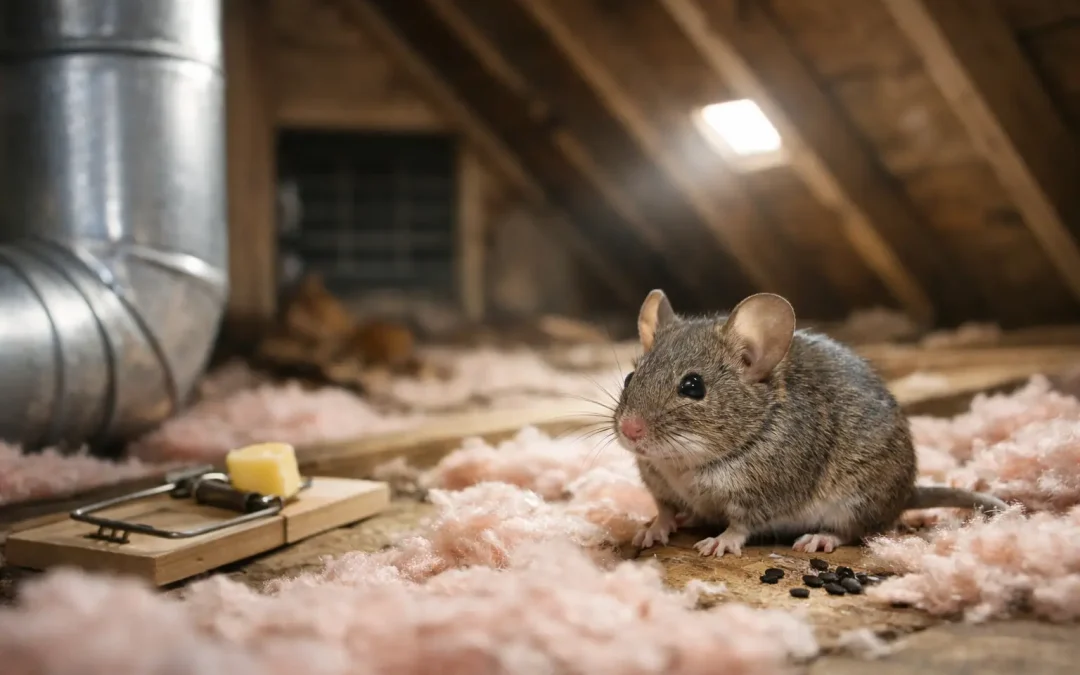
You usually hear them before you see any evidence – scratching above the ceiling at night, light movement in the insulation, or the odd dropping near a loft hatch. If you are asking what causes mice in attics, the answer is rarely just one issue. In most properties, mice get into attic spaces because the conditions are right: easy access, shelter, warmth and a nearby food source.
That matters because an attic is not just an unused void. Once mice settle there, they can spread contamination, damage insulation, chew wiring and move into other parts of the building. In homes, that creates stress and hygiene concerns. In commercial settings, particularly where standards and documentation matter, it can quickly become a wider risk to compliance and reputation.
What causes mice in attics in the first place?
Mice do not end up in attics by accident. They are driven by survival, and attics offer several things they actively seek out. During colder months, the attraction increases, but infestations can happen at any time of year if the building gives them a route in and a reason to stay.
The most common cause is access. A mouse only needs a very small gap to enter a building, often around rooflines, fascia boards, vents, pipe entry points or damaged brickwork. Once inside the wall cavity or roof structure, the attic becomes a safe nesting area away from people, pets and daily disturbance.
Warmth is the second major factor. Roof spaces tend to stay dry and relatively protected, especially in insulated properties. Even if the attic itself is not heated, the warmth rising from the occupied rooms below can make it an ideal shelter in autumn and winter.
Food is the next part of the picture. While mice may not do all their feeding in the attic, they often nest there and travel down for food. Crumbs in kitchens, accessible dry goods, pet food, bird seed and poorly stored waste all help sustain an infestation. In some buildings, cluttered loft storage can also provide materials for nesting, such as cardboard, fabric and paper.
Why attics are especially attractive to mice
An attic gives mice what ground-level spaces often do not – privacy. Basements, kitchens and utility rooms are active areas with more noise, light and movement. Loft spaces are quieter, darker and usually inspected far less often.
That privacy allows mice to breed undisturbed. A small initial problem can become a more serious infestation quite quickly, particularly if there is easy movement between the attic, wall cavities and lower floors. This is why the first signs are often sounds and droppings rather than an actual sighting.
Older properties can be especially vulnerable because of wear around roof junctions and services. Newer buildings are not immune, though. Even modern homes and business units can have small construction gaps, poorly fitted vents or service penetrations that provide a route in.
Entry points that commonly lead to attic infestations
In practical terms, what causes mice in attics is often a failure in proofing rather than a sudden invasion. Rodents exploit weaknesses in the building envelope. Roof edges, gaps beneath eaves, damaged soffits and openings around cables or pipes are frequent entry points.
Air bricks and vents can also be a factor if they are damaged or unprotected. In some cases, mice climb surprisingly well and gain access via drainpipes, rough exterior walls, stacked materials, overhanging branches or adjoining structures. That means the problem is not always at ground level.
For homeowners, the issue may start outside with overgrown vegetation or stored items against the wall. For commercial premises, external housekeeping is just as important. Waste areas, service yards and stock storage can all contribute if site hygiene and proofing are not tightly managed.
The role of food, clutter and nearby activity
Mice need nesting space and a reliable feeding pattern. An attic can provide the nest, but the wider property often provides the rest. If food is easy to access, the mice have little reason to leave.
In domestic settings, this often means open packets in cupboards, food left out overnight, pet feeding areas, or seed stored in sheds and garages. In flats and terraced housing, one property can also be affected by activity in the next, which makes the source harder to identify without a full inspection.
In commercial environments, the causes can be broader. Catering areas, staff kitchens, waste compactors, incoming deliveries and external bin points can all support rodent activity. If mice are nesting in the roof void above a food-handling or regulated area, the issue becomes more than a nuisance. It becomes a hygiene and operational concern that needs documenting and resolving properly.
Clutter adds another layer. Stored boxes, insulation voids and unused contents make an attic harder to inspect and easier for mice to occupy unnoticed. The longer they remain undisturbed, the more established the infestation can become.
Seasonal changes and weather patterns
Many people first notice mice in attics when temperatures drop. That is not a coincidence. Cold, wet or windy conditions push rodents to look for sheltered nesting sites, and attics are one of the most common choices.
Harvest periods and changes in outdoor food availability can also drive movement. If mice have been active in gardens, outbuildings or nearby fields, a change in weather may send them towards buildings. This can affect suburban homes, rural properties and edge-of-town commercial units alike.
That said, summer is not a guarantee of safety. Once mice are inside, they may remain active year-round if the environment supports them. A quiet attic with warmth, nesting material and access to food below can sustain ongoing activity long after winter has passed.
Signs that point to mice in the attic
The clearest sign is usually noise, especially after dark. Mice are more active at night, and movement in roof spaces often sounds like light scratching, scurrying or rustling. People sometimes mistake this for birds, particularly near the eaves, so the pattern and location matter.
Droppings are another common indicator. You may find them near the loft hatch, along joists, around stored items or near access routes. Gnaw marks, damaged insulation and a stale, musky smell can also suggest established activity.
If the infestation has progressed, you may notice signs in lower areas of the building too. These can include droppings in kitchen cupboards, behind appliances or in plant rooms and service spaces. When that happens, the attic may be one part of a larger access and nesting problem.
Why DIY action often only solves part of the issue
Traps and shop-bought products can reduce visible activity, but they do not always address what causes mice in attics to keep coming back. If entry points remain open and the nesting site is undisturbed, fresh rodent activity can follow.
This is where many property owners lose time. They deal with the symptom – the noise or the droppings – but not the route in, the attractants or the scale of the infestation. In roof spaces, that can be particularly difficult because access is awkward and evidence is easy to miss.
There is also a difference between a one-off mouse and a breeding population. A professional inspection looks at the building as a system, not just the place where the mice were heard. That means identifying proofing faults, checking surrounding areas, assessing hygiene risks and planning treatment that fits the property type.
How to stop mice from settling in attic spaces
Effective control usually combines removal with proofing and prevention. If the mice are already active, treatment is needed first. After that, sealing entry points, improving storage, reducing food access and correcting external housekeeping all become essential.
In homes, this may involve closing small gaps around rooflines and services, storing food more securely, and keeping loft spaces as clear as possible. In commercial buildings, the response is often more structured, with monitoring, reporting, trend review and proofing recommendations forming part of a wider pest management plan.
It also helps to act quickly. A low-level issue in the attic can spread into wall cavities, suspended ceilings and occupied rooms. The sooner the cause is identified, the simpler and cleaner the solution tends to be.
For properties in Dublin, Kildare, Meath and Wicklow, changing weather, mixed housing stock and busy urban edges can all contribute to rodent pressure. That makes prevention just as important as treatment.
If you suspect mice in your attic, the best next step is not to wait for louder noises or more obvious damage. It is to treat the early signs seriously, find out how they are getting in, and deal with the conditions that made the space attractive in the first place.
Recent Comments