
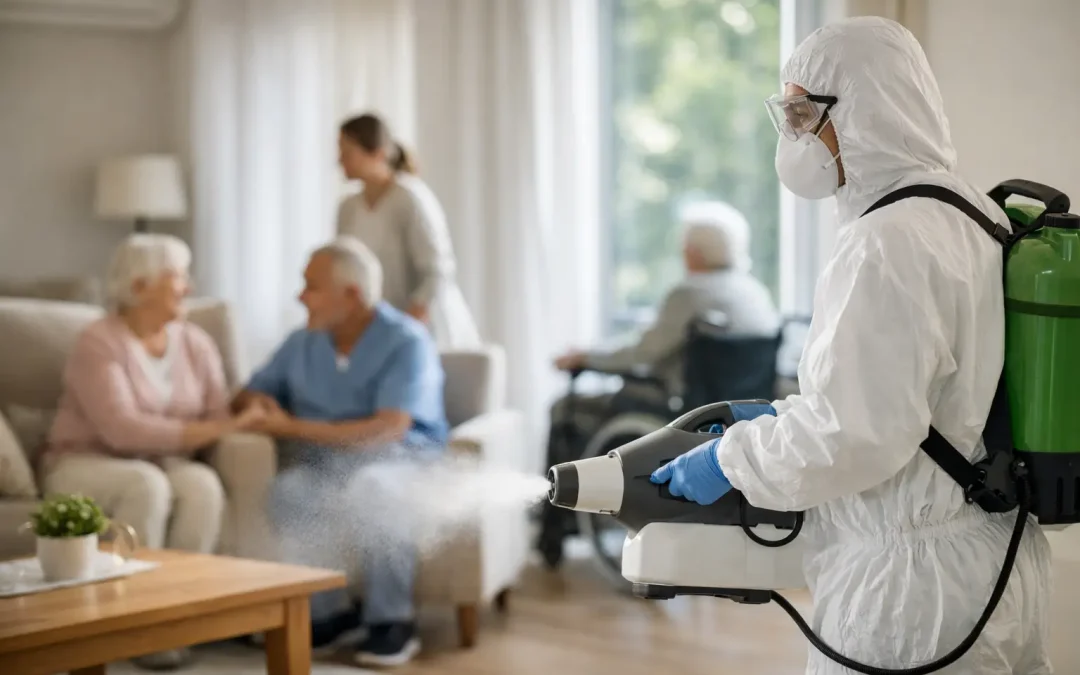
When a care home faces a suspected outbreak, a vomiting incident, or a confirmed infectious case, the issue is not simply cleanliness. It is resident safety, staff protection, family confidence, and the duty to respond quickly without causing unnecessary disruption. That is why disinfection services for care homes need to be approached as a specialist hygiene measure, not a basic cleaning task.
In care settings, the people most at risk are often the least able to protect themselves. Older residents, people with complex medical needs, and those living with reduced immunity are more vulnerable to the consequences of poor infection control. A visible clean may reassure at first glance, but in a regulated environment, surface appearance is only one part of the picture.
Why care homes need specialist disinfection services
Care homes deal with a level of day-to-day exposure that is very different from standard offices or retail spaces. Bedrooms, shared lounges, dining areas, bathrooms, treatment rooms, mobility aids, touchpoints, and staff welfare areas all carry different risk profiles. Add visiting relatives, agency staff, deliveries, and contractors, and there are many possible routes for cross-contamination.
Professional disinfection services for care homes are designed to reduce microbial contamination on surfaces and in high-contact areas after an incident or as part of a broader infection control plan. The aim is not to replace routine housekeeping. It is to provide an added layer of protection where standard cleaning may not be sufficient, particularly after known exposure to viruses, bacteria, or bodily fluid contamination.
This matters for operational reasons as much as clinical ones. A poorly managed hygiene incident can affect admissions, staffing, inspections, occupancy confidence, and reputation. In a sector where trust is central, a fast and documented response carries real value.
Cleaning and disinfection are not the same thing
This is one of the most common points of confusion. Cleaning removes visible dirt, debris, and some contaminants. Disinfection uses appropriate products and methods to reduce harmful microorganisms on treated surfaces. Both are necessary, but they are not interchangeable.
If a contaminated surface is disinfected without proper cleaning first, organic matter can reduce the effectiveness of the treatment. On the other hand, if an area is only cleaned after an infectious incident, there may still be an unacceptable level of microbial risk remaining. The right sequence, the right dwell time, and the right product choice all matter.
For care home managers, the practical takeaway is simple. Routine domestic cleaning supports daily hygiene standards. Specialist disinfection is the escalation step when risk is higher and reassurance needs to be backed by method, training, and records.
When disinfection services for care homes are most appropriate
Not every situation requires the same response. A full-site treatment may be excessive in one case and entirely justified in another. The correct scope depends on the nature of the incident, the areas affected, the vulnerability of residents, and whether the concern is isolated or wider.
A specialist service is often appropriate after confirmed or suspected infectious illness, outbreaks involving shared spaces, contamination from bodily fluids, deep room turnaround following illness, and enhanced hygiene measures after the death or discharge of a resident with an infectious condition. It can also be useful where management needs an independent, documented hygiene response following a complaint or internal risk review.
There is always a balance to strike. Over-treating can create avoidable disruption and cost. Under-treating can leave risk behind. An experienced provider should assess the situation properly rather than applying the same package to every site.
What a professional care home disinfection service should include
A credible service starts with assessment. The provider should understand the affected areas, occupancy considerations, resident vulnerability, and any practical limits around access, ventilation, and room downtime. In care environments, method matters because treatment has to fit around people, not the other way round.
Product selection is equally important. Disinfectants should be suitable for the target setting and used in line with the manufacturer instructions. Contact time, dilution, compatibility with surfaces, and safe application procedures all affect outcome. In a care home, this includes consideration for soft furnishings, bed frames, handrails, bathrooms, equipment surfaces, and communal touchpoints.
The application method may vary. Manual surface disinfection is often necessary for targeted treatment of touchpoints and contaminated areas. In some settings, additional room-based methods may support broader coverage. What works best depends on the incident and the environment. There is no serious one-size-fits-all answer.
Documentation should not be overlooked. Care homes operate under scrutiny from regulators, families, and internal governance processes. A professional service should provide clear records of what was treated, when it was treated, what products were used, and any recommendations for reoccupation or follow-on cleaning.
The importance of safe working in occupied environments
Care homes are sensitive sites. Residents may be living with dementia, respiratory conditions, limited mobility, or high anxiety around environmental changes. Staff are also under pressure, often managing infection control alongside medication, personal care, catering, and family communication.
That means disinfection work has to be planned carefully. Timing, resident movement, area isolation, signage, and re-entry instructions all need to be clear. A technically sound treatment that is poorly managed on site can still create avoidable stress.
This is where experienced commercial hygiene providers stand apart. They understand that discretion and site coordination are part of the service. The objective is to restore hygiene standards with minimal disruption and with a clear chain of communication for managers and frontline teams.
Compliance, reporting, and reassurance
In regulated settings, saying that an area has been sanitised is not enough. Decision-makers need evidence of what was done. That can support internal audits, infection control reviews, insurer queries, and external inspections where hygiene management forms part of wider governance.
For care homes, reporting helps in two ways. First, it gives managers practical records they can refer to after an incident. Second, it provides reassurance to stakeholders who need confidence that the response was proportionate and professionally handled.
For operators in Dublin and surrounding counties, this becomes especially useful when a provider can combine disinfection capability with a broader compliance-led approach to hygiene and environmental risk. In some settings, that may also include pest prevention, proofing, and monitoring, because hygiene issues rarely sit in isolation for long.
Choosing a provider for disinfection services for care homes
The cheapest quote is not always the safest choice. Care homes should be looking for a provider with commercial hygiene experience, clear risk awareness, suitable certifications, and the ability to work in sensitive, occupied premises. Responsiveness matters, but so does judgement.
Ask how the service is assessed, what treatment methods are used, what records are provided, and how resident safety is protected during the process. It is also worth asking whether the provider understands related environmental risks. In care settings, hygiene and pest control often overlap through waste handling, food service areas, laundry zones, and building vulnerabilities.
A dependable contractor should be able to explain the difference between emergency response work and planned preventative support. Both have value. The right choice depends on whether you are dealing with a one-off incident or trying to strengthen hygiene resilience over time.
A practical view for care home managers
Good disinfection is not about theatre. It is about reducing risk in a way that is safe, documented, and appropriate to the incident. Care homes need services that protect vulnerable people, support staff, and stand up to scrutiny when questions are asked later.
That usually means working with a provider that understands more than product labels. They need to understand regulated environments, infection-sensitive populations, and the operational reality of keeping a care home running while hygiene standards are protected.
Where that standard is met, disinfection becomes more than a reactive measure. It becomes part of a wider duty of care that residents, families, and staff can genuinely rely on.
When the pressure is on, the best hygiene response is the one that is calm, competent, and clearly evidenced.
Recent Comments