
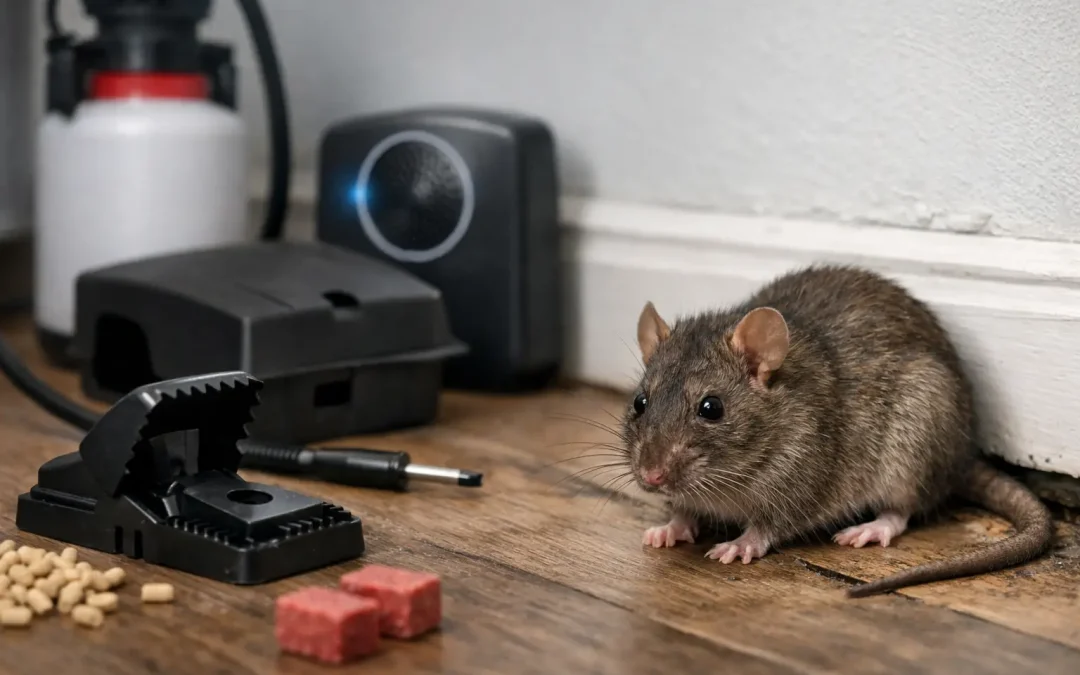
Scratching in the loft at night is rarely a problem that fixes itself. Rats settle quickly, breed fast, and contaminate the spaces they use. If you are looking for the best pest control for rats, the right answer is not a single product. It is a joined-up approach that removes the infestation, blocks access, and reduces the conditions that attracted them in the first place.
That matters whether you are a homeowner hearing movement behind a wall or a business dealing with risk to stock, hygiene, and reputation. Rats are adaptable. They exploit weak points in buildings, food sources, cluttered storage, drains, and neglected external areas. Effective control has to be thorough, safe, and realistic about how rats behave.
What is the best pest control for rats?
The best pest control for rats combines inspection, proofing, targeted treatment, and follow-up. If you only set traps without sealing entry points, the problem often returns. If you block access but leave an active infestation inside, rats may continue to cause damage for days or weeks. If you use poison carelessly, you can create risk for children, pets, wildlife, and staff.
This is why professional rat control usually starts with a site survey rather than a quick guess. The first task is to identify where rats are living, how they are travelling, and why they have chosen that location. In a domestic property, that may mean checking loft voids, kitchen kickboards, garages, sheds, drains, and external boundaries. In commercial settings, it can also include service ducts, delivery areas, waste zones, suspended ceilings, and perimeter access points.
Once the pattern is clear, treatment can be chosen properly. There is no benefit in using a broad, generic method when the infestation is being driven by one obvious issue such as a broken drain, poor waste control, or repeated access under a roller shutter.
Why rats are difficult to eliminate fully
Rats are cautious, but not for long when food and shelter are available. They squeeze through surprisingly small gaps, climb rough surfaces, gnaw through weaker materials, and follow consistent runs along walls and edges. That is why people often see only one rat and assume the problem is minor. In reality, visible activity is often only part of what is present.
They also create more than nuisance. Rat activity can damage insulation, wiring, packaging, timber, and stored goods. Droppings and urine affect hygiene standards, especially in food handling, care, logistics, and other regulated environments. For homeowners, the concern is often more immediate: contamination around food areas, unpleasant odours, disturbed sleep, and the worry of children or pets coming into contact with affected spaces.
The main rat control methods and where each fits
Traps can be highly effective when placed correctly and checked properly. They are often a strong option indoors, particularly where quick removal is needed and where poisoning is not suitable. The difficulty is placement. Rats avoid open areas and prefer to move along edges, behind objects, and through concealed routes. A poorly placed trap may catch nothing and create false confidence that the problem has eased.
Rodenticides have a place in pest control, but they need careful handling. In some environments they remain necessary, especially with larger infestations or external harbourage, yet they are not a casual DIY solution. Bait choice, placement, tamper-resistant stations, and monitoring all matter. Used badly, rodenticides can lead to bait shyness, prolonged infestations, and avoidable safety risks.
Proofing is often the most overlooked part of treatment, but in practice it is one of the most important. If a rat can re-enter through an unsealed gap around pipework, a damaged air brick, a broken drain, or a gap under a door, treatment becomes a temporary fix. Proofing may involve metal mesh, bristle strips, repair works, drain attention, and better storage or waste arrangements depending on the site.
Sanitation and housekeeping also make a measurable difference. This does not mean a property is dirty. Rats will exploit even well-kept premises if food and shelter are available. Still, unsecured bins, spilled feed, stacked materials, dense vegetation, and cluttered back-of-house areas can make control slower and recurrence more likely.
Signs that tell you the infestation is active
Fresh droppings are one of the clearest indicators, especially along walls, under sinks, in cupboards, in lofts, or near stored goods. Grease marks on regular run routes can appear where rats brush against surfaces. Gnawing on cables, timber, packaging, or plastic containers is another strong sign.
Noise matters too. Scratching, scurrying, and movement after dark often point to activity in lofts, wall cavities, under floorboards, or behind equipment. In some cases, a persistent musky odour develops in enclosed areas. Outside, burrows near sheds, decking, bin stores, and boundaries can indicate harbourage.
For commercial premises, the threshold for action is lower. One confirmed sign may be enough to require immediate intervention because the issue is not just removal. It is also documentation, hygiene protection, and risk control.
DIY or professional treatment?
For a very early issue, such as clear signs around one external area with no evidence inside, some property owners start with tidy-up work, waste control, and a small number of traps. That can help if the problem is limited and the access point is obvious.
The risk is that many infestations are not limited. By the time rats are heard or seen, they may already be established in more than one area. DIY treatment often misses nesting points, travel routes, and hidden entry gaps. It can also result in traps being set where rats never pass, or bait being used in the wrong place and ignored.
Professional treatment is usually the better option when there is repeat activity, signs indoors, concerns around pets or children, or any commercial risk. A trained technician will not just look for the rats. They will assess the structure, surrounding environment, hygiene pressures, and recurrence risk. That leads to a more complete result.
Best pest control for rats in homes
In domestic properties, the priority is normally fast control with minimal disruption. Treatment should focus on the rooms and voids affected, but also on the external source. A rat in the loft may have entered from overhanging structures, gaps in the roofline, or adjoining areas. A kitchen issue may trace back to drainage, pipe entry points, or nearby storage.
Safety is central in homes. Any control plan should take account of children, pets, and routine household use. That is one reason discreet, targeted treatment tends to be more effective than overuse of shop-bought products. Householders also benefit from practical advice on bin storage, bird feeder management, pet food, and garden harbourage, because these details often influence whether the problem returns.
Rat control for commercial premises
For businesses, the best solution is rarely a one-off reaction alone. An emergency visit may be necessary, but ongoing prevention is often what protects standards. Sectors such as catering, pharma, care homes, logistics, and waste handling face higher consequences from rat activity. Those consequences include failed audits, damaged stock, interrupted operations, and reputational harm.
Commercial pest control therefore needs more than bait boxes on a perimeter. It should include site-specific monitoring, documented findings, trend analysis where needed, and recommendations that support compliance and hygiene management. In regulated settings, reporting quality is not an extra. It is part of the service.
This is where a specialist provider can add real value, particularly across Dublin and surrounding counties where mixed property types, dense urban access routes, and high-volume commercial sites can make rodent pressure more persistent.
What a proper treatment plan should include
A credible rat control programme starts with inspection and evidence gathering. After that, treatment should be targeted to the level of infestation and the environment involved. Follow-up visits are important because one visit rarely tells the full story. Activity has to be checked, bait or traps reviewed where relevant, and proofing progress confirmed.
You should also expect practical recommendations, not vague advice. If external waste is attracting rodents, that should be addressed clearly. If drain defects are suspected, they should be flagged. If a building has repeated structural weaknesses, those need to be identified. Good pest control removes the immediate pressure and reduces the chance of another call-out a few weeks later.
Pest Pure Solutions approaches rat control in that way, combining eradication with proofing and hygiene-led prevention where needed. For homeowners that means a safer, clearer route to resolving the problem. For commercial clients, it supports continuity, standards, and confidence.
When to act immediately
If you have seen a rat indoors during daylight, found repeated fresh droppings, noticed gnawed wiring, or identified activity in a food area, it is time to act without delay. The same applies where there are vulnerable occupants, pets, or signs in a business with hygiene obligations.
Waiting usually makes treatment more involved. Rats do not stay neatly in one corner of a property, and small access issues can become established routes very quickly. Early action is not about alarm. It is about dealing with the problem while the options are broader and the disruption is lower.
The best pest control for rats is the approach that solves the whole problem, not just the most visible part of it. When treatment, proofing, and prevention work together, you are far more likely to get a lasting result and a property that feels secure again.
Recent Comments