
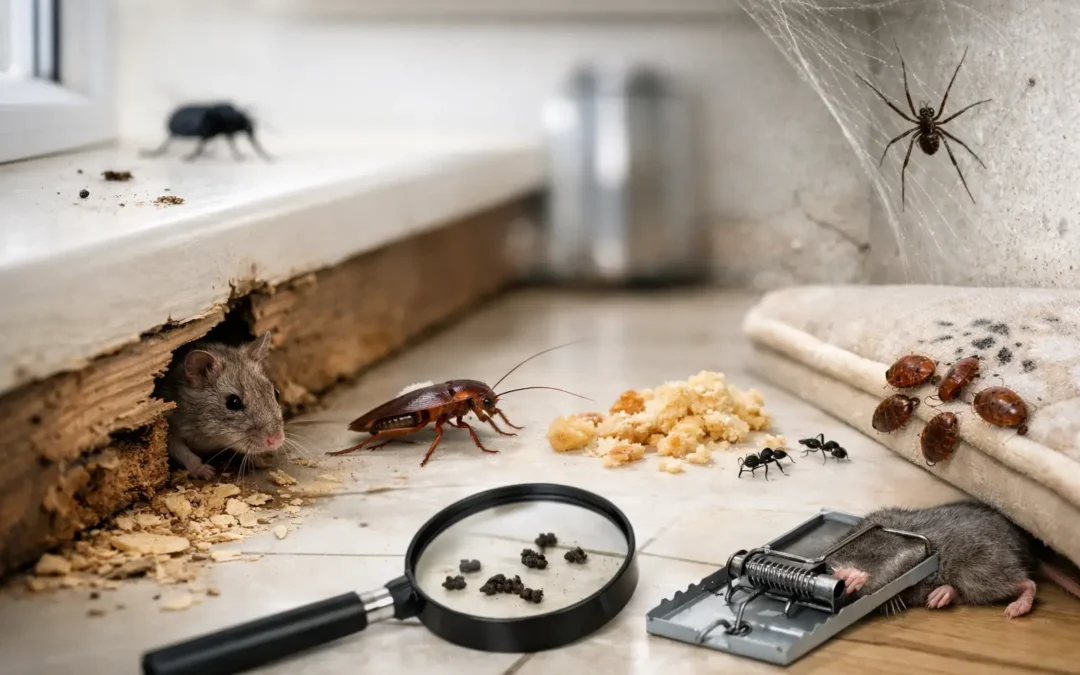
A pest problem rarely starts with a dramatic moment. More often, it begins with a faint scratching in the wall, a few unusual marks in a cupboard, or stock damage that does not make sense. Knowing the top signs of pest infestation early can make the difference between a straightforward treatment and a more serious hygiene, property, or compliance issue.
For homeowners, early detection helps protect food storage, soft furnishings, children, pets, and the fabric of the property. For commercial sites, the stakes are often higher. Pest activity can affect audits, customer confidence, product safety, staff welfare, and day-to-day operations. The signs are often similar, but the consequences can be very different.
Top signs of pest infestation to watch for
Some warning signs are obvious, while others are easy to dismiss at first. The key is to look at the overall pattern rather than any one clue in isolation.
Droppings in cupboards, corners, or plant rooms
Droppings are one of the clearest indicators of pest activity. Rodents leave small, dark pellets near food sources, along skirting boards, behind stored items, and in lofts or service voids. Cockroach droppings can look more like specks of black pepper or coffee grounds, especially around kitchen equipment and warm, hidden spaces.
Fresh droppings usually suggest current activity rather than an old issue. In commercial settings, finding droppings near stock, food preparation areas, or waste storage should be treated as urgent. In domestic properties, repeated sightings in the same area often point to an established route or harbourage rather than a one-off visitor.
Gnaw marks and damaged materials
Rodents need to gnaw constantly, so visible damage to wood, cable coverings, cardboard, food packaging, or plastic containers is a strong warning sign. This is not just a nuisance issue. Damaged wiring increases fire risk, and compromised packaging can create immediate hygiene concerns.
The location of the damage matters. Gnawing under sinks, behind appliances, in storage rooms, and around entry points often suggests mice or rats are nesting nearby. In warehouses, catering environments, and waste handling sites, this type of damage can spread quickly if routine monitoring is not in place.
Unusual smells that do not go away
Persistent odours often tell you more than people realise. Rodent infestations can create a strong musky smell, especially in enclosed spaces. Cockroach activity is also associated with an oily, unpleasant odour that tends to build as numbers increase. Dead pests in wall voids or ceiling spaces can produce a sudden and very distinct smell.
If cleaning does not remove the odour, and it keeps returning in the same room or section of a building, it is worth investigating properly. Smell alone will not identify the pest with certainty, but it is often an early sign that hidden activity is already established.
Scratching, scurrying, or movement at quiet times
Nocturnal pests are often heard before they are seen. Mice, rats, and even birds in roof spaces can create scratching, tapping, or movement sounds in walls, ceilings, and under floors. These noises are often most noticeable late at night, early in the morning, or when a building is otherwise quiet.
There is some nuance here. Buildings naturally make noise, especially in colder weather or older properties. But repeated sounds in the same area, particularly combined with droppings or damage, should not be ignored. In commercial premises, staff reports about sounds in suspended ceilings, storage areas, or service ducts should be logged and checked quickly.
Visible pest sightings are not the first stage
Seeing a live pest in daylight often means the problem is already more advanced. Many pests prefer to stay hidden, so visible activity can suggest overcrowding, disruption, or a large enough population that concealment is no longer possible.
Insects around windows, lights, or food areas
Flying insects such as moths, flies, or wasps are usually noticed quickly, but crawling insects can be missed until numbers rise. Ant trails, cockroach sightings, silverfish in bathrooms, or fleas in soft furnishings are all signs that treatment may be needed.
The context matters. One wasp indoors in summer may be incidental. Repeated wasp activity around rooflines or loft spaces may indicate a nest. A few flies around an open door may be expected in warm weather. Ongoing fly presence around bins, drains, or food handling areas usually points to a source that needs professional attention.
Rodents seen during the day
Daytime rodent sightings should always be taken seriously. Mice are curious and may be seen briefly at any time, but rats in particular are more commonly active when human movement is low. If they are being seen in open areas during the day, the infestation may be significant.
For businesses, this becomes a reputation and audit issue as much as a pest control issue. For households, it often means there is already nesting activity within the building or very close to it.
Property damage and contamination signs
Some of the top signs of pest infestation are less about the pest itself and more about what it leaves behind.
Nesting materials and disturbed insulation
Rodents use shredded paper, fabric, loft insulation, and packaging to build nests. If materials appear pulled apart or moved into hidden corners, behind appliances, in riser cupboards, or inside loft spaces, there may be active nesting nearby.
This is one reason infestations can escalate quietly. By the time nesting is discovered, breeding may already be underway. In commercial buildings with complex layouts, false ceilings, plant rooms, and storage voids can allow pests to remain undisturbed for long periods.
Grease marks and pest tracks
Rats and mice often travel the same routes repeatedly. Over time, this can leave dark smear marks along walls, pipe runs, or skirting boards caused by the oils in their fur. In dusty environments, you may also see tracks or tail marks.
These route markers are useful because they help identify where proofing or control measures should focus. It is not always enough to remove the pest. If the access point remains open, the issue can return.
Bites, skin irritation, or marks on bedding
Bed bugs, fleas, and some mites are usually identified through the effects they have on people rather than through direct sightings. Bites are not always conclusive on their own, as skin reactions vary and can be mistaken for other causes. However, when irritation appears repeatedly, particularly after sleeping or using specific furniture, it is sensible to investigate.
Small blood spots on bedding, dark spotting around mattress seams, or flea activity around pet resting areas can all indicate a hidden infestation. These cases need careful assessment because over-the-counter treatment often misses the root of the problem.
Why early action matters
Pests do not stay neatly in one place. They follow heat, shelter, water, and food, and once those conditions exist, the problem can spread through adjoining rooms, neighbouring units, or larger sections of a site.
For domestic customers, acting early usually means less disruption, less property damage, and a faster return to normal. For commercial customers, early action helps protect hygiene standards, prevent stock loss, reduce downtime, and support compliance requirements. This is especially relevant in regulated sectors where documented monitoring and corrective action are part of normal operational oversight.
There is also a practical point that is often overlooked. The longer pest activity continues, the harder it can be to identify the full extent of it. What begins as a rodent issue may expose proofing gaps, waste handling weaknesses, drainage faults, or cleaning blind spots that need to be addressed at the same time.
When to call a professional
If you have one isolated sign with no repeat pattern, monitoring the area may be reasonable. If you have multiple signs, repeated sightings, contamination risk, or any concern involving food, children, vulnerable residents, patients, tenants, or commercial compliance, it is best to bring in professional support promptly.
A proper inspection should do more than confirm the pest. It should identify likely entry points, nesting areas, contributing hygiene factors, and the most suitable treatment plan for the type of property. In some cases, eradication alone is not enough. Proofing, sanitation advice, monitoring, and reporting may also be needed to prevent recurrence.
That is particularly true in busy homes and high-risk commercial environments across Dublin and the surrounding counties, where pest pressure can increase due to density, waste activity, shared structures, and constant movement of goods.
Pest Pure Solutions works with both homeowners and businesses where fast action, discretion, and reliable follow-through matter. The right response is rarely just about removing what you can see. It is about restoring control of the environment that allowed the problem to start.
If something feels off in your property, trust that instinct and check it properly. The earlier you act, the more options you usually have, and the easier it is to protect the people, products, and spaces that matter most.
Recent Comments