
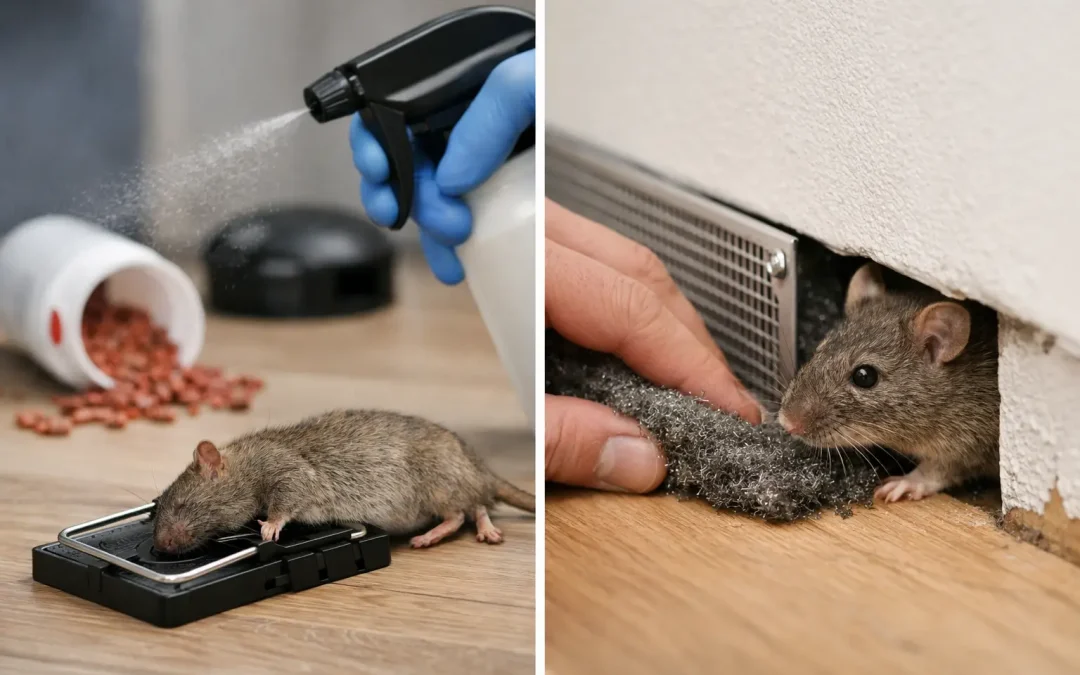
A scratching sound in a ceiling void, chewed food packaging or droppings beneath a sink calls for more than a quick fix. The question of rodent control vs rodent proofing is not about choosing one service over the other. It is about identifying what is happening at the property, removing the immediate risk and preventing the same issue from returning.
For a homeowner, that may mean dealing safely with mice in the kitchen before closing gaps around pipework. For a business, particularly in food, care, logistics or pharmaceutical settings, it can mean a documented programme that protects hygiene standards, stock, reputation and compliance. The right approach depends on the evidence, the building and the level of risk.
What is rodent control?
Rodent control is the process of reducing or eliminating an active rodent population. It is the response needed when rats or mice are already present, nesting, feeding or moving through a building.
A professional visit begins with inspection, rather than simply placing bait. Signs such as droppings, grease marks, gnawing damage, burrows, tracks and disturbed insulation help establish the species, likely numbers, travel routes and harbourage points. Rats and mice behave differently, so a treatment plan must reflect the activity found on site.
Control measures may include secured bait stations, traps, monitoring devices and the removal of food or harbourage that is supporting the infestation. The method should be appropriate to the environment. A family home with children or pets needs careful product placement and clear safety advice. A catering premises or care home requires similarly careful treatment, alongside records that demonstrate responsible pest management.
The purpose is to bring current activity under control quickly and safely. However, treatment alone may not solve the reason rodents entered in the first place.
When control is the priority
Active control should come first where there is fresh evidence of rodent activity, visible rats or mice, contamination of food areas, damage to cables or a risk to vulnerable occupants. Delaying treatment while focusing only on repairs can allow the population to grow and spread further through wall cavities, ceilings, stores or external areas.
In commercial premises, prompt control is particularly critical where an incident may affect audit results, customer confidence or operational continuity. A well-managed response includes treatment records, inspection findings and practical recommendations for corrective action.
What is rodent proofing?
Rodent proofing, often called exclusion, is the work carried out to make a property harder for rodents to enter, move through and nest within. It addresses access points and building defects rather than directly removing the rodents already inside.
Mice can pass through gaps of around 6mm, while rats can exploit larger cracks, damaged vents, broken drains and poorly sealed service penetrations. Common entry points include gaps around utility pipes, ill-fitting doors, damaged air bricks, openings beneath sheds, broken roof edges and unsealed voids around cable routes.
Proofing can involve fitting brush strips to doors, sealing suitable gaps with durable materials, repairing damaged vent covers, protecting drain openings and improving the condition of external structures. It should not block necessary ventilation or create a new moisture problem. This is why an informed survey matters: a repair that looks simple can affect airflow, fire safety or building maintenance if it is carried out without care.
Proofing is prevention, not a substitute for treatment
The main difference in rodent control vs rodent proofing is timing and purpose. Control manages the infestation that is present now. Proofing reduces the opportunity for the next infestation to begin.
If a property has no current rodent signs but has obvious gaps around pipes or damaged access covers, proofing may be the most sensible first step. If rodents are active inside, exclusion work is normally planned alongside or following treatment. Sealing every route immediately can sometimes trap rodents within parts of the building, creating odours, damage or new activity in occupied spaces.
A professional technician will assess the sequence carefully. In some situations, selected access points can be proofed straight away while controlled exit routes and monitoring remain in place. In others, eradication and follow-up inspections should come before final sealing work.
Why the combined approach delivers better results
Rodent infestations are rarely caused by one issue alone. Access, food, shelter and low disturbance often work together. A baiting programme may reduce numbers, but an open gap beneath a rear door can allow new mice to enter the following week. Equally, a fully proofed building may still experience activity if rodents were already established in ceiling voids or if food waste is readily available nearby.
The strongest approach combines treatment with exclusion and good site hygiene. This is often described as integrated pest management: using inspection, targeted control, proofing, sanitation and ongoing monitoring to manage the root cause as well as the immediate problem.
For homes, the practical focus may be food stored in sealed containers, bins kept closed, clutter reduced in garages or sheds, and repairs made around kitchens and utility areas. Bird feed, pet food and overflowing refuse can also attract rodents if left accessible outdoors.
For businesses, the focus is broader. Waste storage, delivery doors, staff habits, landscaping, drainage, building fabric and supplier activity can all influence rodent pressure. A logistics yard with frequent open loading bays has different risks from a pharmacy store room or a care home kitchen. The treatment plan should reflect that reality rather than rely on a standard set of bait boxes.
Choosing the right response for your property
A small number of mouse droppings in a domestic cupboard may be resolved with a targeted treatment and a few specific repairs. Repeated signs, noises in several rooms or activity in a loft suggest a more detailed inspection is needed. Rodent activity can cause contamination, damage insulation and, in some cases, create electrical safety concerns through gnawing.
For commercial sites, one-off treatment may be suitable for a contained incident, but higher-risk or regulated environments generally benefit from scheduled inspections. Regular servicing provides trend information, checks proofing remains effective and creates a clear record of actions taken. This is valuable where hygiene and due diligence must be demonstrated during internal or external audits.
A good provider should explain the evidence found, identify likely entry points and set out what happens next. You should know whether a follow-up visit is required, what actions the occupier or facilities team needs to take and how success will be measured. Empty assurances are not enough when an infestation affects a home, workplace or sensitive site.
Common mistakes that allow rodents back in
The most frequent mistake is treating rodent sightings as isolated events. A single mouse can indicate an accessible food source or a gap in the building envelope. Another is relying on shop-bought bait without locating the source of activity. Poorly placed products may not address the infestation and can introduce avoidable risks around children, pets and non-target wildlife.
It is also easy to overlook external conditions. Overgrown vegetation against walls, stacked materials, leaking bins and damaged drainage can all provide cover or food close to the building. Proofing works best when the surrounding area is considered as well as the room where the signs were found.
For commercial teams, inconsistent reporting is another weakness. If findings from inspections are not recorded and assigned, repairs can be delayed until a minor vulnerability becomes a recurring issue. Clear reporting turns pest management into a controlled maintenance process rather than an emergency-only response.
When to call a professional
Professional support is advisable where there are repeated signs, activity in difficult-to-reach areas, evidence of rats, contamination in food-handling areas or a need for documented compliance reporting. It is also the safer option where children, pets, residents or customers may be exposed to control products.
Pest Pure Solutions assesses both the active infestation and the conditions that support it, allowing treatment and proofing recommendations to work together. For properties across Dublin and the surrounding counties, this means a response designed around the building, the risk level and the practical measures needed to keep rodents out.
A rodent-free property is not achieved by one product or one repair. It is maintained by acting early, closing the vulnerabilities that matter and checking that the conditions which attracted rodents have not returned.
Recent Comments