
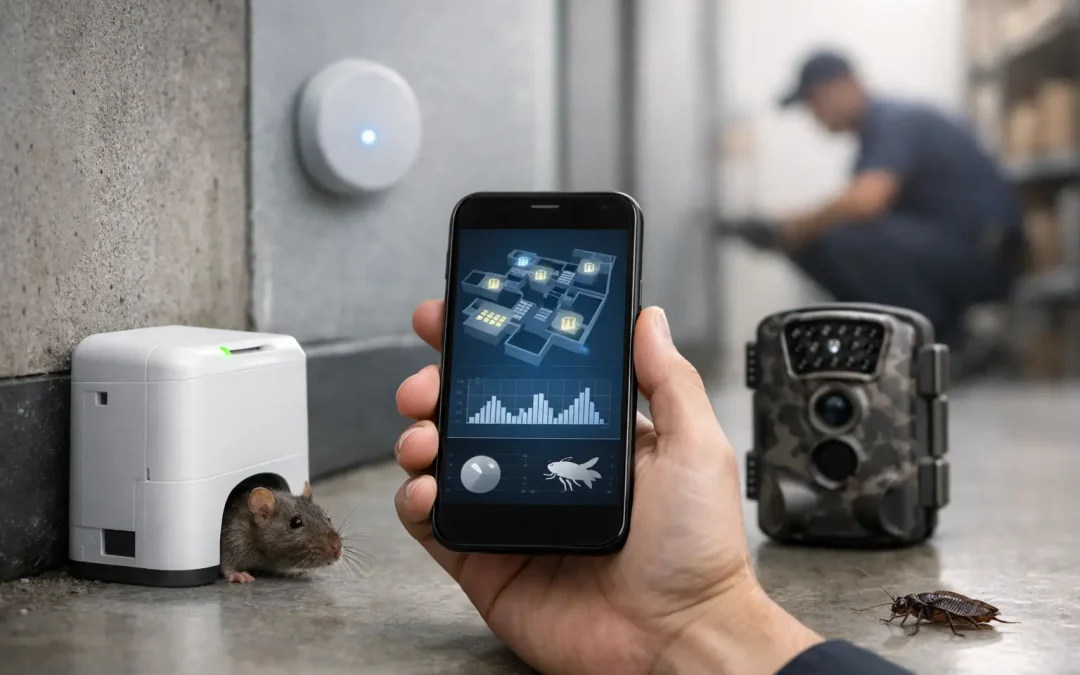
A mouse caught on a trap is evidence of a problem. A sensor showing repeated rodent activity beside a loading bay at 2am is early warning that allows the problem to be addressed before stock, hygiene standards or an audit are affected. That distinction is driving the most useful smart pest monitoring trends across homes, food premises, logistics sites, care settings and regulated facilities.
For property owners, connected monitoring can make pest management faster and less disruptive. For commercial operators, it can strengthen traceability, support inspection records and help identify patterns that routine checks alone may miss. The technology is valuable, but it is not a substitute for experienced inspection, proofing and treatment. Its real benefit comes from combining accurate data with professional judgement.
Smart pest monitoring trends are becoming more practical
Smart monitoring is no longer limited to large, high-security sites. Connected devices are increasingly being used where pest activity needs to be detected promptly, particularly for rodents and flying insects. These systems can report activity, device status or environmental changes to a central platform, allowing pest management teams to prioritise the locations that need attention.
The strongest trend is not simply putting more devices on a site. It is using monitoring information to make each visit more targeted. Rather than treating every bait station, trap or fly control unit as if it carries equal risk, technicians can focus on evidence of activity and investigate the conditions causing it.
That may mean examining a damaged door seal near a warehouse, poor waste handling behind a catering unit, gaps around service penetrations in a home, or harbourage close to a warm plant room. Monitoring identifies where to look. A trained professional determines why the issue is occurring and what action will prevent a repeat.
Connected rodent monitoring for earlier intervention
Rodent monitoring remains the most established use of smart technology. Sensors can indicate when a trap has activated, when a device has been disturbed or when there is repeated movement in a particular area. This enables a quicker response than waiting for a scheduled inspection, which matters where rodents can contaminate goods, damage cables and spread pathogens.
For a pharmaceutical, food, care home or logistics environment, speed is only part of the advantage. Time-stamped records can show when activity was detected, how it was investigated and what corrective action followed. These records can support site hygiene procedures and provide clearer evidence for internal reviews or external audits.
However, an alert does not automatically tell the full story. A single catch may indicate a local access point. Several activations in one zone may suggest a wider issue with proofing, nearby vegetation, waste storage or building fabric. Interpretation matters, particularly when decisions affect operational areas, sensitive residents or stored products.
Better data, not more meaningless data
Modern systems can produce a large volume of information. The useful trend is towards clearer reporting that turns device activity into a practical risk picture. Facility managers need to know which area requires action, what the likely cause is, whether the issue is escalating and who is responsible for the next step.
A well-managed programme should connect findings to corrective actions. If activity is repeatedly recorded near a delivery entrance, the report should not stop at a graph or device number. It should recommend measures such as repairing brush strips, reviewing door-opening practices, improving external waste controls or repositioning monitoring points.
This is particularly valuable in high-governance sectors, where a pest control report forms part of a wider quality and hygiene record. Detailed bio-reports, trend analysis and documented site recommendations give compliance teams more than proof that a technician attended. They provide a defensible account of how risk is being managed.
The shift towards prevention-led pest management
Smart monitoring supports a broader change in professional pest control: less reliance on reactive treatment and greater emphasis on prevention. A call-out will always be necessary when a homeowner finds rats in a loft or a business discovers cockroaches in a food preparation area. Yet ongoing monitoring can reduce the chance that small signs become a serious infestation.
Prevention-led programmes usually bring together monitoring, physical proofing, good sanitation and appropriate treatment where required. Technology can improve the monitoring element, but it cannot correct the conditions that attract pests. Food debris, overflowing bins, standing water, gaps beneath doors and cluttered storage areas still create opportunity.
For domestic customers, this may be as straightforward as monitoring a known rodent entry route after proofing work has been completed. For a commercial premises, it may involve reviewing device activity alongside cleaning schedules, waste collections, deliveries and seasonal pressures. The right approach depends on the building, the pest species and the consequences of an incident.
Environmental monitoring can add useful context
Some smart systems can track conditions such as temperature, humidity or door activity. On their own, these readings do not confirm pests. Used carefully, they can help explain why certain areas become more attractive to insects or rodents.
For example, high humidity and hidden moisture can contribute to conditions favourable for pests such as silverfish and cockroaches. Frequent access through a warehouse door can raise the risk of flying insects or rodents entering from outside. Monitoring these factors alongside pest evidence gives a clearer basis for prevention.
There is a trade-off. Not every site needs a highly connected system, and unnecessary technology can add cost without improving outcomes. A small residential property with a straightforward wasp nest does not require the same monitoring plan as a multi-unit care facility or distribution centre. The technology should match the risk, not become a feature for its own sake.
Digital records are changing client expectations
Paper service reports still have a place, but digital records are increasingly expected by commercial clients. They make it easier to review visit history, find previous recommendations, track open actions and share information with facilities, quality or operations teams.
For businesses managing several locations, central visibility is especially useful. A manager can compare recurring issues across sites and identify whether a pattern is linked to waste management, building maintenance, supplier access or local environmental factors. This can support better budgeting and more focused preventative work.
Digital reporting also improves accountability. Recommendations should be clear, prioritised and assigned where possible. Pest control is most effective when the service provider and site team both understand their responsibilities. A technician may identify an entry point, but the repair must be completed promptly if the risk is to be removed.
Pest Pure Solutions uses tailored service planning and in-depth reporting to help clients move from isolated treatments to practical, documented pest prevention. For regulated businesses, that means pest management can sit properly within wider hygiene, quality and compliance controls.
What smart monitoring cannot replace
The growing use of sensors and reporting platforms should not create a false sense of security. Devices can fail, lose connectivity, be placed poorly or capture activity that requires careful interpretation. A system is only as effective as its installation, maintenance and the response process behind it.
Professional site knowledge remains essential. An experienced technician understands rodent behaviour, insect life cycles, harbourage conditions and the risks associated with different environments. They can recognise when a sensor alert is isolated, when it points to a structural weakness and when urgent treatment is needed.
This is also why integrated pest management remains the right framework. Monitoring should be combined with inspection, sanitation advice, exclusion measures and responsible treatment methods. In sensitive settings, the choice of control measure must consider people, pets, products, residents and business operations, not just the presence of a pest.
Choosing the right monitoring approach
Before investing in smart monitoring, homeowners and businesses should start with the problem they need to solve. Is there a history of rodent activity outside normal service hours? Does the site need stronger audit evidence? Are flying insects affecting a customer-facing area? Or is the priority to verify that proofing work has stopped activity?
A professional assessment can establish whether connected monitoring will provide genuine value. It should consider the pest risk, layout, access limitations, hygiene requirements, operating hours and reporting needs. In Dublin and surrounding counties, this is particularly relevant for premises where busy deliveries, dense urban surroundings or mixed-use buildings can increase pest pressure.
The best systems are quiet, targeted and backed by action. They help detect risk earlier, but their value is measured by cleaner conditions, fewer incidents, stronger records and a property that is harder for pests to enter and inhabit. When monitoring is paired with skilled inspection and preventative work, it becomes a practical safeguard rather than another dashboard to manage.
Recent Comments