
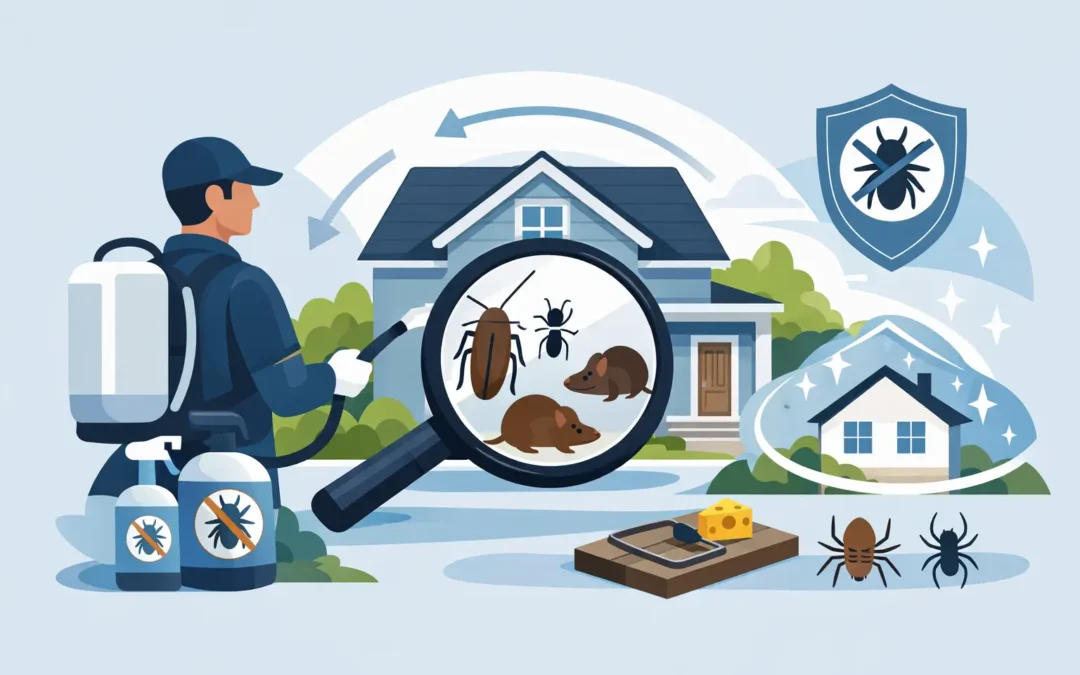
A few ants in the kitchen or scratching in the loft rarely stay small problems for long. If you are asking how does home pest control work, the short answer is that effective treatment is not just about killing pests on sight. It is a planned process of inspection, identification, targeted treatment, proofing and follow-up, designed to remove the immediate issue and reduce the chance of it returning.
That matters because different pests behave in very different ways. Mice can enter through gaps no wider than a fingertip. Bed bugs hide in seams, joints and cracks close to where people sleep. Wasps may appear suddenly in high numbers once a nest is active. A proper home pest control service works by understanding that behaviour first, then choosing the safest and most effective response for the property, the occupants and any pets.
How does home pest control work in practice?
In most homes, pest control starts with a survey. This is the stage that tells the technician what pest is present, how severe the activity is, where it is coming from and what conditions are allowing it to continue. Without that first step, treatment can become guesswork.
A good inspection looks beyond the obvious signs. Droppings, gnaw marks, nesting material, grease trails, insect casings, damage to fabrics and unusual smells all help build the picture. The technician will usually assess likely entry points, food sources, moisture issues and hidden harbourage areas as well. In a domestic setting, that might include kitchens, utility rooms, loft spaces, under-sink cupboards, air vents and the perimeter of the building.
Once the pest has been identified, the treatment plan is matched to the problem. This is where professional pest control differs sharply from a DIY spray picked up in a shop. The objective is not to apply as much product as possible. It is to use the correct method in the correct place, with proper regard for safety, hygiene and long-term control.
The stages of an effective treatment
Most professional home pest control work follows the same core stages, although the details vary depending on the pest.
Inspection and identification
This is the decision-making stage. Rodents, crawling insects and flying insects all require different control measures, and even closely related pests can call for different approaches. For example, dealing with Pharaoh ants is not the same as dealing with common black ants, and treating a wasp nest is very different from dealing with cluster flies in a loft.
Accurate identification prevents wasted time and unnecessary treatments. It also helps determine whether the problem is active, seasonal or long established.
Targeted treatment
Treatment may involve baiting, trapping, insecticidal products, dust application, physical nest treatment or a combination of methods. In rodent control, secure bait stations and traps are often used in specific locations based on movement patterns. For insects such as cockroaches or ants, treatment may focus on harbourage areas and travel routes rather than open surfaces.
For bed bugs, a more detailed and methodical process is usually required. Rooms may need preparation before treatment, and follow-up visits are often necessary because eggs and hidden insects can survive an initial visit if the programme is not thorough enough.
Proofing and prevention
If the access point remains open, the problem can return even after a successful treatment. That is why proofing matters. Home pest control often includes advice or practical measures to block entry routes, reduce attractants and make the environment less favourable to pests.
This could mean sealing gaps around pipes, improving door seals, repairing air bricks with suitable mesh, addressing food storage, reducing clutter, correcting moisture problems or managing external waste areas. In many cases, this preventive work is what makes the difference between temporary relief and lasting control.
Monitoring and follow-up
Some infestations can be resolved in one visit. Others cannot, and it is better to be clear about that from the start. Rodent activity may need monitoring over time to confirm feeding has stopped and entry points are secure. Bed bug work commonly needs multiple visits. Larger infestations of cockroaches or moths may also require staged treatment.
Follow-up is not a sign that the first visit failed. It is often part of a proper programme. Good pest control is measured by results, not by how quickly someone leaves the property.
Why different pests need different methods
One reason people ask how does home pest control work is that they expect a single treatment to cover everything. In reality, pest control is highly pest-specific.
Mice and rats are controlled by locating runs, nesting points and entry routes. The focus is on safe placement of control measures and making sure reinfestation is less likely. If food is freely available and proofing is poor, control becomes much more difficult.
Wasps are usually dealt with by treating the nest directly. Timing is important, and nest location matters. A nest in a shed is straightforward compared with one in a cavity wall or roofline, where access and safety become bigger considerations.
Ant control depends on the species and the nesting pattern. Surface spraying may kill visible workers, but if the colony remains untouched the problem often continues. Professional treatment aims to reach the source.
Bed bugs require patience and precision. They are not linked to poor housekeeping, and that is worth saying clearly. They spread by travel, luggage, furniture and close human movement. Control usually involves careful inspection, detailed treatment and clear preparation instructions for the household.
Bird-related issues are different again. In those cases, control is often less about eradication and more about proofing, exclusion and hygiene management around nesting and fouling.
Is home pest control safe?
Safety is one of the main reasons homeowners call in a professional. When carried out correctly, home pest control is designed to manage risk as well as eliminate the infestation. That includes choosing approved products, applying them in a controlled way and giving clear guidance to the people living in the property.
The safest treatment is not always the one with the least visible intervention. Sometimes a targeted professional application is safer than repeated DIY attempts, especially where children, pets or food preparation areas are involved. Overuse of shop-bought products can spread contamination, drive pests into new areas or make monitoring harder.
A reputable provider will explain what is being used, where it is being used and whether any temporary precautions are needed. In many cases, disruption is minimal. It depends on the pest, the treatment method and the scale of the problem.
What homeowners can do before and after treatment
Professional treatment works best when the household plays its part. Preparation may include clearing under sinks, emptying affected cupboards, vacuuming specific areas, laundering bedding at the right temperature or making loft and utility spaces accessible.
After treatment, some behaviour changes may be recommended. Food may need to be stored more securely. Pet food might need to be lifted overnight. Outdoor bins may need better management. If moisture is attracting silverfish or insects, improving ventilation can make a significant difference.
That does not mean the homeowner caused the problem. Pests can affect very clean, well-kept homes. But practical changes often support the treatment and help stop the issue becoming cyclical.
When one-off treatment is enough, and when it is not
For a straightforward wasp nest or a localised ant problem, one visit may be enough. For rodents, bed bugs, persistent cockroaches or repeat infestations linked to structural access points, a more managed programme is often the better option.
This is especially relevant for landlords, managed properties and homes near recurring risk factors such as older drainage, adjoining buildings or heavy bird activity. In those cases, the question is not only how to remove the current pest issue, but how to reduce repeat call-outs and protect the condition of the property over time.
For households and businesses across Dublin and the surrounding counties, that is where an experienced provider such as Pest Pure Solutions brings value – not simply by treating the visible problem, but by identifying the cause, documenting the risk and recommending practical next steps.
The real purpose of home pest control
At its best, home pest control is a hygiene and property protection service, not just an emergency response. It protects food areas, sleeping areas, insulation, wiring, soft furnishings and the general sense of comfort people expect in their own home. It also helps prevent a small issue becoming a larger and more expensive one.
The most effective treatments are rarely the most dramatic. They are the ones built on careful inspection, the right technical method and sensible prevention. If you are dealing with pest activity at home, the useful question is not whether something can be sprayed today. It is whether the cause can be found, treated properly and kept from coming back.
Recent Comments