
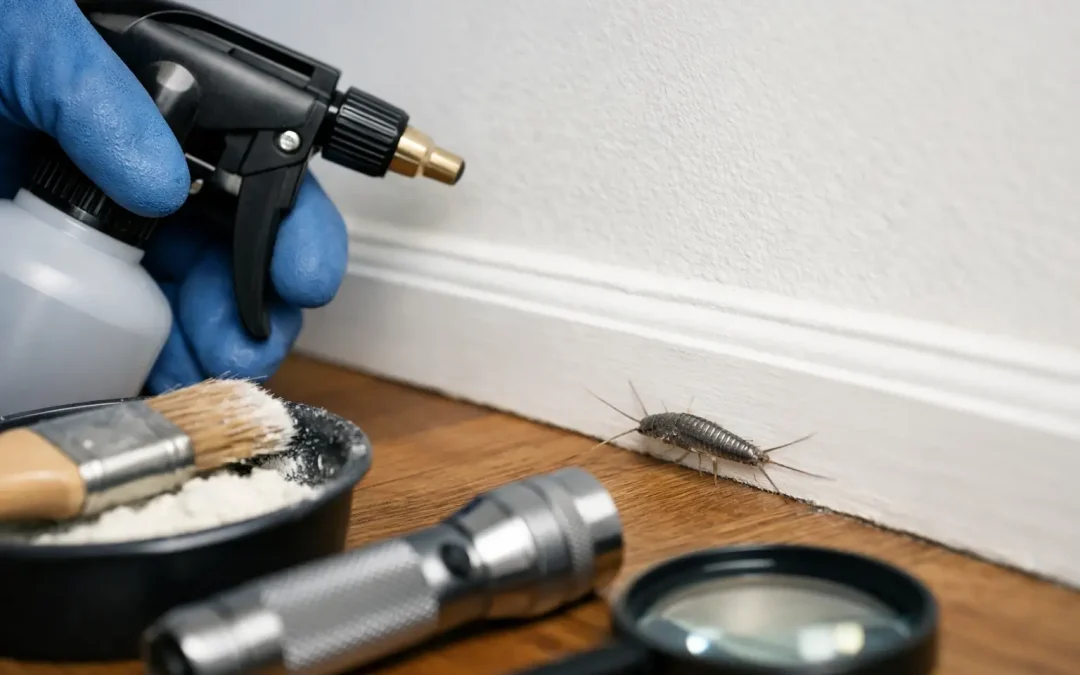
That papery, dusty smell in a bathroom cupboard or behind stored boxes in the loft often has a cause. If you are wondering how to get rid of silverfish, the answer is usually not a single spray or trap. It takes a proper combination of moisture control, cleaning, proofing and, in more persistent cases, professional treatment.
Silverfish are small, wingless insects that favour dark, humid areas and feed on starchy materials. In homes, that can mean wallpaper paste, paper, cardboard, fabrics, book bindings and food debris. In commercial settings, especially where hygiene and stock condition matter, they can become a nuisance that signals a wider moisture or housekeeping issue.
Why silverfish keep appearing
Silverfish do not usually arrive in large numbers overnight. More often, they build up slowly in places that give them exactly what they need – damp, shelter and access to food sources. Bathrooms, kitchens, utility rooms, airing cupboards, basements, lofts and understairs storage are common hotspots. They also turn up in blocks of flats, older properties and buildings with limited ventilation.
For businesses, silverfish are often found in storerooms, washroom areas, plant rooms, archives, staff facilities and buildings with consistent warmth and humidity. They are not as high profile as rodents or cockroaches, but they still matter. In regulated or customer-facing environments, any pest activity can raise hygiene concerns and damage confidence.
One of the main reasons DIY efforts fail is that people treat the insect they can see, rather than the conditions allowing the infestation to continue. If the area stays damp and undisturbed, silverfish usually return.
How to get rid of silverfish step by step
The most effective approach is to make the environment less suitable for them. Chemical treatment can help, but it works best when the underlying causes are dealt with at the same time.
Reduce moisture first
Moisture control is the priority. Silverfish thrive in humid conditions, so improving ventilation often makes a noticeable difference. Use extractor fans properly in bathrooms and kitchens, open windows when practical, and deal with condensation before it becomes an ongoing pattern. If a room regularly feels damp, a dehumidifier may help.
Leaks should be repaired promptly, especially around sinks, baths, washing machines and pipework. Even a small hidden leak behind units or in a service void can sustain activity for a long time. In older buildings, it is also worth checking for damp patches around skirting boards, peeling wallpaper or musty odours.
Remove food sources and harbourage
Silverfish are attracted to more than crumbs. Paper stacks, cardboard boxes, old magazines, stored fabrics and dust build-up can all support them. Decluttering helps, particularly in cupboards, loft spaces and storage rooms where items are left untouched for long periods.
Vacuum thoroughly along skirting boards, under appliances, inside cupboards and around cracks where dust gathers. In domestic kitchens and pantries, keep dry foods sealed in proper containers rather than thin paper or opened packets. In commercial premises, stock should be rotated, spillages cleaned quickly and storage kept off the floor where possible.
This does not mean every sighting points to poor hygiene. Sometimes silverfish are simply exploiting hidden moisture in an otherwise well-kept property. Still, good housekeeping reduces their options and improves the effectiveness of any treatment.
Seal entry points and hiding places
Silverfish are small and able to slip into narrow gaps around pipe penetrations, skirting, wall cracks and loose fittings. Sealing these areas can limit movement and reduce the number of protected harbourages. Pay particular attention to bathrooms, kitchen units, utility areas and service points where pipes enter walls.
For landlords and facilities managers, this is especially important in multi-room or multi-unit properties. If insects are moving through service ducts, ceiling voids or wall cavities, isolated treatment in one room may only give short-term relief.
What works and what tends not to
There are plenty of shop-bought products marketed for crawling insects, but silverfish can be stubborn. Sticky traps can help monitor activity and show where they are most active, but traps alone rarely solve the issue. Aerosol sprays may kill insects on contact, yet they often miss hidden harbourages and do little to address eggs or the conditions behind the infestation.
Insecticidal dusts and residual treatments can be effective when placed correctly in cracks, voids and known harbourage areas. The difficulty is access and accuracy. Overusing the wrong product in the wrong place can be ineffective and, in some settings, inappropriate. That is especially true in food handling sites, care environments or regulated workplaces where treatment has to be carried out safely and with proper documentation.
Natural remedies are often mentioned, including cedar, citrus or diatomaceous powders. Some may have a limited repellent effect or help in very light activity, but they are not usually reliable for established infestations. If silverfish are repeatedly appearing in multiple rooms, the issue is normally bigger than a home remedy can handle.
When silverfish become a bigger problem
A few silverfish in a bathroom may be manageable with environmental changes. Repeated sightings across several areas are different. If you are seeing them in bedrooms, kitchens, hall cupboards, around books or stored clothing, there may be a larger population hidden in wall voids, under flooring or behind fitted units.
For commercial sites, the threshold for action is lower. A silverfish issue in a private home is unpleasant. In a care home, catering premises, archive room, washroom facility or pharmaceutical setting, it can become a hygiene, audit and reputational problem. Pest management in these environments needs to go beyond quick eradication. It has to identify root causes, record findings and support long-term prevention.
This is where a professional survey adds value. A trained technician will not only identify the insect correctly, but also assess moisture sources, harbourage points, structural risks and the level of infestation. That matters because silverfish are sometimes confused with other moisture-related pests, and misidentification leads to wasted time and poor treatment choices.
Professional treatment for silverfish
Professional silverfish control usually combines targeted insecticide application with practical advice on housekeeping, proofing and moisture reduction. Depending on the property, treatment may include residual sprays, specialist dust application into cracks and voids, and monitoring to confirm whether activity has stopped.
The right approach depends on the setting. A family home may need focused treatment in bathrooms, kitchen voids and storage spaces. A commercial building may require a broader inspection of service risers, stock rooms, suspended ceilings, locker areas and washrooms, followed by scheduled follow-up visits. In higher-governance sectors, reporting and evidence of control measures are often as important as the treatment itself.
If activity is linked to damp or building defects, pest control should sit alongside maintenance action. Treatment can reduce the current infestation, but if leaks, condensation or poor airflow remain, there is a real chance of recurrence.
How to stop silverfish coming back
Long-term control is about making your property less attractive to them. Keep humidity down where you can, inspect hidden areas periodically and avoid letting paper, cardboard and fabrics build up in damp locations. Store items in sealed plastic containers rather than old boxes, particularly in lofts, garages and understairs cupboards.
Routine inspection is useful because silverfish are secretive. By the time you notice them regularly, they may have been present for some time. Watch for tiny holes in paper products, yellowish staining, shed skins and activity after dark when lights are switched on.
If you manage a business, prevention should be structured rather than informal. Scheduled pest inspections, documented findings and quick action on moisture issues provide much better control than waiting for repeated sightings. For many sites, especially those with compliance obligations, a reactive approach costs more in the long run.
Knowing how to get rid of silverfish is really about recognising what they are telling you about the building. They are often a sign that a space is too damp, too undisturbed or too easy to exploit. Once those conditions are corrected, treatment becomes more effective and lasting results are far more likely. If the problem keeps returning, getting expert help early is usually the fastest route back to a clean, controlled environment.
Recent Comments