
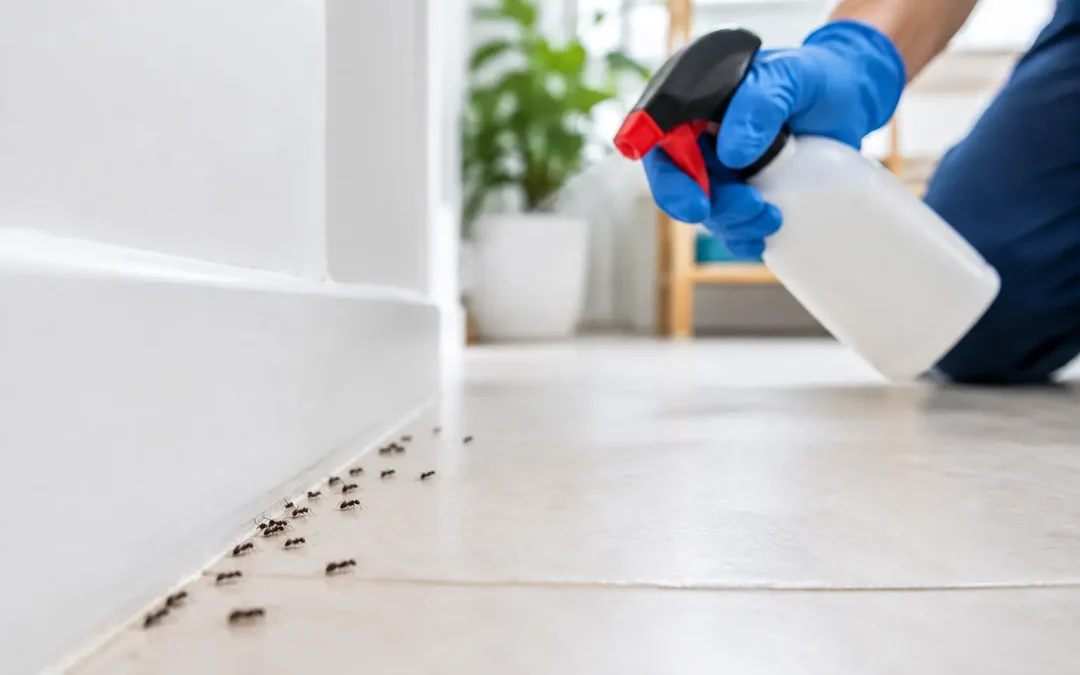
A trail of ants along a kitchen worktop can turn from a minor nuisance into a hygiene concern surprisingly quickly. The visible ants are usually only foragers, travelling between a food source and a nest that may be in a wall void, beneath paving or outside the property. Knowing how to remove ants safely means dealing with that wider activity without putting children, pets, food preparation areas or your property at unnecessary risk.
For most homes, the safest approach combines thorough cleaning, exclusion work and a targeted treatment where required. Reaching for an aerosol spray may kill the ants you can see, but it often fails to address the colony and can scatter activity into other areas.
Start by removing what is attracting them
Ants enter buildings in search of food, water and shelter. Sweet spills, crumbs, pet food and unsealed dry goods are common attractants, but grease around appliances and residue in recycling bins can be just as appealing. Follow the ants’ trail if possible, as this will usually reveal where they are feeding and how they are getting in.
Clean food preparation surfaces with a suitable household cleaner, paying close attention to skirting boards, beneath the toaster, around bins and under free-standing appliances. Vacuum visible crumbs and empty indoor bins regularly. Food should be kept in sealed containers, while pet bowls should not be left down overnight if ant activity is ongoing.
This step will not always eliminate a well-established nest on its own, but it removes the reason ants continue to forage indoors. It also makes any targeted treatment more effective because ants are less likely to ignore it in favour of easier food sources.
How to remove ants safely without spreading the problem
Avoid spraying a line of ants with general insecticide, particularly around worktops, cupboards, children’s play areas or pet bedding. Surface sprays can provide a short-term visual result, but they may repel rather than eliminate the colony. When foraging routes are disturbed, ants can split into new trails and become harder to trace.
If you choose to use an over-the-counter ant bait, use only a product labelled for the area and pest you are treating, and follow the manufacturer’s instructions precisely. Place it where ants are active but where children and pets cannot reach it. Do not put bait directly on a food preparation surface, and do not spray insecticide close to bait stations, as this can stop ants from carrying the bait back to the nest.
It can take several days for a bait treatment to reduce activity. That is not necessarily a sign it has failed. Foraging may briefly appear more noticeable as ants collect the bait, but the important measure is whether trails reduce over the following days.
Home remedies, such as vinegar, essential oils or powders, may disrupt a scent trail temporarily. They are not dependable solutions for an established infestation, and some concentrated oils can be unsafe around pets, young children or sensitive individuals. A remedy that seems natural is not automatically suitable for every household.
Find and seal entry points
Ants can use gaps that are easy to overlook. Check around pipes, window frames, air bricks, door thresholds and cracks in external render or brickwork. Indoors, inspect gaps along skirting boards, around kitchen units and where cables or plumbing enter cupboards.
Once activity has reduced, seal appropriate gaps with a suitable filler or sealant. Do not block ventilation openings, drainage points or weep holes in walls, as these have an important function in preventing damp and moisture problems. If you are unsure whether an opening should be sealed, a professional inspection is the safer option.
Outside, keep vegetation cut back from walls and avoid allowing soil, compost, timber or dense debris to sit directly against the building. Ant nests are often found beneath paving slabs, in dry soil, around foundations and in wall cavities. Reducing sheltered nesting opportunities near the property can make repeat incursions less likely.
Protect kitchens, pets and children during treatment
Safe ant control is as much about where and how a product is used as the product itself. Before any treatment, remove or cover food, utensils and food-contact items. Keep children and pets away from the treatment area for the period stated on the label or advised by the technician.
Never mix cleaning chemicals or pest control products. Do not transfer insecticides into unlabelled containers, and do not apply more than the stated amount in the belief that it will work faster. Excess product can increase exposure risks without improving control.
If ants are repeatedly entering a kitchen, pantry or utility room, address moisture as well as food sources. Repair dripping taps, dry standing water and check for leaks beneath sinks and appliances. Ants need water too, and a small leak can support persistent activity even in an otherwise clean property.
When an ant problem needs professional treatment
Professional help is advisable when ants keep returning after cleaning and exclusion work, when you cannot identify the entry point, or when activity is widespread across several rooms. It is also the sensible choice where there are babies, pets, allergies, vulnerable residents or concerns about using treatments correctly.
A trained pest control technician can inspect the property, identify likely nesting and foraging areas, and select a treatment suited to the location. This is particularly valuable where nests are beneath floors, inside wall voids, in inaccessible voids or around external structures. Treatment should be targeted, with clear advice on preparation, aftercare and prevention.
For homeowners in Dublin, Kildare, Meath and Wicklow, Pest Pure Solutions provides professional pest control with a practical focus on safe eradication and prevention. A proper assessment helps avoid repeated DIY treatments that address the ants in view but leave the colony active.
Ant control in commercial premises
In catering, care, logistics, retail and other commercial settings, ants are more than an inconvenience. Trails near food, stock, washrooms or staff areas can create hygiene concerns and affect customer confidence. A single treatment may be appropriate for a contained issue, but recurring activity usually requires a structured programme that includes inspection, treatment, proofing and documented follow-up.
Site teams can help by keeping food stores sealed, cleaning spillages promptly, managing waste carefully and reporting early signs of activity. However, staff should not apply unsuitable products in food-handling or sensitive areas without an approved control process. The treatment method, placement and records need to reflect the premises, its risks and its hygiene responsibilities.
Prevent ants from returning
After activity has stopped, continue with the habits that made the property less attractive in the first place. Keep worktops and floors free from food residue, store dry foods securely, manage indoor and outdoor waste, repair leaks and maintain seals around likely access points. During spring and summer, inspect patios, external walls and kitchen entry points more often, as warmer conditions tend to increase ant activity.
Ants are persistent, but a recurring problem is usually a sign that a food source, moisture issue, access point or nearby nest has been missed. Addressing that cause carefully is the safest way to restore comfort and hygiene without relying on repeated, unnecessary chemical use.
Recent Comments