
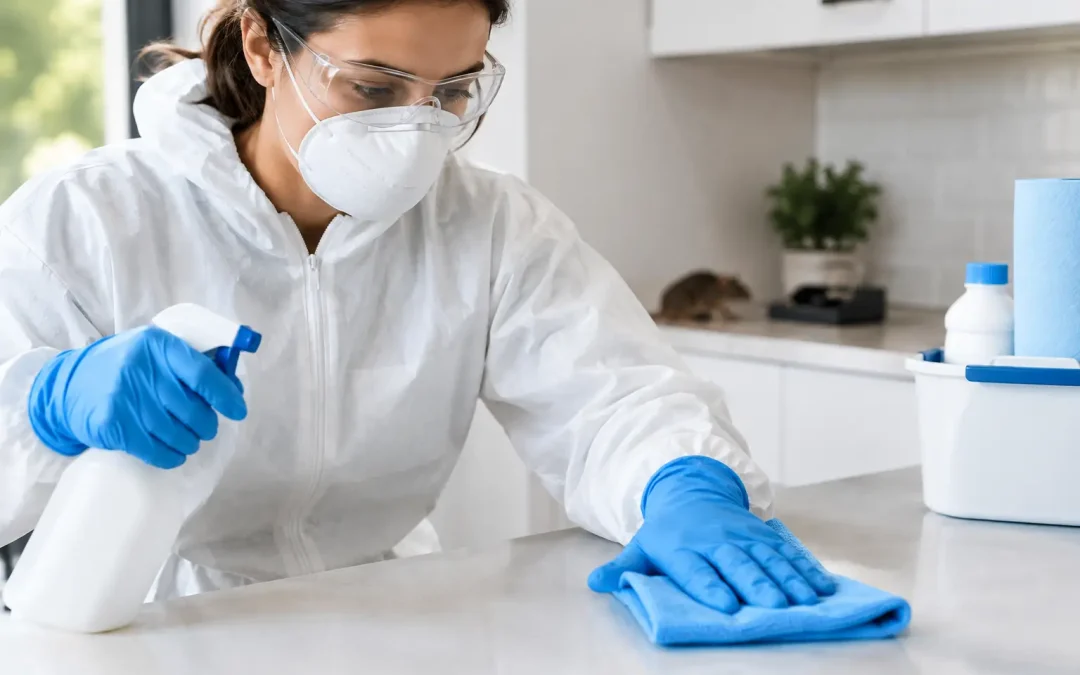
Rodent droppings in a cupboard, loft, store room or food area are more than an unpleasant clean-up job. They can contaminate surfaces, stock and equipment, particularly where urine, nesting material or dead rodents are present. Knowing how to disinfect after rodents helps protect the people using the property, but cleaning must only begin once the active infestation has been controlled.
A mouse or rat may have used hidden routes behind units, within ceiling voids or around pipework. Treat the visible evidence as an indication of wider activity, not necessarily the full extent of contamination. For homes, this means checking adjacent cupboards and food storage areas. For catering, care, logistics and regulated premises, it may also require a documented assessment of affected areas, products and hygiene controls.
Control the rodent problem before cleaning
Disinfecting while rodents are still moving through the building is rarely effective. New droppings, urine and contamination can appear overnight, leaving you back at the beginning. The first priority is professional inspection, treatment and proofing of likely entry points.
Look for fresh droppings, rub marks along walls, gnaw damage, shredded nesting material and gaps around pipes, doors, vents and service penetrations. Rats and mice can access remarkably small openings, and a treatment plan should address both the rodents present and the conditions allowing them to remain.
In a commercial setting, isolate affected food, packaging, ingredients or hygiene-sensitive materials before any cleaning takes place. Do not assume that an item is safe simply because there are no obvious marks on its outer surface. Your internal food safety or quality procedures should determine whether stock can be safely retained, cleaned or must be disposed of.
Prepare the area safely
Do not dry sweep, vacuum or brush rodent droppings, urine stains or nesting material. These actions can disturb contaminated particles and spread them into the air or onto nearby surfaces. This is especially relevant in enclosed spaces such as sheds, lofts, basements, plant rooms and storage cupboards.
Ventilate the affected room first where possible. Open windows and doors, then leave the area for a short period before beginning work. Keep children, pets and unnecessary staff away until cleaning and disinfection are complete.
Wear disposable gloves. If you are dealing with a larger accumulation of droppings, a poorly ventilated area, a dead rodent, or contamination in a commercial workplace, suitable protective clothing and respiratory protection may be needed. The right level of protection depends on the scale and location of the contamination. For extensive infestations or sensitive premises, professional hygiene support is the safer option.
Gather your cleaning materials before entering the area repeatedly. You will generally need disinfectant suitable for the surface, disposable paper towels or cloths, waste bags, gloves and a lidded bin or secure external waste container. Never mix cleaning chemicals. In particular, bleach must not be mixed with other products, as dangerous fumes can result.
Choose a suitable disinfectant
Use a disinfectant that is appropriate for the surface and follow the product label for dilution, contact time and safe use. A freshly prepared bleach solution can be used on compatible hard, non-porous surfaces, but bleach may damage certain finishes, fabrics, metals and natural stone.
For food preparation areas, food-contact equipment and commercial kitchens, use products approved for the task and follow your site hygiene procedures. After the required contact time, rinse food-contact surfaces with clean water where the product instructions require it. Disinfection does not replace thorough cleaning – dirt and grease can reduce the effectiveness of many products.
How to disinfect after rodents: the correct method
Start by thoroughly wetting droppings, urine residue and nesting material with disinfectant. Do not touch or lift dry material first. Allow the product to remain for the stated contact time so it can work properly.
Once wet, use paper towels or disposable cloths to lift the material carefully. Place used towels, disposable gloves and any small contaminated debris into a waste bag. Seal the bag securely, place it inside a second bag if practical, and dispose of it in accordance with local waste arrangements.
Clean the affected hard surface with detergent and water if needed, then disinfect it again. Work from cleaner areas towards the visibly contaminated area, changing cloths or paper towels as necessary. Pay close attention to ledges, corners, cupboard bases, pipe runs, shelving, floor edges and the undersides of equipment. These are common rodent routes and can be missed during a quick clean.
After removing gloves, wash your hands thoroughly with soap and warm water. Do not touch your face, mobile phone, door handles or other clean surfaces while wearing contaminated gloves.
Handling dead rodents and traps
Dead rodents and contaminated traps should also be sprayed with disinfectant before handling. Allow the stated contact time, then use gloved hands to place the rodent and trap contents into a sealed bag. Double-bagging is sensible where leakage is possible.
Wash and disinfect reusable trap stations only after they have been emptied safely. Disposable traps should be bagged and discarded. If there are repeated catches, unusual odours, insects around a carcass, or signs of rodents in inaccessible voids, arrange professional attendance rather than trying to retrieve material from difficult areas.
Cleaning different parts of the property
Hard surfaces such as floors, worktops, shelves, tiles and plastic storage boxes can usually be cleaned and disinfected effectively when the contamination is limited. Empty cupboards fully so that every surface can be inspected, cleaned and dried before safe goods are returned.
Discard open food, food in cardboard or paper packaging, and any items with signs of gnawing, droppings or urine. Wipe sealed tins, jars and intact plastic containers before returning them to storage. Check behind appliances and beneath sinks, as these areas offer rodents warmth, water and cover.
Soft furnishings and fabrics need more care. Wash washable bedding, clothing and soft items on the warmest setting suitable for the fabric, using normal laundry detergent. Heavily contaminated materials, including some insulation, cardboard, upholstery or stored textiles, may be impractical to disinfect reliably and may need disposal. Avoid carrying contaminated items through clean areas of the property without bagging them first.
For lofts, roof voids and wall cavities, the right approach depends on the extent of contamination. A small, accessible area may be cleaned safely with appropriate precautions. Widespread droppings, nesting material or damaged insulation call for a professional assessment. Disturbing extensive contamination in an enclosed space can create more risk than leaving it until trained operatives can remove it correctly.
Extra duties for commercial and regulated premises
A rodent incident can affect more than one room in a business. It may interrupt production, raise concerns during an audit, compromise stock, or damage customer confidence. Care homes, catering businesses, pharmaceutical sites, warehouses and waste-related operations should have clear escalation procedures for pest activity and contamination events.
Record where evidence was found, what stock or surfaces were affected, the cleaning and disinfection completed, disposal decisions and the follow-up pest control actions taken. This provides a clear trail for management and supports quality, hygiene and compliance requirements. It also helps identify patterns, such as activity around goods-in areas, staff kitchens, bin stores or building service points.
A professional service can combine rodent treatment, proofing advice and hygiene-led follow-up, rather than treating the clean-up as a separate issue. Pest Pure Solutions supports homes and businesses across Dublin and surrounding counties with practical rodent control and tailored service arrangements where ongoing prevention is needed.
Prevent contamination from returning
After cleaning, make the property less attractive and less accessible to rodents. Keep food in sealed containers, remove spills promptly, avoid leaving pet food out overnight and empty internal bins regularly. Outdoors, keep bin lids closed and reduce clutter against walls, sheds and entrances.
Proofing is equally important. Repair damaged door seals, cover suitable gaps around service pipes, maintain vents appropriately and address broken brickwork or gaps beneath doors. Take care not to block essential ventilation or interfere with building services. Where the route is unclear, an inspection will prevent ineffective guesswork.
Fresh droppings after cleaning are a sign that rodents are still active or able to re-enter. Do not simply disinfect again and hope the issue has passed. Arrange a prompt inspection, protect food and sensitive materials in the meantime, and keep a record of where new evidence appears. A properly controlled infestation followed by careful disinfection restores hygiene with far more confidence than cleaning alone.
Recent Comments