
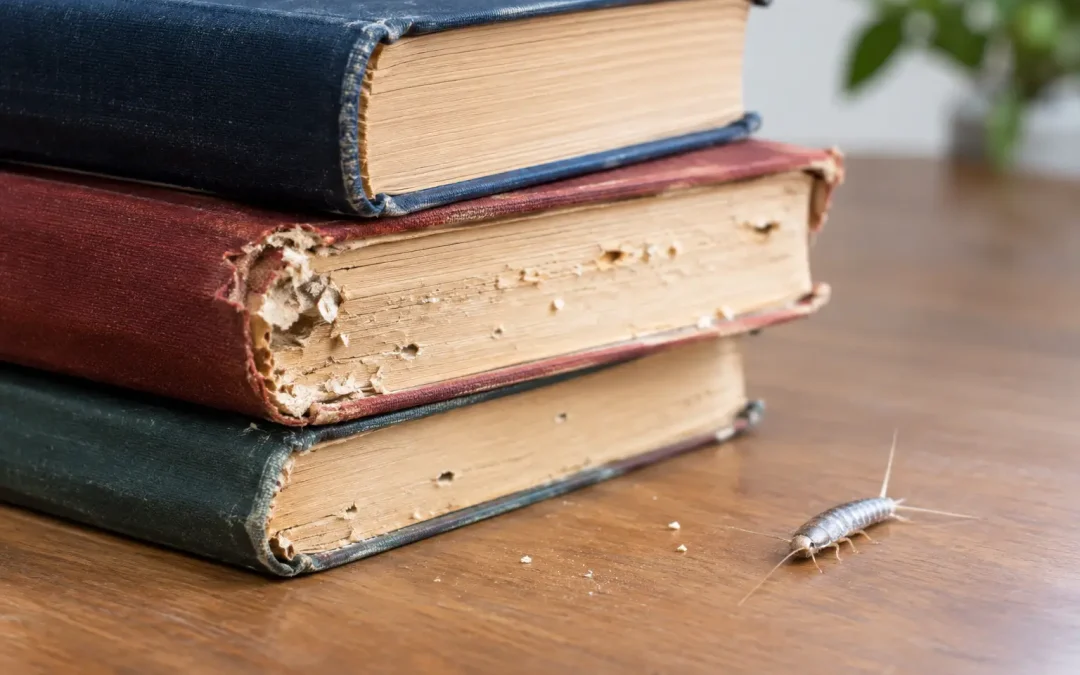
A favourite book with irregular holes in its pages, fine surface scraping on the cover, or tiny yellow marks around the binding may be showing more than ordinary wear. Can silverfish damage books? Yes. Although they do not bite people or spread disease in the way some pests can, silverfish can cause gradual, costly damage to books, papers and stored collections when an infestation is left untreated.
For homeowners, this may mean damaged family albums, documents or book collections. For offices, care settings, libraries, archives, storage facilities and other commercial premises, it can become a wider hygiene and property-protection concern. The key is to identify the activity early, correct the conditions that support it and arrange professional treatment where needed.
How silverfish damage books
Silverfish feed on materials containing starches, sugars and cellulose. In a book, that can include paper, glue in the binding, pasted endpapers, labels and surface finishes. They may also feed on dust, crumbs, mould growth and the adhesive on stored cardboard packaging.
The damage is usually not dramatic overnight. Silverfish are nocturnal and prefer quiet, sheltered areas, so they can remain unnoticed while feeding along page edges, inside bindings and around covers. Over time, this can leave uneven holes, scraped patches, notched edges and weakened paper. Older books, damp books and items stored for long periods are often at greater risk.
They are particularly drawn to humid places. A bookcase against a cold external wall, a cupboard beside a bathroom, a basement store or a poorly ventilated archive can provide the darkness and moisture they need. That is why simply moving visibly affected books may not solve the underlying problem.
What silverfish damage to books looks like
Silverfish damage can resemble general ageing, accidental water damage or activity from other insects. Looking closely at the pattern helps. Fresh feeding damage often appears as irregular, shallow grazing on paper or cover surfaces rather than clean, uniform holes. Page edges may look chewed or ragged, and binding glue may appear disturbed.
Other signs of an active infestation include small black or pepper-like droppings, shed skins, yellowish staining and silver-grey insects moving quickly when a light is switched on. Silverfish have a tapered, fish-like body and three fine tail bristles. They commonly hide in gaps around skirting boards, beneath shelving, behind radiators, under flooring edges and within cluttered storage areas.
Seeing one silverfish does not always mean a substantial infestation. However, repeated sightings, damage to several items or activity in more than one room should be taken seriously. Silverfish reproduce steadily in favourable indoor conditions, and the population may be larger than the number seen suggests.
Books are rarely the only item at risk
If silverfish are feeding on books, inspect nearby materials as well. Wallpaper paste, photographs, paperwork, cartons, textiles and stored dry goods can all be affected. In commercial premises, damaged packaging and paper records may also indicate an environmental issue that needs attention, particularly where hygiene standards, stock integrity or documented pest control procedures matter.
Why dampness makes the problem worse
Silverfish need moisture to thrive. Persistent condensation, small plumbing leaks, damp cupboards and weak ventilation can create the conditions that keep them active. This is why silverfish control is not just about treating the insects that are visible. The source of moisture and the available harbourage must also be addressed.
Check for condensation behind furniture, around window frames and on cold walls. Look under sinks, around pipework and in utility rooms for leaks or damp materials. Bathrooms and kitchens should be ventilated effectively, while basements, storerooms and rarely used rooms may need particular attention during wetter periods.
Books should not be stored directly on floors or pressed tightly against damp walls. Raising boxes and shelving slightly off the floor makes cleaning and inspection easier, while allowing better air movement. For valuable books or records, a dry, stable storage environment is often the most effective long-term protection.
What to do if you find silverfish in books
Avoid spraying household insecticide directly onto books, documents or delicate bindings. It can stain pages, affect inks and adhesives, and may not reach the hidden areas where silverfish are harbouring. Equally, do not discard items immediately unless they are severely compromised. Many books can be retained once the infestation and surrounding conditions are controlled.
Start by separating clearly affected books from the main collection where practical. Place them in a clean, dry area away from other paper items, but do not move them into an unheated shed or damp garage. Carefully vacuum shelves, floor edges and surrounding cracks using an appropriate attachment, then dispose of the vacuum contents promptly in an outdoor bin.
Reduce clutter around the affected area and remove unnecessary cardboard, old papers and packaging. Clean dust from shelves and behind furniture, as silverfish can feed on organic debris as well as book materials. Then examine the room for dampness, gaps and concealed areas that could support ongoing activity.
For small, isolated sightings in a dry property, these measures may be enough alongside continued observation. Where there is repeated activity, visible book damage or a known moisture issue, professional inspection is the sensible next step.
Professional silverfish treatment for homes and premises
A professional silverfish treatment begins with inspection rather than a one-size-fits-all application. The aim is to identify where silverfish are living, what is attracting them and whether the problem is confined to one room or established across the property.
A technician will assess likely harbourage areas such as bathrooms, kitchens, utility spaces, cupboards, floor edges, voids and storage rooms. Treatment can then be applied carefully to targeted areas, with advice provided on cleaning, ventilation, storage and proofing measures that reduce the chance of recurrence.
For residential customers, this approach helps protect books, photographs and personal possessions without unnecessary disruption. For businesses, professional pest control also supports a cleaner, more controlled environment for paper records, stored stock and customer-facing areas. Premises with formal hygiene or compliance responsibilities benefit from clear service records and a treatment plan suited to their site.
Pest Pure Solutions provides discreet silverfish control for homes and commercial premises across Dublin and surrounding counties. A proper assessment is especially valuable where valuable collections, vulnerable residents, food areas or sensitive working environments are involved.
Preventing future damage to books
Prevention works best when housekeeping, moisture control and regular inspection are combined. Keep shelves clean and avoid allowing paper piles, cardboard boxes or textiles to accumulate in dark corners. Store books in dry rooms with reasonable airflow, rather than lofts, basements or cupboards known to suffer from condensation.
If you bring second-hand books, archived files or stored boxes into the property, inspect them before adding them to a collection. This is not a reason to avoid used books, but it is sensible to check bindings, page edges and packaging for insects, shed skins or signs of dampness.
Sealing obvious gaps around pipe entries, skirting boards and damaged floor edges can reduce harbourage. It will not replace treatment where an infestation is active, but it makes the property less hospitable once control work is complete. Ongoing damp should be repaired rather than masked with air fresheners or temporary drying measures.
When urgent action is needed
Arrange professional advice promptly if books are being damaged across several rooms, silverfish are regularly seen in daylight, or there are signs of mould, leaks or persistent condensation. Commercial operators should also act quickly where pest activity affects stored documents, packaging, hygiene areas or audit requirements.
A few small signs can be the early warning that protects a much larger collection. Addressing silverfish before they become established gives books, records and the building itself the best chance of staying clean, dry and protected.
Recent Comments