
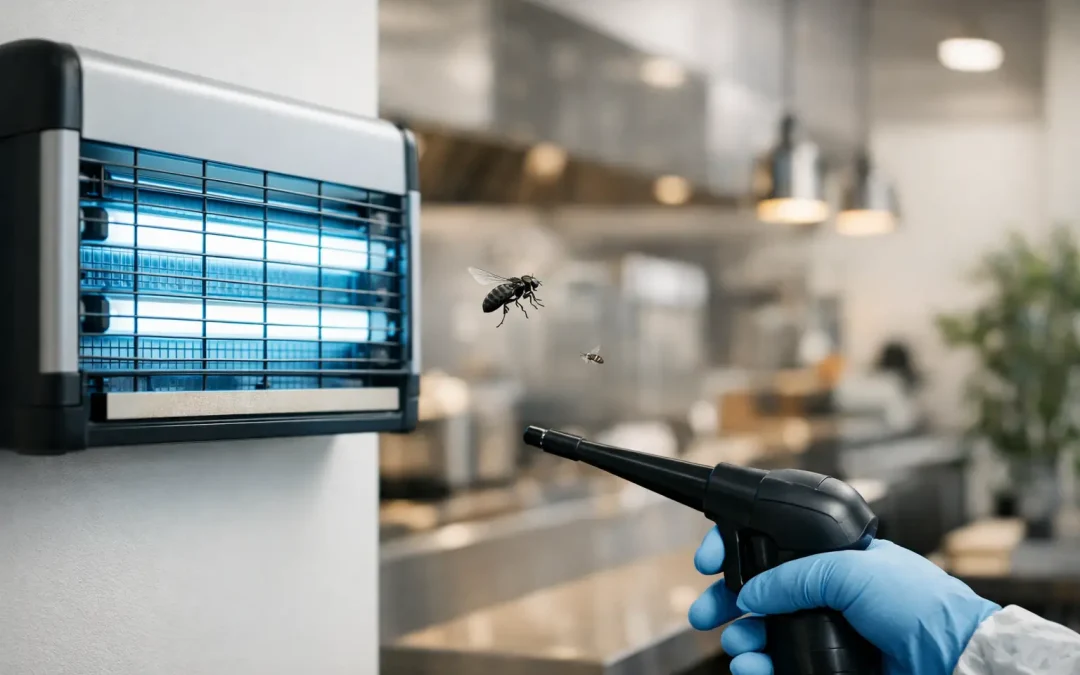
Flying insect control Dublin is rarely just about the insects you can see. A few flies around a kitchen window, fruit flies near a bin, or moths in a storeroom can point to a breeding source, food contamination risk or an entry point that needs attention. Effective treatment begins by identifying the species, locating what is attracting it and taking action that prevents the problem returning.
For homeowners, flying insects can quickly make a property feel unhygienic and uncomfortable. For businesses, particularly those handling food, medicines, waste or vulnerable residents, activity can create a more serious operational and reputational concern. A prompt, professional response protects the premises as well as the people using it.
Flying insect control in Dublin starts with identification
Not all flying insects require the same treatment. House flies, blowflies, fruit flies, drain flies, cluster flies and clothes or stored-product moths each have different feeding and breeding habits. Treating every sighting with a general aerosol may reduce visible activity for a short time, but it will not resolve an established source.
House flies and blowflies are often drawn to food waste, animal waste, decaying material and poorly managed external bins. Fruit flies are commonly linked to overripe produce, recycling containers, spills beneath equipment or residue in bottle storage areas. Drain flies breed in the organic film that can build up inside drains, gullies and traps. Moths may indicate vulnerable stock, unsealed dry goods, lint, textiles or undisturbed storage areas.
A proper inspection considers where insects are being found, when activity occurs, what is stored nearby and whether there are conditions that support breeding. The number of insects matters, but location matters more. A single fly in an open doorway on a warm day is different from recurring activity near a food preparation area or an increasing number of moths around stored products.
Why source control matters more than a quick spray
Insecticides can have a place in a professional treatment, but they are only one part of flying insect management. If waste remains accessible, a drain has not been cleaned, a window gap is allowing entry or food stock is affected, insects can return as soon as the initial treatment has worn off.
The most reliable approach combines inspection, targeted treatment, hygiene improvements and practical proofing. This may involve treating specific harbourage points, advising on drain cleaning, improving waste handling or fitting appropriate fly screening. In commercial settings, insect monitoring units can provide early warning and help show whether control measures are working over time.
There is a balance to strike. A business cannot always close an entrance or eliminate every potential access point, especially in busy loading areas or customer-facing premises. In those cases, the aim is to reduce the risk through sensible positioning of monitoring equipment, effective waste routines, door management and regular inspections. Control measures should suit how the premises actually operates, rather than creating rules that staff cannot realistically maintain.
The inspection should look beyond the room where insects appear
Flying insects can travel some distance from their breeding site. A problem noticed in a kitchen may originate from an outside refuse area, a blocked gully, a void beneath equipment or a neighbouring service space. In larger properties, it may be linked to plant rooms, delivery bays, staff canteens or storage areas that receive less frequent cleaning.
A technician will assess likely entry routes, sanitation standards, drainage, waste storage, food handling and signs of activity. Where necessary, monitoring can establish the scale and type of insect problem before a longer-term treatment programme is recommended. This avoids guesswork and makes follow-up work more effective.
For moth activity, inspection also needs to include the contents of cupboards, stock rooms and packaging. Infested goods often need to be identified and removed safely. Treating the surrounding area without addressing affected stock can allow larvae or eggs to remain in place and restart the infestation.
Treatment should protect people, products and operations
A responsible flying insect treatment is selected according to the species, severity of activity and use of the premises. Homes with children or pets need clear advice on preparation and re-entry. Commercial sites may require work to be scheduled around production, patient care, food service or delivery times.
At Pest Pure Solutions, treatments are planned with hygiene and safety at the centre. That includes clear recommendations for cleaning, waste management and monitoring after treatment, rather than simply leaving a product behind. Where an infestation is linked to a hygiene issue, sanitisation or disinfection measures may also be appropriate after the source has been removed.
Flying insect control Dublin for regulated businesses
A flying insect incident in a catering kitchen, care home, logistics facility or pharmaceutical environment can have consequences beyond immediate nuisance. It may lead to customer complaints, failed internal inspections, stock concerns or questions about hygiene controls. For businesses operating under strict governance, evidence of prevention is as valuable as a rapid response.
A tailored pest management programme provides documented site visits, monitoring records, trend analysis and practical corrective actions. This helps site managers demonstrate that risks are being identified and addressed. It also makes it easier to spot recurring seasonal issues before they become a significant problem.
For example, flies may increase during warmer weather when external bins are used more heavily and doors are opened for deliveries. A programme can account for that pattern with increased monitoring, bin-area reviews and preventative measures before peak activity begins. In a warehouse, moth monitoring may be concentrated around vulnerable stock and quieter storage zones rather than treating the whole building unnecessarily.
Detailed reporting is particularly useful where audit readiness matters. A Certified Field Biologist can support a more technical review of pest pressures, contributing to bio-reports and evidence needed for GDP-focused environments. The result is a pest control approach that supports business continuity, hygiene standards and confidence in the site’s controls.
Practical prevention between visits
Good prevention does not need to be complicated, but it does need to be consistent. Food debris, waste and standing moisture should not be allowed to build up in hidden or low-traffic areas. External bins need secure lids and regular cleaning, while indoor recycling should be emptied often enough to avoid fermenting residues.
Drains deserve particular attention. Surface cleaning alone does not remove the film inside drains where drain flies can breed. A suitable cleaning routine for drains, gullies and grease-prone areas is often essential, especially in commercial kitchens, bars and food preparation spaces.
Staff should also know what to report. Repeated sightings in one location, larvae in food storage, insects around drains, damaged packaging or a sudden increase near waste areas should be raised early. Small observations can prevent a larger infestation and reduce the level of treatment required.
Physical proofing has an important role too. Well-fitted screens, maintained door seals, covered vents and sensible management of open doors reduce entry opportunities. These measures are not a substitute for cleaning and treatment where breeding is established, but they can make a substantial difference as part of a wider plan.
When to arrange professional help
It is sensible to seek professional advice when flying insect activity is recurring, increasing or linked to a sensitive area such as food storage, bedrooms, care settings or stock rooms. Immediate action is especially appropriate where there is evidence of breeding, possible contamination or an unexplained strong odour that could indicate a hidden source.
A professional inspection is also worthwhile after attempted DIY treatment has failed. Repeated use of household sprays can mask activity while leaving the underlying issue untouched. It may also complicate assessment if insects have been disturbed into other areas of the property.
Whether the issue is a persistent drain fly problem in a home or fly activity affecting a commercial operation, the best next step is to address the conditions that allow insects to thrive. Early, targeted action keeps treatment proportionate, protects hygiene and gives you a clearer route back to a clean, controlled premises.
Recent Comments