
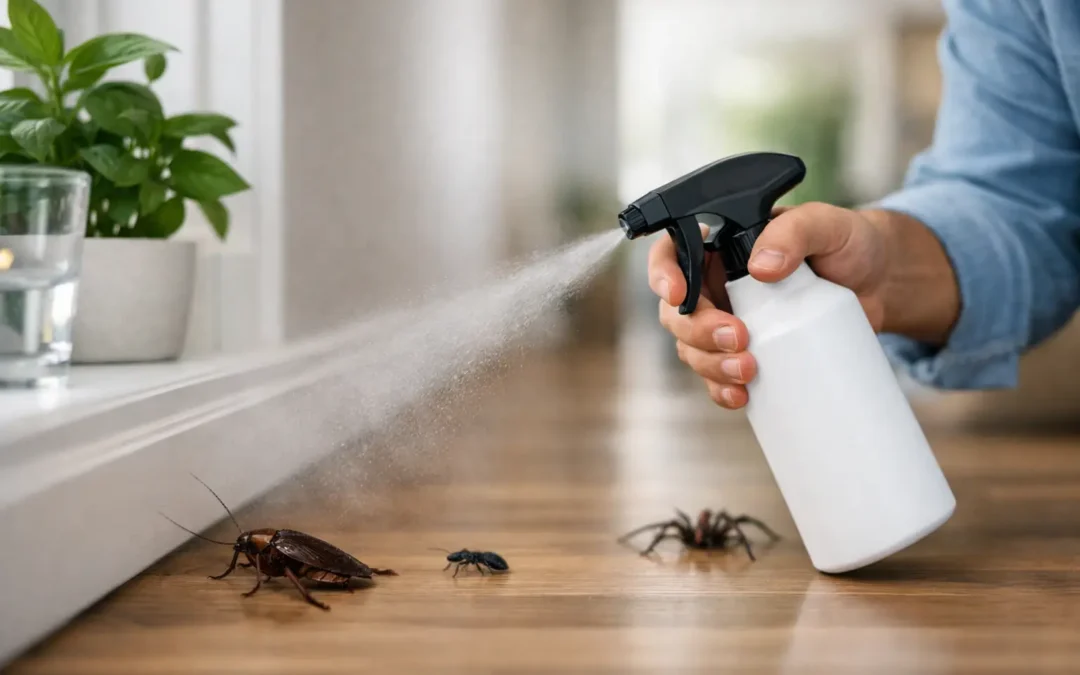
The best home pest control spray is not always the strongest product on the shelf. More often, it is the one matched properly to the pest, used in the right place, and applied with a clear understanding of its limits. That matters because a quick spray can solve a minor issue, but the wrong treatment can leave an infestation untouched while giving a false sense of security.
For homeowners, that usually means the difference between dealing with the odd trail of ants in the kitchen and facing a larger problem a week later. For landlords and commercial operators, it can mean wasted time, repeat complaints, and avoidable hygiene risk. Sprays have their place, but they work best when they are part of a sensible pest control plan rather than a panic purchase.
What makes the best home pest control spray?
A good spray does three things well. It targets the pest you actually have, it is suitable for the area being treated, and it leaves as little risk as possible to people, pets and food preparation spaces.
That sounds straightforward, but this is where many problems start. An aerosol labelled for crawling insects may help with ants or silverfish, yet do very little for fleas hidden deep in soft furnishings. A fly spray may knock down visible insects, but it will not solve the reason they are breeding indoors. Bed bugs are another common example. Surface sprays can kill insects they directly hit, but rarely deal with harbourages properly on their own.
The best result comes from looking beyond the word spray and checking the active use. Is it a contact killer, a residual treatment, or a repellent? Contact sprays act quickly but often have short-lived impact. Residual sprays continue working after application and can be more useful for insects moving through treated areas. Repellent products may drive pests elsewhere, which is not always helpful if they simply retreat into wall voids or adjacent rooms.
The best home pest control spray depends on the pest
If you are dealing with ants, a residual spray around entry points, skirting edges and external thresholds can help reduce activity. Still, ants are highly organised and often return if the nest remains active. In many cases, baiting is more effective than spraying alone because it allows workers to carry treatment back to the colony.
For flies and moths, sprays are best seen as a short-term measure. They can reduce visible adults, but they do not remove breeding sources. If bins, drains, food residue or stored product contamination are involved, the insects will keep returning. In these cases, sanitation and proofing matter as much as the chemical product.
Fleas are more complex. A suitable insecticidal spray may form part of treatment, but successful control usually involves the full room, pet bedding, carpets and upholstery, along with veterinary advice for animals in the property. One quick application rarely resolves a well-established flea problem.
Cockroaches and bed bugs need even more caution. Both pests are resilient, both hide well, and both are commonly mishandled with shop-bought sprays. Overuse can scatter activity, push pests deeper into harbourages, and make professional treatment more involved later.
Where household sprays tend to work well
There are situations where a domestic spray is a sensible option. A small number of spiders in a utility space, occasional ants near a back door, or a few wasps around an outdoor frame may respond well to a carefully chosen product used according to the label.
Low-level, visible pest activity is where sprays tend to perform best. They can also be useful as a stop-gap while you arrange professional attendance, especially if you need immediate reduction in a specific area.
The key point is that these are contained problems. Once there is evidence of nesting, repeat emergence, widespread activity, bites, droppings, damage, or contamination risk, a spray becomes less of a solution and more of a temporary cover.
Where sprays fall short
Most insect problems are not really surface problems. They are nesting problems, access problems, hygiene problems, or structural problems.
That is why people often spray the insects they can see while missing the conditions supporting them. You may kill the ants crossing the worktop, but not the colony outside. You may knock down a few flies, but not the drain issue attracting them. You may treat the edge of a mattress, but not the hidden bed bug harbourages in bed frames, furniture joints or adjoining rooms.
There is also a safety issue. Overapplication in kitchens, around children, near pet resting areas or close to food storage can create unnecessary exposure. Using multiple products together is another common mistake. More product does not automatically mean better control.
What to look for before you buy
When choosing a home pest control spray, the label is more useful than the branding. It should clearly state which pests it covers, where it can be used, how long it remains active, and what precautions apply.
Look for products with clear domestic-use instructions rather than vague marketing claims. If the spray does not specify your pest, do not assume it will work. If the treatment area includes food preparation surfaces, bedrooms, soft furnishings, or pet zones, check those uses carefully.
Application method matters as well. Ready-to-use trigger sprays can be practical for small, targeted treatment. Aerosols can be convenient but are easy to overuse indoors. Concentrated products may sound economical, yet they need careful dilution and handling.
For many households, the best choice is the product that allows precise treatment rather than broad, repeated spraying. Good pest control is usually targeted, not excessive.
Safe use matters as much as effectiveness
Any spray used at home should be treated with care. Read the instructions fully, ventilate the area if required, and keep children and pets away until it is safe to return. Avoid treating toys, feeding areas, food contact surfaces and bedding unless the product explicitly permits that use.
It is also worth remembering that dead insects are not the only concern. Some pests trigger allergic reactions, leave contamination behind, or indicate wider hygiene issues. In those cases, simply reducing numbers does not fully address the risk.
For landlords, letting agents and businesses, this becomes even more important. A poorly handled treatment can create complaints of its own. In regulated sectors such as catering, care settings or pharmaceutical environments, ad hoc spray use is rarely enough and may conflict with site procedures unless it forms part of a documented control plan.
When professional treatment is the better option
If pest activity keeps returning after spraying, the issue is no longer about product choice alone. It points to a source that has not been removed.
That is the point where professional assessment saves time. An experienced technician will identify the pest accurately, locate harbourages or entry points, assess hygiene and structural factors, and select treatment methods that fit the level of infestation. In many cases, that means combining targeted insecticide use with proofing, monitoring, sanitation advice and follow-up.
This is especially relevant for bed bugs, cockroaches, fleas, rodents, birds, stored product pests, and any issue affecting multiple rooms or multiple units in the same building. It also matters where discretion, reporting and compliance are part of the brief, which is why many commercial clients rely on structured service programmes rather than off-the-shelf products.
In homes across Dublin, Kildare, Meath and Wicklow and the surrounding counties, one-off call-outs often begin with a customer who has already tried a spray and found that the problem kept coming back. That does not mean sprays are useless. It means they are only one tool, and not always the decisive one.
A better way to judge results
The best home pest control spray should not be judged by how quickly it kills one visible insect. It should be judged by whether pest activity genuinely reduces over time without creating new safety or hygiene concerns.
If a product gives short-term relief and the pests return in the same spot, something deeper is still active. If a spray helps while you improve cleaning, sealing and waste control, it may have done its job well. If the issue involves nesting, breeding, repeated sightings or sensitive environments, the better decision is usually to move beyond retail treatment and have the problem assessed properly.
A useful spray can buy you time. Proper pest control solves the cause.
Recent Comments