
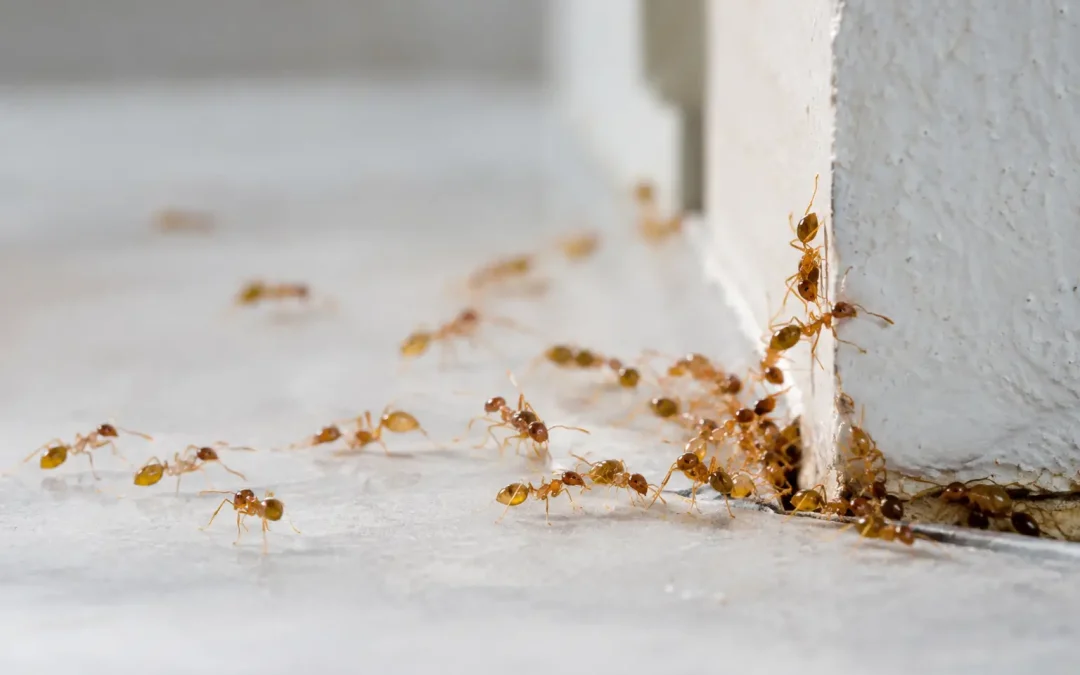
Often searched for as Pharaoh ants, Pharaoh ants are a small indoor ant species that can become a serious hygiene concern in homes, care settings, food premises and other occupied buildings. Their size makes them easy to overlook, but their behaviour makes them difficult to control without the right treatment plan. A visible trail may be only a small part of a much larger infestation hidden within walls, service voids, cupboards or heated areas.
Unlike many ants that are mainly a seasonal outdoor nuisance, Pharaoh ants can remain active throughout the year in warm buildings. They need a measured, professional response – not a quick spray around the insects you can see.
What do Pharaoh ants look like?
Pharaoh ants are very small, usually around 2 mm long, with a pale yellow to light brown body and a darker abdomen. They may be mistaken for other small household ants, particularly when seen near food cupboards, sinks, bins or worktops.
Their trails are often most noticeable where warmth, moisture and food are readily available. Kitchens, utility rooms, bathrooms, boiler cupboards, staff canteens and clinical areas can all provide suitable conditions. In commercial premises, they may travel through cable routes, pipework, suspended ceilings and shared wall voids, allowing the problem to extend beyond the room where they were first noticed.
Correct identification matters. Different ant species behave differently, and a treatment that is suitable for a common garden ant may make a Pharaoh ant infestation harder to resolve.
Why Pharaoh ants are difficult to eliminate
The central challenge is how Pharaoh ant colonies respond to disturbance. When they feel threatened by unsuitable insecticide use, nest sites may split. This is known as budding. Rather than removing the colony, the treatment can cause multiple smaller colonies to establish elsewhere in the building.
A colony can also have more than one queen. This gives Pharaoh ants a strong ability to persist, particularly in large, warm or complex properties. Treating only the trail near a skirting board or kitchen unit is therefore rarely enough.
Shop-bought aerosol sprays may kill foraging ants on contact, but they do not normally reach the queens or hidden nest sites. They can also drive activity into less accessible locations. For homeowners, this can turn a manageable issue into a longer-running infestation. For a business, it can create avoidable hygiene, audit and reputational risks.
Where infestations commonly develop
Pharaoh ants favour consistently warm indoor environments and can be found in both domestic and commercial properties. They are especially associated with places where food residues, water sources and sheltered voids are available.
In a home, activity may begin around kitchens and bathrooms before appearing in bedrooms, airing cupboards or behind fitted furniture. Flats and multi-occupancy buildings need particular care because ants may move between neighbouring units through shared services and structural gaps.
For commercial operators, the risk is more significant where vulnerable people, food handling or strict hygiene standards are involved. Care homes, catering operations, healthcare-related environments, warehouses and pharmaceutical facilities may all require a controlled response with clear records of inspection, treatment and follow-up activity.
Pharaoh ants are not simply a cosmetic nuisance. As they forage across surfaces, waste areas and food preparation zones, they may contribute to contamination concerns. In sensitive environments, the presence of ants can also raise difficult questions during customer inspections or compliance reviews.
Signs that professional treatment is needed
A repeated trail of tiny pale ants indoors is the clearest warning sign. You may see them moving along worktops, behind kitchen appliances, around sink units or at the edge of floors and walls. Activity can fluctuate during the day, so a lack of ants at one particular moment does not mean the infestation has gone.
Other signs include ants appearing in several rooms, activity returning after DIY treatment, or ants emerging from cracks around pipework, electrical fittings or cupboards. In business premises, reports from different departments or units may indicate that the infestation is travelling through the structure rather than being limited to one localised nest.
Early intervention is preferable. The longer Pharaoh ants are allowed to establish, the more potential there is for colony budding and wider movement through the property.
How professional Pharaoh ant control works
Effective control starts with a detailed inspection. A trained technician will identify the ant species, assess foraging routes, look for likely nesting areas and consider how the building layout may be supporting the infestation. This is particularly important in larger sites, where treatment must account for service runs, adjoining rooms and possible access points between areas.
The preferred approach is usually a carefully selected bait treatment. Foraging worker ants take the bait back to the colony, allowing it to reach queens and other ants that are not visible. This is a slower process than using a contact spray, but it is designed to deal with the infestation at its source without triggering unnecessary dispersal.
Treatment programmes often require return visits. The timing depends on the extent of activity, building type and the response of the colony. During follow-up inspections, the technician checks consumption, reviews ant activity and adjusts treatment where required. This patient, targeted approach is one reason professional control is much more reliable than trying several household products in quick succession.
At Pest Pure Solutions, treatment plans can be tailored for domestic properties and hygiene-sensitive commercial sites across Dublin and the surrounding counties. Where commercial reporting is required, the focus is not only on reducing ant activity but also on providing a clear record of the work completed and recommendations for ongoing prevention.
What to avoid while treatment is underway
Once a treatment plan is in place, avoid spraying ants with household insecticides unless specifically instructed by your pest control technician. Sprays may interfere with bait acceptance and can encourage the colony to fragment.
Do not remove bait placements, wash treated areas immediately or block suspected access points before they have been assessed. Pharaoh ants may be using the route to carry bait back into concealed nests. Your technician will advise when cleaning and proofing measures can safely take place.
It is also sensible to reduce competing food sources. Keep food in sealed containers, wipe away crumbs and spills promptly, empty internal bins regularly and deal with leaks around sinks, appliances or pipework. Good hygiene supports treatment, but it cannot replace it once a colony has become established.
Prevention after the infestation is controlled
Long-term prevention is about reducing the conditions that make a property attractive and accessible. In homes, attention should be paid to kitchen cleanliness, moisture control and gaps around pipes or service entries. In flats, landlords and managing agents may need to coordinate action where activity affects more than one unit.
Commercial sites benefit from routine inspections, good waste management and clear cleaning responsibilities. Food debris in staff areas, leaking fittings, unsealed service penetrations and poorly managed waste can all support recurring activity. In regulated settings, prevention should form part of a wider hygiene and pest management programme rather than being treated as a one-off task.
Pharaoh ants reward patience and penalise guesswork. If you are seeing recurring trails indoors, especially after using a spray, the most useful next step is a professional inspection that identifies the species and treats the colony in a controlled way.
Recent Comments