
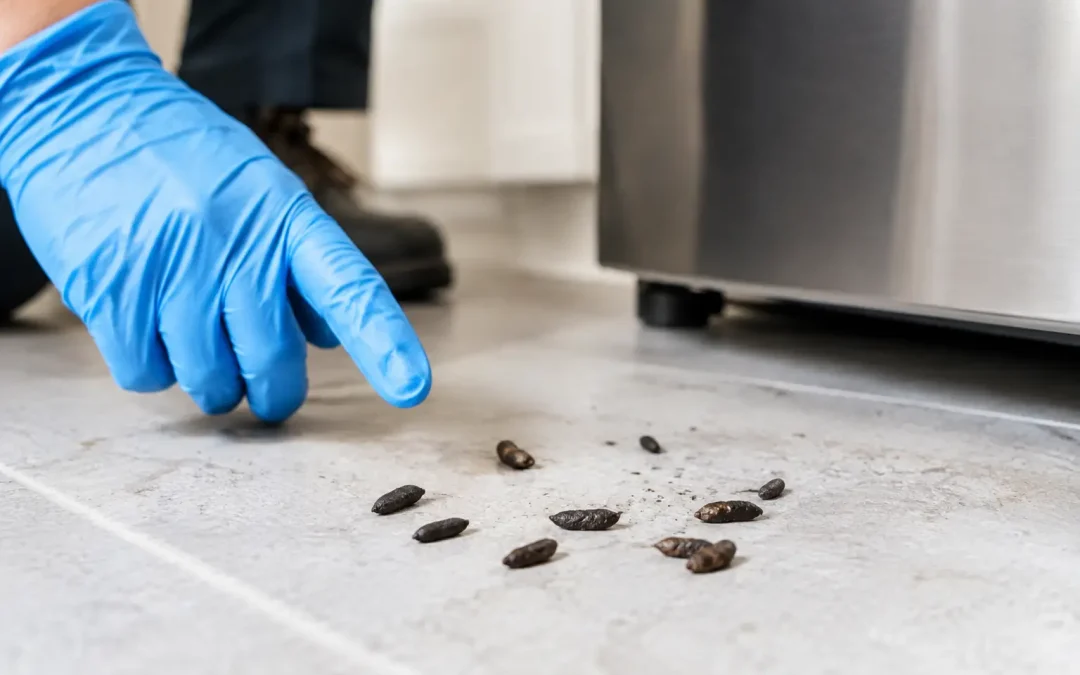
A small line of dark pellets behind a kitchen appliance, in a loft or beside stored stock is rarely something to ignore. Knowing how to identify rat droppings can help you act before rodents contaminate food areas, damage wiring or establish a larger infestation. For homes and businesses, the key is not simply finding droppings, but recognising their size, condition and location alongside other signs of rat activity.
How to identify rat droppings by appearance
Rat droppings are usually dark brown to black when fresh and become lighter, drier and more brittle as they age. They are commonly 12-18 mm long, although their size can vary with the species, age and diet of the rat. A typical rat dropping is shaped like a grain of rice, with a noticeably tapered or pointed end.
Fresh droppings may look slightly shiny or feel soft when inspected through suitable protective equipment. Older droppings are dull, greyish and crumble more easily. This can indicate previous activity, but it does not prove that rats have left the property. Rats may return to old routes, particularly where there is easy access to food, shelter or warmth during winter.
The quantity also matters. One or two pellets may have been carried in or left by a passing rodent, while repeated clusters along walls, under units or around stored materials suggest an established route. Rats tend to leave droppings as they travel, feed and investigate their surroundings.
Rat droppings compared with mouse droppings
Mouse droppings are considerably smaller, generally 3-6 mm long. They are often narrow and pointed at both ends, resembling dark grains or small seeds. Rat droppings are thicker, longer and more substantial by comparison.
This distinction is useful, but it is not always enough to identify the pest with certainty. Young rats can leave smaller droppings, while a large mouse infestation can create a surprising amount of evidence. A professional inspection considers the full picture, including access points, gnaw marks, footprints, smear marks and the pattern of activity.
Common lookalikes to rule out
Not every dark pellet is rodent evidence. Cockroach droppings are much smaller and often resemble black pepper or coffee grounds. Bat droppings can look similar to mouse droppings, but they tend to crumble into shiny fragments from insect remains when handled carefully by a trained person.
Rabbit or bird droppings are normally easier to distinguish because of their shape and lighter material. If you are unsure, avoid disturbing the evidence unnecessarily. Clear photographs and the location of the droppings can help a pest control professional assess the likely issue.
Where rat droppings are most often found
Rats prefer to move close to walls, beneath cover and through quiet, undisturbed areas. Droppings are therefore often found around the edges of rooms rather than in the middle of an open floor. In a house, inspect behind cookers, fridges and washing machines, inside cupboards near pipework, beneath sinks, in lofts, garages, sheds and under decking.
Outdoor evidence may be found near bin storage, compost areas, drains, bird feeders, pet food and gaps beneath outbuildings. Rats are strong climbers and can access loft spaces, wall cavities and rooflines as well as ground-level areas.
In commercial premises, the risk areas depend on the operation. Catering sites should pay close attention to delivery areas, dry stores, waste holding points and voids around kitchen equipment. Warehouses and logistics facilities need regular checks around loading bays, pallet storage, staff areas and external boundaries. In care, food and pharmaceutical environments, even a small amount of rodent evidence requires prompt investigation because hygiene and audit consequences can be significant.
Signs that the droppings are from active rats
Droppings alone may not reveal whether activity is current. Look for supporting signs, especially in the same area. Fresh gnawing on food packaging, timber, plastic or cables can point to active rodents. Rats need to gnaw continually, and damage to electrical wiring presents a particular safety concern.
You may also notice greasy smear marks along skirting boards, pipe runs or wall edges. These marks develop as rats repeatedly use the same route. A musky odour, scratching in ceilings or walls, disturbed insulation, shredded paper and burrow holes outside can all add to the evidence.
Rats are mainly active at night, so sightings in daylight can suggest a higher level of pressure, although it is not a rule on its own. Construction work, a shortage of food or disturbance to nesting sites can also force rats into view during the day.
Why rat droppings should be dealt with carefully
Rat droppings can contaminate surfaces, stored goods and food preparation areas. They may also be associated with bacteria and other organisms that present hygiene risks. For this reason, do not sweep or vacuum dry droppings, as this can disturb contaminated dust.
Keep children and pets away from the affected area. Wear disposable gloves and, where necessary, suitable respiratory protection. Ventilate the space if practical, then carefully dampen the droppings with an appropriate disinfectant before lifting them with disposable paper towels. Place waste in a sealed bag, clean the surrounding surface and wash hands thoroughly afterwards.
This approach may be suitable for a small, isolated amount of evidence in an accessible area. It is not a substitute for professional treatment where droppings are widespread, the source is unclear, rodents have entered food areas or there is evidence in a business premises. In those circumstances, cleaning without addressing access and harbourage simply removes one sign of the problem.
What causes rats to enter a property?
Rats are usually looking for three things: food, water and shelter. Overflowing bins, spilled bird seed, accessible pet food and poorly stored dry goods can all encourage activity. Leaking pipes, damaged drains and standing water provide a reliable water source, while cluttered storage areas, dense vegetation and gaps around services offer protection.
Winter often brings increased reports of rodent activity across Dublin, Kildare, Wicklow and Meath. As temperatures fall, rats seek warmer, more secure spaces indoors. A minor gap around a pipe, air brick, door threshold or damaged vent can be enough for entry, particularly where an external food source is nearby.
Proofing is therefore as important as treatment. Sealing suitable gaps, repairing damaged vents, fitting brush strips where appropriate and keeping waste areas clean can reduce the chance of repeat activity. However, proofing should follow a proper assessment. Blocking an entry point while rats are still inside can move the problem into another part of the building.
When to call professional pest control
Arrange a professional inspection if you find repeated droppings, see a rat, hear persistent scratching, notice gnaw damage or identify evidence near food, medicines, patient areas or sensitive stock. Landlords and business operators should also act promptly where tenants, staff or customers may be affected.
A thorough service should identify likely species, assess the scale of activity, locate entry points and establish why the site is attractive to rodents. Treatment may involve targeted control measures, trapping where appropriate, hygiene advice and practical proofing recommendations. For commercial customers, documented inspections and clear reporting support site hygiene, corrective actions and compliance obligations.
Pest Pure Solutions provides professional rodent control for homes and businesses, including discreet inspections and tailored programmes for higher-risk sites. The right response depends on the property, the level of activity and how quickly the area can be made less attractive to rodents.
Finding droppings is an early warning, not something to wait on. Preserve the evidence, avoid unnecessary contact and arrange an inspection before a small route through the property becomes an established rat problem.
Recent Comments