
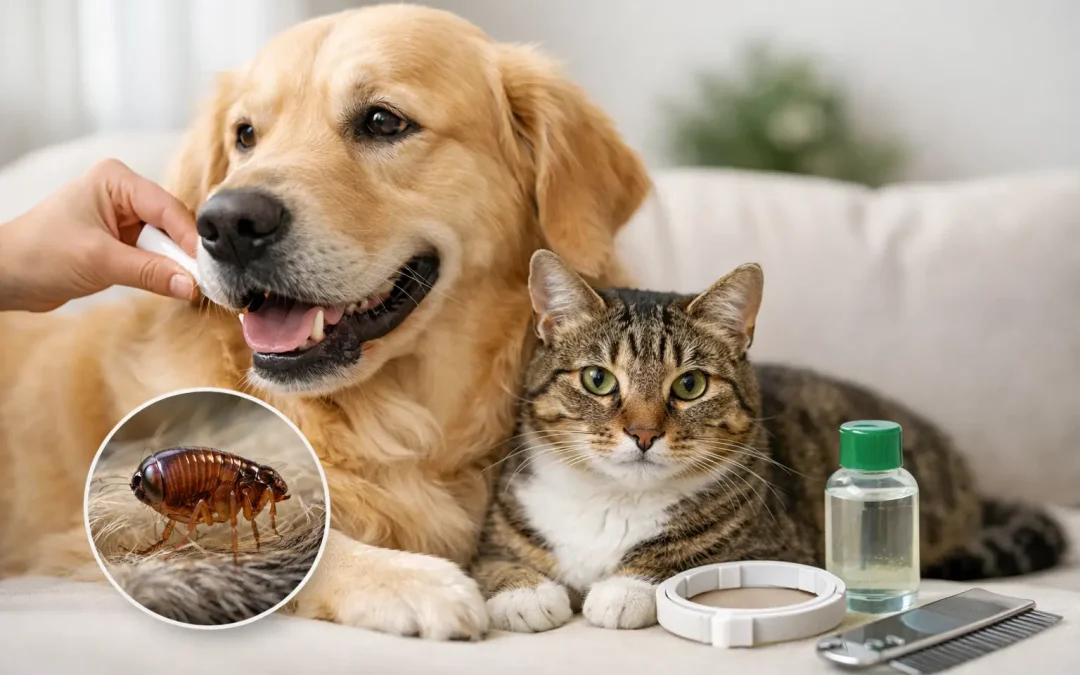
A flea problem often becomes visible when people start getting bitten around the ankles, not when the first flea arrives on a pet. Effective flea control for pet owners means treating more than the animal: eggs, larvae and pupae can be hidden in bedding, carpets, upholstery and floor-edge gaps, ready to restart the problem weeks later.
The good news is that fleas can be controlled safely and reliably. The key is to break their life cycle with the right pet treatment, thorough household hygiene and enough follow-up to deal with newly emerged adults.
Why fleas keep coming back
Adult fleas feed on cats, dogs and, occasionally, people. After feeding, they lay eggs that drop from the animal into the places where it sleeps, rests and travels. Those eggs develop into larvae, then pupae protected in a cocoon. The pupal stage is the reason a home can appear clear for a short period before fresh adult fleas emerge.
A single treatment may kill the adult fleas currently on a pet, but it will not necessarily reach every immature flea already present in the property. Vibration, warmth and carbon dioxide can encourage pupae to emerge when people and pets move around the home. This can make it seem as though a treatment has failed when, in fact, the treatment programme has not yet run its full course.
The length and severity of an infestation depend on temperature, flooring, the number of pets and whether animals have access to outdoor areas. Fleas thrive in warm, sheltered conditions, so a centrally heated home can support their development at any time of year.
Flea control for pet owners: treat the pet first
Every cat and dog in the household should be covered by a suitable veterinary-recommended flea treatment, even if only one animal is scratching. Untreated pets can keep the flea population going and undermine work carried out elsewhere in the home.
Choose a product appropriate for the animal’s species, age, weight and health condition, and use it exactly as directed. Your veterinary practice can advise on the most suitable route, whether that is a spot-on treatment, tablet, collar or another prescribed option. Never assume a dog product is safe for a cat. Some ingredients used in dog flea treatments can be highly toxic to cats.
Bathing may remove some adult fleas temporarily, but it is not a complete control method and may affect the performance of certain topical products. If your pet is very young, pregnant, unwell or already receiving medication, ask a vet before applying any flea control product.
A flea comb can be useful alongside treatment, particularly for checking pets that are showing signs of irritation. Comb over a white surface and place any collected fleas into soapy water. This helps confirm activity, but combing alone will not clear a household infestation.
Look beyond scratching
Scratching is a common sign, but not every pet reacts in the same way. Look for tiny dark specks in the coat, especially around the neck, lower back and base of the tail. Known as flea dirt, these droppings often turn reddish-brown when placed on damp white tissue because they contain digested blood.
Cats may groom excessively rather than scratch openly. Dogs can develop sore patches, hair loss or flea allergy dermatitis, where even a small number of bites causes an intense skin reaction. Contact a vet promptly if your pet has broken skin, signs of infection, lethargy or significant hair loss.
Treat the places fleas develop
Once pets are protected, focus on the environment. Flea eggs and larvae are most likely to be concentrated where animals spend their time, rather than evenly distributed throughout the property. Start with pet beds, blankets, sofa cushions, rugs, carpets, skirting-board edges and the car if pets regularly travel in it.
Wash removable pet bedding, throws and washable covers on the hottest cycle the fabric can safely tolerate. Vacuum carpets, rugs, fabric furniture, under beds and along edges of rooms carefully. Pay particular attention to cracks, crevices and areas beneath radiators or furniture, where larvae can find dust and organic debris to feed on.
Empty the vacuum outside immediately after use, sealing the contents in a bag before disposal. Repeat vacuuming regularly during the treatment period. It removes debris that supports flea larvae and can encourage pupae to emerge, bringing them into contact with an ongoing control programme sooner.
Do not overlook seldom-used rooms if pets have access to them. Likewise, avoid moving untreated bedding or soft furnishings into another room, as this can spread eggs and larvae to a new area.
Use household insecticides carefully
For established infestations, a professional-grade household treatment may be necessary alongside pet treatment and cleaning. Household flea products often include an adulticide to kill emerging fleas and an insect growth regulator that prevents immature stages from developing. Both elements matter when breaking the life cycle.
Read the label in full before use. Follow instructions on preparation, application, ventilation, re-entry times and any surfaces that must not be treated. Fish tanks should be covered and protected as directed, as many insecticides are hazardous to aquatic life. Food preparation surfaces, children’s toys and pet feeding bowls should be removed or covered before treatment.
Do not spray pets with a product intended for rooms, and do not apply more product than the label permits. Mixing treatments, repeating applications too soon or treating areas unnecessarily can increase risk without improving results.
If there are babies, vulnerable adults, pets with medical needs or concerns about chemical use in the household, professional advice provides a safer route. A trained technician can identify the likely source areas, select an appropriate treatment and explain exactly how to prepare and reoccupy the property.
Expect activity before the cycle ends
After a properly planned treatment, it is possible to see adult fleas for several weeks as protected pupae emerge. This does not automatically mean the infestation is worsening. Continued vacuuming and maintaining pet treatment are essential during this stage.
What should improve is the overall pattern: fewer sightings, less biting and reduced scratching over time. Keep a simple note of where and when fleas are seen. This is particularly useful if activity is concentrated in one room, a communal hallway or a vehicle.
If flea activity remains heavy after the expected treatment period, reassess the situation. A pet may have missed treatment, the dosage may not be suitable, eggs may have been introduced from another animal, or flea habitats may have been missed. In flats and shared buildings, fleas can also be associated with neighbouring pets, communal areas or wildlife close to the building.
Prevent the next infestation
Year-round prevention is often the most practical option for households with pets, particularly where animals go outdoors, visit kennels, grooming premises or mix with other animals. The right schedule depends on the product and the pet, so follow veterinary advice rather than applying treatments only when fleas are visible.
Regular washing of pet bedding and routine vacuuming around sleeping areas will reduce the chance of a small introduction becoming an established issue. If a pet has access to a garden, keep resting areas clear of leaf litter and organic debris. Wildlife nesting close to the home can also contribute to flea activity, so avoid feeding or encouraging animals near doors, vents and under-deck spaces.
Landlords should address flea reports promptly between tenancies. Treatment is most effective when the property is vacant, soft furnishings are accessible and any resident pets have been dealt with at the same time. For managed properties, clear records of reports, treatment dates and preparation instructions help prevent disputes and repeat call-outs.
When to call a professional flea control service
Professional help is sensible when fleas have spread through several rooms, bites are continuing despite correct pet treatment, or the property has been treated before without success. It is also valuable where a household cannot safely prepare or treat the premises itself, or where discretion and documented treatment are needed.
Pest Pure Solutions can assess domestic flea activity across Dublin, Kildare, Meath and Wicklow, provide a targeted treatment plan and explain the aftercare needed to prevent reinfestation. The most successful result comes from combining professional treatment with coordinated pet care and regular cleaning.
Fleas are persistent because their life cycle is persistent, not because a home is unclean. Acting early, treating every relevant area and staying consistent for the full programme gives pets and households the best chance of becoming comfortable again.
Recent Comments