
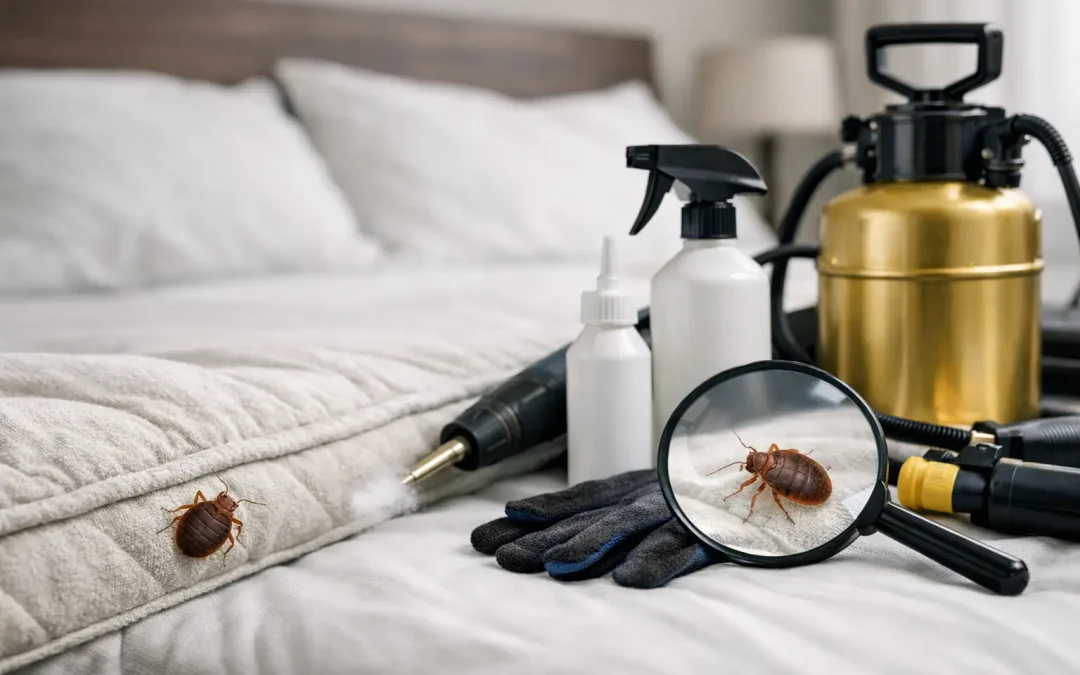
You usually know it is serious when bites start appearing in a line, sleep becomes difficult, and washing every sheet in the house still does not solve the problem. A proper bed bug treatment review matters because these infestations rarely disappear through surface cleaning alone. Whether you are dealing with a bedroom at home, a rental property, or a guest-facing business, the real question is not just what kills bed bugs, but what removes them fully and stops them returning.
Bed bug treatment review: the main options
Most treatments fall into a few categories – shop-bought sprays, insecticidal dusts, steam, heat treatment, mattress encasements, and professional multi-visit programmes. Each has a place, but they do not offer the same result.
Bed bugs are difficult because they hide in very narrow spaces. They can live in bed frames, skirting gaps, soft furnishings, headboards, electrical points and behind loose wallpaper. Eggs are especially challenging, as many products do not destroy them effectively in one application. That is why a treatment that seems to work in the first week can fail by the third.
For homeowners, this often becomes an expensive cycle of repeat buying and repeat washing. For commercial settings such as care environments, staff accommodation, hospitality rooms or short-stay lets, delay carries a bigger risk – complaints, disruption, and reputational damage.
Shop-bought sprays
Retail bed bug sprays are often the first step people take. They can kill exposed insects on contact and may reduce activity for a short period. The problem is coverage. Bed bugs do not remain out in the open, and missing even a small harbourage can allow the infestation to continue.
There is also a false sense of progress with sprays. You may see fewer live insects after use, but that does not mean eggs and hidden adults have been dealt with. In some cases, overuse of the wrong product can scatter activity into nearby rooms or make inspection harder.
Sprays can have value as a temporary control measure, but they are rarely a complete answer on their own.
Insecticidal dusts
Dust formulations can be effective in cracks, voids and inaccessible areas where liquid treatment is less suitable. Used correctly, they can provide longer residual action than many domestic aerosols. Used incorrectly, they create mess, reduce safety, and still fail to reach the main source of infestation.
Dust is not a stand-alone solution either. It works best as part of a structured treatment plan based on inspection, not guesswork.
Steam treatment
Steam is one of the more useful non-chemical options because high temperature can kill bed bugs and eggs on contact. It is particularly helpful on seams, buttons, bed frames and upholstered furniture. For households concerned about chemical exposure, this can be reassuring.
The trade-off is that steam only works where it is applied thoroughly and at the right temperature. Move too quickly, and the heat does not penetrate enough. Miss hidden cracks, and surviving bed bugs remain active. Steam is very effective in trained hands, but less dependable as a casual DIY measure.
Full heat treatment
Heat treatment is often seen as the premium option, and for good reason. When carried out correctly, raising the temperature of an infested room or area to a lethal level can eliminate bed bugs at all life stages, including eggs. It also reaches many hiding places that sprays cannot.
That said, heat is not automatically the right answer in every property. The success of heat treatment depends on room layout, insulation, clutter levels, access, and the ability to achieve and monitor the correct temperatures throughout the treated space. It also requires specialist equipment and technical control.
For severe infestations, multi-room spread, or settings where rapid resolution matters, heat treatment can be one of the strongest options available. It is especially useful where downtime must be reduced.
Mattress encasements and laundering
These measures are supportive, not curative. Encasements can trap insects already inside a mattress and reduce new harbourage points. Hot washing and tumble drying can kill bed bugs on bedding and clothing. Both are sensible parts of the response.
However, if the infestation is also in the bed frame, bedside furniture, carpet edge or wall junctions, laundering alone will not solve the issue. This is where many people lose time.
What actually works in a real infestation?
If this bed bug treatment review has one clear outcome, it is this: successful control usually comes from a combination of thorough inspection, correctly chosen treatment, and follow-up. The best method depends on the scale of the problem.
A very early infestation limited to one sleeping area may respond to a targeted professional treatment with follow-up inspection. A larger or well-established infestation may require a broader programme involving residual insecticides, steam, physical removal advice, monitoring, and sometimes heat.
The reason professional treatment performs better is not just access to stronger products. It is the inspection process. Knowing where bed bugs are likely to harbour, how they spread through adjoining areas, and what signs indicate active versus historic activity changes the whole result.
When DIY stops being cost-effective
DIY often feels cheaper at the start. One spray, a few extra washes, perhaps a mattress cover. But bed bug problems are rarely measured by the first receipt. They are measured by repeat purchases, lost sleep, damaged furnishings, room downtime, tenant complaints, and the risk of spreading insects to other rooms or properties.
For landlords and commercial operators, there is another cost – delay. A guest room left untreated properly can affect neighbouring rooms. Staff trying to manage the issue internally may miss signs or use unsuitable products. In regulated environments, pest activity is not simply a nuisance; it can become a hygiene and compliance concern.
If bites continue after initial treatment, if bugs are being seen in daytime, or if activity appears in more than one room, the problem has moved beyond basic DIY.
A professional bed bug treatment review: what to expect
A credible professional service should start with inspection and honest assessment. Not every property needs the same method, and a reliable provider should explain why a particular treatment is being recommended.
You should expect advice on preparation, because access matters. Bedding, clothing and nearby stored items often need careful handling before treatment. You should also expect clear information on re-entry times, follow-up visits where required, and what level of activity may still be seen immediately after treatment.
For commercial sites, reporting is equally important. Where hygiene standards, audits or internal governance apply, the treatment process should be documented properly. That is especially relevant in care, catering, logistics and other operational environments where pest control must stand up to scrutiny, not just solve the visible issue.
This is where specialist providers offer more than eradication alone. A company such as Pest Pure Solutions can approach bed bug control as part of a wider hygiene and risk-management picture, which is valuable for both homes and businesses that need confidence as well as results.
Signs the treatment has worked – and signs it has not
A reduction in bites is encouraging, but it is not the only measure. Some people do not react to bites at all, while others continue to notice skin irritation from earlier exposure. Better signs include reduced live sightings, no fresh spotting near harbourage areas, and no evidence of continued spread.
By contrast, fresh bites after the expected treatment window, new activity in adjacent rooms, or repeated sightings of different life stages suggest the infestation is still active. That does not always mean the treatment itself was poor. It may mean the infestation was more widespread than first thought, preparation was incomplete, or follow-up was needed.
Bed bug work is one of those areas where certainty matters more than optimism.
Choosing the right response
If you are dealing with a few suspected signs, quick inspection is the smart move. If you already know bed bugs are present, the right treatment depends on access, severity and the type of property involved. Homes need safe, effective elimination with minimal disruption. Businesses need that too, but often with the added pressure of documentation, discretion and continuity.
The most reliable route is not the treatment with the loudest claims. It is the one matched to the actual infestation and delivered with enough technical care to deal with bed bugs at every stage of their lifecycle.
When sleep, hygiene and reputation are on the line, getting the diagnosis right is half the job. Acting early is the other half.
Recent Comments