
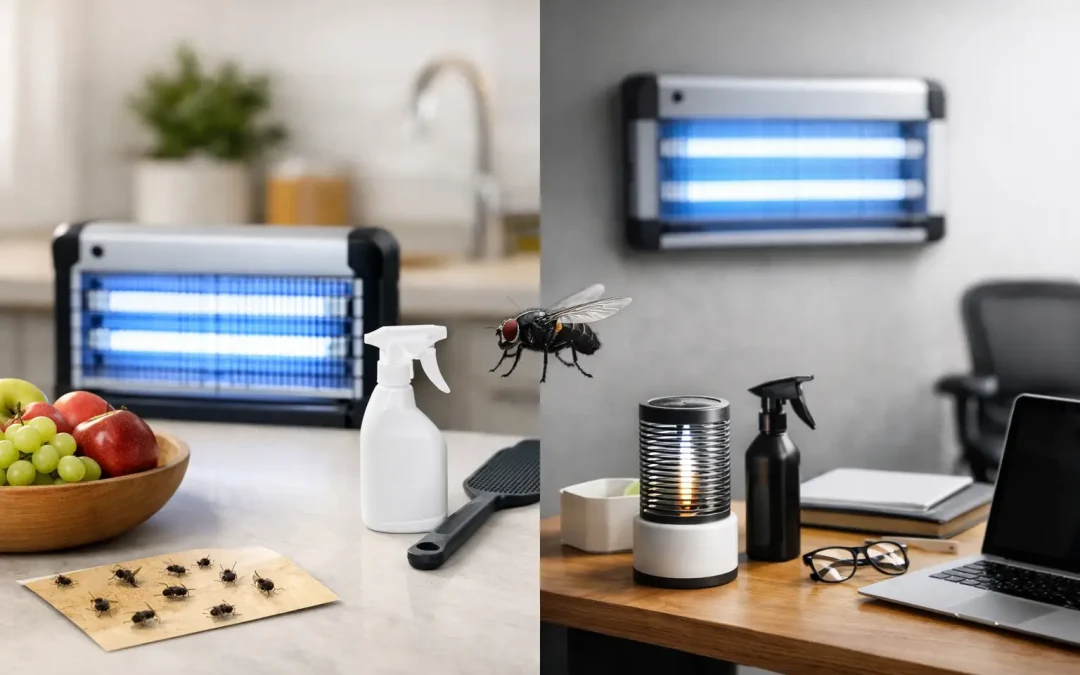
A single fly in a kitchen can be irritating. Repeated fly activity around food, bins, drains or loading areas is a hygiene warning that needs a proper response. The best fly control methods do not rely on one spray or one trap. They remove the breeding source, restrict access to the property and use targeted monitoring to prevent the problem returning.
For homes, the priority is protecting food preparation areas and restoring comfort quickly. For businesses, particularly catering, care, logistics, waste and pharmaceutical sites, fly activity can threaten hygiene standards, customer confidence and audit performance. The right approach depends on the fly species, the size of the infestation and where flies are breeding.
Best fly control methods start at the source
Adult flies are the visible part of the problem, but they are rarely the whole problem. House flies, blow flies, fruit flies and drain flies need suitable conditions to lay eggs and develop. Decaying food, overflowing refuse, dirty drains, damp organic debris and animal waste can all provide a breeding site.
Removing that source is usually the most effective step. Empty internal bins regularly, keep external refuse containers closed and clean spillages promptly. Food waste should be bagged securely, particularly during warmer weather, and recycling areas should be washed where residues have built up. A bin that looks clean from a distance may still contain enough residue around its lid, base or wheels to attract flies.
In homes, inspect pet feeding areas, compost caddies, kitchen bins and under appliances. A dead rodent in a loft, wall void or under a floor can also lead to a sudden appearance of large bluebottle or greenbottle flies. In this situation, treating the adult flies alone will not resolve the issue. Finding and removing the carcass is the key action.
Commercial premises need a wider inspection. Waste storage areas, floor drains, grease traps, staff canteens, delivery bays and damaged bin stores are common risk points. A professional survey should follow the route from where waste is created to where it leaves the site, as this often identifies the underlying cause.
Prevent flies getting indoors
Proofing works alongside cleaning. Flies are drawn to light, warmth and food odours, so open doors and damaged screens can turn a manageable external issue into an internal infestation.
Fit intact insect screens to opening windows where practical, especially around food preparation and storage areas. Check that doors close fully, repair worn seals and avoid leaving doors propped open during deliveries. On busy commercial sites, air curtains or strip curtains may be appropriate at entrances, although they must be correctly selected and maintained to be effective.
External housekeeping matters as much as internal proofing. Keep bins away from doors and windows where possible, clear vegetation that traps rubbish, and make sure gullies and drainage channels are free-flowing. Standing water and accumulated organic material create favourable conditions for several flying insects.
Proofing has limits. It will reduce entry, but it cannot solve an established breeding source inside a drain, bin store or void. That is why a site inspection should always consider both access points and conditions that support fly development.
Use the right treatment for the type of fly
Different flies point to different problems. Identifying them correctly avoids wasted effort and helps determine the safest treatment plan.
House flies and blow flies
House flies are often linked to food waste, animal waste and refuse. Blow flies are larger and may be associated with bins, carrion or dead rodents and birds. Effective control usually combines deep cleaning, improved waste handling, proofing and a targeted insecticidal treatment where needed.
Residual insecticides can be useful on appropriate surfaces in non-food areas, but they should never replace cleaning or be used indiscriminately around food preparation. Professional technicians select products and application methods based on the environment, the risk level and the activity found.
Fruit flies
Small fruit flies are commonly found around overripe fruit, recycling, bar areas, bottle stores and food residues trapped beneath equipment. Removing exposed fruit and cleaning visible surfaces helps, but the real source may be a sticky residue beneath a shelf, inside a recycling container or in a neglected spill tray.
Fruit fly control demands detailed cleaning rather than a quick aerosol treatment. In commercial kitchens and hospitality venues, it may also require a review of stock rotation, cleaning schedules and waste collection frequency.
Drain flies
Drain flies are small, moth-like flies that rest on walls near sinks, showers or floor drains. They breed in the organic film inside poorly maintained pipework and drains. Pouring bleach down a drain may provide a short-lived improvement, but it does not always remove the material supporting larvae.
The more reliable approach is to identify the affected drain, physically clean accessible components and use suitable drain-maintenance products. Where activity persists, the pipework may need further investigation for leaks, damaged traps or infrequently used outlets.
Traps and fly units are monitoring tools, not a complete answer
Fly traps can reduce adult numbers and show where activity is greatest. Sticky traps, pheromone traps and ultraviolet fly control units all have a place, but their location is critical.
UV fly units are widely used in commercial settings because they provide visible monitoring and captured insects can be recorded during servicing. They should be positioned away from open food, external doors and areas where they might draw flies further into the premises. The unit type, glue board replacement schedule and placement should suit the site layout and sector requirements.
Domestic fly papers and baited traps may help in garages, sheds or bin areas, but they can be unsightly and are often insufficient for a recurring indoor problem. Outdoor traps also need careful placement. Put too close to a patio door or kitchen window, they may attract more flies towards the building.
When professional fly control is the sensible option
Professional support is advisable when fly numbers are increasing, the source cannot be found, flies are appearing from drains or wall voids, or the property handles food or cares for vulnerable people. It is particularly important where a pest sighting could affect a hygiene inspection, customer complaint or compliance record.
A competent fly control programme should begin with an inspection, not an assumption. The technician should identify likely species, inspect breeding and entry points, assess waste and cleaning arrangements, and recommend practical corrective actions. Treatment may include targeted insecticide application, drain treatment, proofing advice and installation or servicing of monitoring equipment.
For commercial clients, documented reporting is as valuable as treatment. Service records, trend data, site plans and corrective-action recommendations allow managers to show that risks are being actively controlled. This is especially relevant for high-governance environments, where a fly unit full of insects is not simply a maintenance issue but evidence that requires investigation.
Keep fly pressure low throughout the year
Flies are most noticeable in spring and summer, but prevention should not begin with the first warm spell. Regular cleaning, sensible waste storage and planned monitoring make it far less likely that a small issue becomes a larger infestation.
At home, make bin hygiene and drain cleaning part of the routine. At commercial sites, review fly activity trends before peak season, check door controls and arrange maintenance of fly units before they are urgently needed. If activity continues despite good housekeeping, there may be a hidden source that needs professional investigation.
Pest Pure Solutions provides discreet fly control for homes and businesses across Dublin and surrounding counties, with treatment plans built around hygiene, prevention and the practical needs of each site. Acting early protects more than comfort: it protects the standards people expect from your property or business.
Recent Comments