
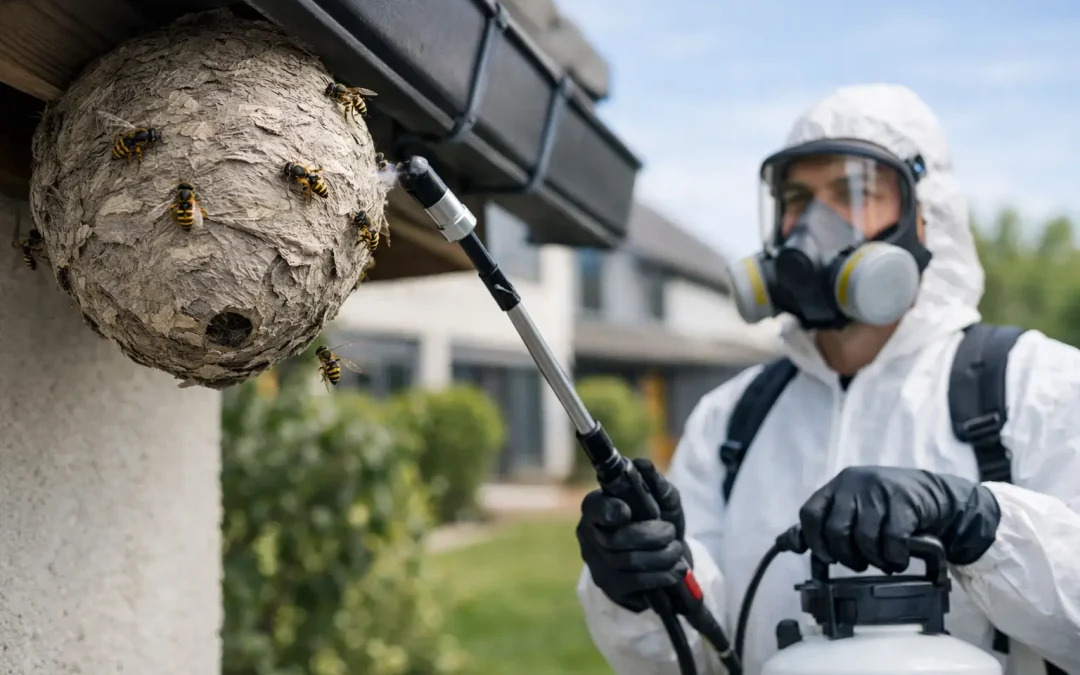
A wasp nest can turn a garden, loft, shed or workplace entrance into an area people avoid. Wasp nest removal Meath is not simply a matter of getting rid of visible insects. Effective treatment needs to deal with the active colony, reduce the risk of stings and help prevent the same access point becoming a problem again.
For homeowners, the concern is often immediate: children cannot use the garden, a pet is getting too close to a nest, or wasps are appearing inside a bedroom. For businesses, the risk can extend to staff welfare, customer confidence, food hygiene and operational disruption. A professional response provides a controlled, discreet solution without putting people unnecessarily close to an active nest.
When a wasp nest needs professional treatment
Wasps are most noticeable from late spring through to early autumn, with activity often increasing during warmer weather. A few wasps around flowers, bins or outdoor food does not always mean there is a nest on the property. Repeated traffic into one particular gap, however, is a strong sign that a colony is established nearby.
Common nest locations include roof eaves, soffits, wall cavities, lofts, sheds, garages, compost areas and dense hedging. In commercial premises, nests may also appear around loading bays, plant rooms, external waste areas, service yards and roof voids. A nest hidden in a cavity can still create a serious issue if wasps find their way into occupied rooms.
Professional treatment is particularly advisable where the nest is close to a doorway, play area, patio, public entrance or working area. It is also the sensible choice for nests at height, in confined spaces, or where the people on site may be allergic to stings. Disturbing a nest can provoke a defensive response from a large number of wasps very quickly.
If somebody develops difficulty breathing, swelling of the face or throat, dizziness or collapses following a sting, seek urgent medical help by calling 112 or 999. Do not wait to see whether symptoms settle.
Why DIY nest removal can make the situation worse
It is understandable to want a quick solution, especially when wasps are affecting daily life. But spraying an entrance hole, knocking down a visible nest or blocking access before treatment can trap or agitate the colony. Wasps may then seek an alternative route into the building, including gaps leading into bedrooms, offices or food preparation areas.
Domestic aerosol products also have limitations. They may not reach a nest concealed behind cladding or inside a wall void, and using them near electrical fittings, open flames or food areas introduces additional hazards. Reaching a nest with ladders is another avoidable risk. The treatment itself is only one part of safe removal – identifying the species, nest position, access route and surrounding risks matters just as much.
There is also the question of bees. Honeybees and bumblebees play an important role in pollination and should not be treated as wasps. Their appearance, behaviour and nesting habits differ, but misidentification is common from a distance. A qualified technician can assess the activity before deciding on the appropriate course of action.
How professional wasp nest removal in Meath works
A proper service starts with an assessment of the problem. The technician identifies where wasps are entering and leaving, considers whether the nest is likely to be visible or concealed, and checks the surrounding area for risks to residents, staff, visitors and pets. This allows the treatment method to be selected for the property rather than relying on a one-size-fits-all approach.
The nest is then treated using professional-grade products and equipment applied in a controlled way. In many cases, the nest does not need to be physically removed on the day. Once treatment has taken effect and activity has stopped, the colony will not recover. Removing an inaccessible nest can cause unnecessary damage to roof spaces, wall finishes or external fittings, so the right approach depends on its position.
Some activity after treatment can be normal, particularly when returning foraging wasps arrive back at the site. This should reduce as the treatment works. Customers should follow the technician’s site-specific advice, including keeping people and pets away from the treated area for the recommended period.
At Pest Pure Solutions, treatments are planned around the location and the practical demands of the property. That may mean arranging access around a family’s routine, keeping a commercial call-out discreet, or managing a nest near a sensitive hygiene area with appropriate care.
Treatment timing depends on the nest location
A visible nest in a detached shed may be straightforward to assess and treat. A nest inside a chimney breast, behind fascia boards or within a cavity can require more care. The aim is not to rush access at the expense of safety. It is to treat the colony effectively while avoiding damage and preventing wasps from moving further into the building.
Late-season nests can look intimidating because they may support high wasp numbers. Yet it is still better not to interfere with them. A professional assessment can establish whether immediate treatment is required and how the area can be managed safely until the work is completed.
Protecting homes, tenants and workplaces
For a home, wasp control is about restoring safe use of the property. It allows families to use outdoor spaces again, reduces the risk to pets and avoids the stress of constantly watching doors, windows and loft areas for insect activity. Landlords and managing agents should also respond promptly, especially where a nest affects shared access routes or a tenant’s ability to use the property safely.
For commercial premises, the implications are often broader. A nest beside a café entrance, care home garden, school collection point or warehouse loading bay can expose employees and visitors to stings. In catering, pharmaceutical, logistics and care environments, a pest issue can raise hygiene concerns and invite questions during inspections or customer visits.
The right service should fit the operation. A one-off call-out may be sufficient for an isolated nest, while a site with repeated seasonal activity may benefit from planned pest monitoring and proofing. Businesses with formal hygiene and compliance responsibilities should retain clear records of inspections, findings, treatment and recommendations. This supports a proactive approach rather than reacting only when the next nest is already active.
Preventing wasps from returning next season
No treatment can guarantee that wasps will never appear on a property again. New queens establish fresh nests each season, and old nests are not normally reused. However, the same sheltered gaps can remain attractive year after year.
After activity has ended, inspect the area for damaged vents, gaps around pipework, loose soffits, broken air bricks and openings into roof voids. Proofing work should be timed carefully and only carried out once the nest is inactive. Sealing an entrance too early can force wasps into internal spaces.
Good external hygiene also helps reduce unwanted wasp activity around a building. Keep refuse areas closed and clean, clear food spillages promptly, maintain outdoor bins and avoid leaving sweet drinks or food uncovered during warmer months. These measures will not remove an established nest, but they can make patios, staff break areas and customer spaces less attractive to foraging wasps.
Choosing a dependable local service
When arranging wasp nest removal, ask whether the provider will assess the nest location before treatment, explain what will happen afterwards and provide practical advice on access and prevention. Price matters, but the cheapest option is rarely good value if it leaves a concealed nest active, creates property damage or puts occupants at risk.
For commercial sites, check that the contractor can work around your operating hours, provide suitable documentation and understand the hygiene demands of your sector. A discreet, responsive service is particularly valuable where public access, vulnerable residents, food handling or regulated processes are involved.
Do not wait for a nest to become a daily hazard. Keeping people away from the area and arranging a professional assessment early gives you the best chance of resolving the problem safely, with minimal disruption to your home or business.
Recent Comments