
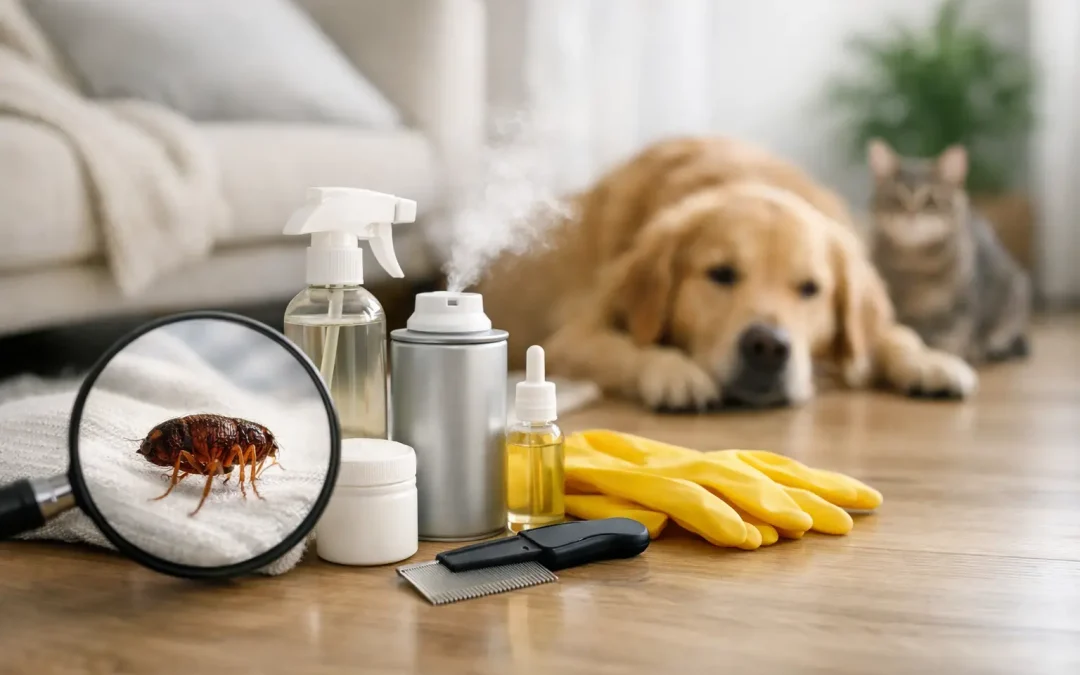
Fleas rarely stay confined to the pet bed. By the time adults are biting ankles or appearing on a sofa, eggs and developing fleas may already be spread through carpets, soft furnishings and floor gaps. This homeowner guide to flea treatment explains how to tackle the full infestation safely, rather than simply killing the fleas you can see.
Why flea infestations keep returning
A flea problem can appear to improve quickly after cleaning or using a household spray, then return days or weeks later. That is because adult fleas are only one part of the lifecycle. Eggs fall from pets into the home, larvae develop in protected areas such as carpet fibres and under furniture, and pupae remain inside sticky cocoons that are difficult for treatments to penetrate.
Heat, movement and the presence of a host can encourage adult fleas to emerge from those cocoons. This is why homeowners may see fresh activity after vacuuming, walking through a room or returning from a holiday. Effective treatment must account for the developing stages, not just the adults currently on a pet or floor.
Fleas most often arrive through cats and dogs, but they can also be introduced by visiting animals, wildlife near the property, or a previous occupant in a rented home. Even homes with very clean floors can be affected. Fleas need a host and sheltered places to develop, not an untidy house.
A homeowner guide to flea treatment: find the source first
Start by checking pets carefully. Use a fine-toothed flea comb over white paper or a pale towel, concentrating around the neck, lower back, belly and base of the tail. Small dark specks may be flea dirt. If the specks turn reddish-brown when dampened, they are likely digested blood and a strong sign that fleas are present.
Pets are not the only source, however. Fleas may be concentrated in a favourite sleeping area, a fabric sofa, beneath a bed, along skirting boards or in rooms where a pet spends little time but people sit regularly. Bites on lower legs can suggest fleas, although bites alone cannot confirm the pest. Other insects and skin conditions can cause similar irritation.
If there are no pets in the property, consider whether a previous pet, visiting animal, fox, rodent or bird nest near the building could be involved. A professional inspection is particularly useful where the cause is unclear, because treating the wrong area or missing an animal source can lead to repeated activity.
Treat pets and the home at the same time
Treating a pet without treating the house allows developing fleas indoors to re-infest the animal. Treating rooms while leaving pets untreated has the same problem. The safest approach is to coordinate veterinary-approved pet treatment with thorough environmental treatment.
Start with veterinary advice for pets
Speak to a vet or qualified veterinary professional about a suitable flea treatment for every cat and dog in the household. The right product depends on the animal’s species, age, weight, health and current medication. Never apply a dog flea product to a cat unless a vet has specifically confirmed it is safe. Some ingredients that are suitable for dogs can be highly dangerous to cats.
Follow the product instructions exactly and maintain treatment at the recommended intervals. Bathing, swimming and grooming can affect some products, so check the label or ask the prescribing professional. Wash pet bedding only after the animal has been treated, otherwise it can quickly become contaminated again.
Clean thoroughly before applying room treatment
Vacuum carpets, rugs, upholstered furniture, pet beds, mattress edges, beneath furniture and along skirting boards. Use crevice attachments to reach seams and corners where flea debris can collect. Empty the vacuum container into a sealed bag and place it in an outdoor bin straight away. If your vacuum uses a bag, remove and dispose of it according to the manufacturer’s guidance.
Wash washable pet bedding, throws and cushion covers at the hottest temperature the fabric can safely tolerate. Where appropriate, a 60°C wash can help kill flea stages, but always follow the care label to avoid damaging the material. Items that cannot be washed should be vacuumed carefully and may require targeted professional treatment.
Apply insecticide carefully and allow time for results
For a confirmed household infestation, an approved residual insecticide may be needed. Products designed for flea control often include an insect growth regulator, which helps interrupt the development of eggs and larvae. Read the label in full before use. It should state where the product can be applied, how much is required, how long people and pets must stay out of the treated space, and when the area is safe to re-enter.
Remove or cover food, food-preparation items, fish tanks and children’s toys before treatment. Keep children and pets away until treated surfaces are fully dry and the label’s re-entry instructions have been met. Do not spray pet bedding while the pet is using it, and do not use household insecticide directly on animals unless it is specifically licensed for that purpose.
Treat the areas where fleas are likely to develop, rather than spraying every surface indiscriminately. Carpets, rugs, fabric furniture, floor edges, cracks near pet resting places and the underside of furniture are usually more relevant than walls or open worktops. Foggers and total-release aerosols are often a poor substitute for targeted treatment because they may not reach the sheltered areas where immature fleas are developing.
Do not expect every flea to disappear immediately. Pupae can remain protected until adults emerge, so occasional new fleas may be seen after treatment. Continue vacuuming regularly to remove debris and encourage emerging adults to contact treated areas. Avoid deep-cleaning or steam-cleaning treated carpets until the product instructions permit it, as this may reduce the residual effect.
Avoid the common causes of treatment failure
The most frequent problem is treating only one part of the infestation. Every pet must be on an appropriate treatment plan, and the rooms they use must be cleaned and treated consistently. A second issue is stopping too soon. Flea control requires patience because the lifecycle does not end when the first adult flea is killed.
Be cautious about home remedies. Essential oils, vinegar and strongly scented products are not proven replacements for properly approved flea treatment, and some can be harmful to pets. Likewise, mixing chemical products or applying more than the labelled amount does not make treatment more effective. It can create unnecessary risks for occupants, animals and surfaces.
If you have birds, reptiles, fish, young children, pregnancy concerns, respiratory conditions or a pet with an existing health issue, seek tailored advice before applying any pesticide indoors. The correct treatment method depends on the property, the level of activity and who uses the space.
When to call a professional flea controller
Professional treatment is sensible when bites continue after a coordinated home effort, fleas are widespread through several rooms, the property is vacant or rented, or the source may be wildlife or rodents. It is also the safer option where there are vulnerable occupants or uncertainty about which products can be used around pets.
A professional pest controller can assess the likely source, identify flea harbourage areas and apply a targeted treatment programme with clear preparation and aftercare instructions. In some cases, more than one visit may be recommended because of the flea lifecycle. That is not a sign that treatment has failed. It is often the most reliable way to deal with emerging fleas and confirm that activity has stopped.
For homeowners in Dublin, Kildare, Wicklow and Meath, Pest Pure Solutions provides professional, discreet flea treatment with practical guidance on preparation, pet safety and follow-up control.
A calm, methodical response is more effective than repeatedly changing products. Treat the host, treat the environment, keep cleaning consistently and seek professional help early if activity does not reduce. That gives your household the best chance of ending the problem without exposing family members or pets to unnecessary risk.
Recent Comments