
A kitchen can look spotless and still carry risk. That is where confusion often starts around disinfection vs deep cleaning. They are not the same service, they do not solve the same problem, and choosing the wrong one can leave hygiene gaps in a home, workplace, care setting or food-handling environment.
For homeowners, that can mean lingering contamination after illness, pests or waste exposure. For commercial sites, it can mean avoidable operational risk, failed hygiene standards and questions from auditors, clients or regulators. The right approach depends on what you are trying to remove, reduce or prevent.
Disinfection vs deep cleaning: what is the difference?
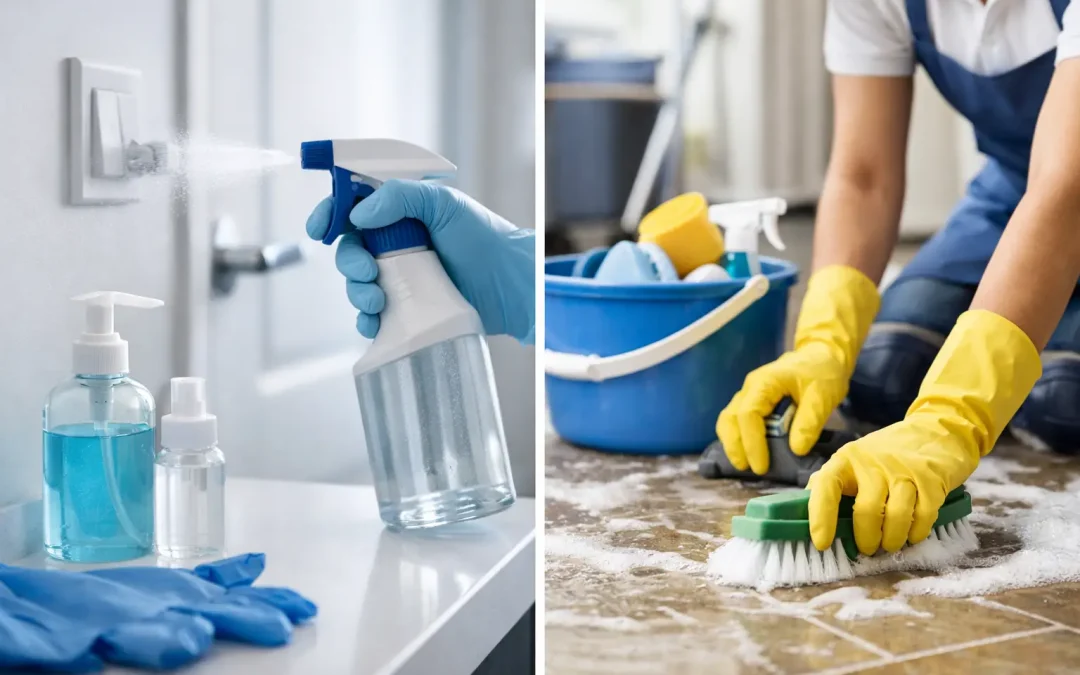
Deep cleaning is focused on physically removing dirt, grease, dust, debris and built-up grime from surfaces and hard-to-reach areas. It goes beyond a standard clean by targeting neglected zones such as skirting boards, behind equipment, high-touch points, floor edges, vents and washroom fixtures. The aim is to restore cleanliness and remove the organic matter that bacteria, odours and pests can thrive on.
Disinfection is different. It is the process of reducing harmful microorganisms on surfaces through the use of appropriate disinfectant products and application methods. While cleaning removes contamination, disinfection is designed to treat the microbial risk that may remain.
In simple terms, deep cleaning removes the dirt you can often see. Disinfection addresses the contamination you usually cannot. One is not automatically a substitute for the other.
That distinction matters because disinfectants generally work best on surfaces that have already been cleaned properly. If grease, food residue, dust or organic matter are still present, the disinfectant may not contact the surface effectively or perform to the required standard.
Why the order matters
In practice, the safest and most effective hygiene results often come from cleaning first and disinfecting second. This is especially true after a pest issue, a bodily fluid incident, a bin store problem, heavy washroom use, or an outbreak concern in a shared environment.
A deep clean prepares the area. It strips away the material that shields bacteria and viruses, improves overall hygiene, and makes hidden issues easier to identify. Once that is done, disinfection can be applied to the relevant surfaces with far better coverage and reliability.
Skipping straight to disinfection may sound quicker, but it can be a false economy. If the underlying dirt load is still there, the treatment may be less effective, and the space may still feel unclean or smell unpleasant even after the work is done.
When deep cleaning is the right choice
Deep cleaning is often the better option when the main issue is visible build-up, poor hygiene standards, odour, or contamination linked to neglect, pests or high use over time.
In a domestic setting, this could include a property after a mouse infestation, a kitchen with grease accumulation, or a bathroom that has developed heavy limescale and residue around fittings and flooring edges. In commercial premises, deep cleaning is commonly needed in staff kitchens, washrooms, bin stores, warehouses, food prep areas and back-of-house zones where dirt gradually builds beyond what routine cleaning can manage.
It is also the right starting point when a site has recurring pest activity. Crumbs behind units, grease under appliances, residue around waste areas and hidden spillages all create ideal conditions for insects and rodents. Removing those conditions is not just about appearance. It supports pest prevention and helps break the cycle of repeat activity.
For businesses in regulated sectors, deep cleaning can also form part of a broader hygiene correction plan. If inspections have identified housekeeping failures, surface contamination risks or poor standards in hard-to-access areas, a one-off intensive clean may be necessary before routine systems can be relied upon again.
When disinfection is the priority
Disinfection becomes the priority when the main concern is pathogen control rather than visible dirt alone. This may follow illness in a household, a confirmed contamination event, a suspected viral exposure, or an incident involving bodily fluids, waste or pests.
In care settings, pharmacies, catering environments and shared workplaces, the decision to disinfect is often linked to protecting vulnerable people, reducing transmission risk or meeting internal hygiene protocols. In these spaces, high-touch surfaces such as door handles, rails, switches, desks, shared equipment and washroom contact points often need targeted treatment.
For homeowners, disinfection is commonly appropriate after sickness in the home, particularly where multiple people share bathrooms, bedrooms or kitchen surfaces. It can also be sensible after pest contamination where rodents, birds or insects may have spread harmful organisms onto surfaces, cupboards or stored items.
That said, disinfection is not a magic fix. If the site is visibly dirty, if waste remains present, or if contamination is widespread, it should usually sit within a wider cleaning and hygiene response rather than being treated as a standalone solution.
Disinfection vs deep cleaning after pest activity
This is one of the areas where the distinction matters most. After a pest problem, many people focus on removal of the pest itself and overlook the hygiene risk left behind.
Rodents can leave droppings, urine trails, nesting debris and contamination in lofts, kitchens, storage areas and service voids. Cockroaches can spread bacteria across food contact surfaces and hidden harbourage points. Birds can create significant fouling and airborne contamination risk around ledges, rooftops and access zones. In each of these cases, simply spraying disinfectant over the area is rarely enough.
A proper response usually starts with safe removal of contaminated materials and a deep clean of the affected area. Once surfaces have been cleaned, disinfection can then be used where appropriate to reduce the microbial risk. If proofing or pest prevention work is also required, that should be handled as part of the same plan so the area does not return to the same condition.
This joined-up approach is especially important in commercial settings, where hygiene, audit readiness and continuity all matter. A pest issue is not just about eradication. It is about restoring the site to a safe, controlled standard.
How to choose the right service
The best choice depends on the condition of the site, the nature of the risk and what outcome you need.
If the problem is visible dirt, ingrained grime, odour, grease, neglected areas or hygiene decline over time, deep cleaning is likely to be the starting point. If the problem is exposure to harmful microorganisms after illness, contamination or a high-risk incident, disinfection is likely to be required as well.
In many cases, the answer is both. That is particularly true in homes after pest contamination, and in businesses where hygiene standards have to be demonstrated, not just assumed.
There are also practical factors to weigh up. Some disinfectant treatments require dwell time to work properly. Some environments need careful product selection because of food handling, sensitive equipment, vulnerable occupants or operational restrictions. Some areas may need to be isolated temporarily during treatment. That is why a professional assessment matters. The right method is not only about what cleans the surface, but what protects people, property and compliance.
A note for commercial operators
For facilities managers and business owners, disinfection vs deep cleaning is not a cosmetic decision. It can affect staff confidence, customer perception, inspection outcomes and operational resilience.
A warehouse with high-touch shared equipment has different risks from a care home bedroom. A catering unit has different surface requirements from a waste handling site. In sectors where records, reporting and hygiene evidence matter, the service must match the environment and the risk profile.
That is where specialist support becomes valuable. A professional provider can identify whether the issue is housekeeping, contamination, pest-related hygiene failure, or a combination of all three. In counties such as Dublin, Kildare, Meath and Wicklow, where commercial sites range from offices and blocks of flats to pharma and logistics facilities, that distinction can save time and prevent costly repeat problems.
The clearest way to think about it is this: deep cleaning restores the condition of the space, while disinfection reduces the microbial risk within it. If you choose the service based on the actual hazard rather than the label, you are far more likely to get a result that is safe, effective and proportionate.
If you are unsure which is needed, start by asking a practical question: are you dealing with dirt, germs, or both? The answer usually points you in the right direction, and if it is both, dealing with it properly now is far easier than dealing with the consequences later.
Recent Comments