
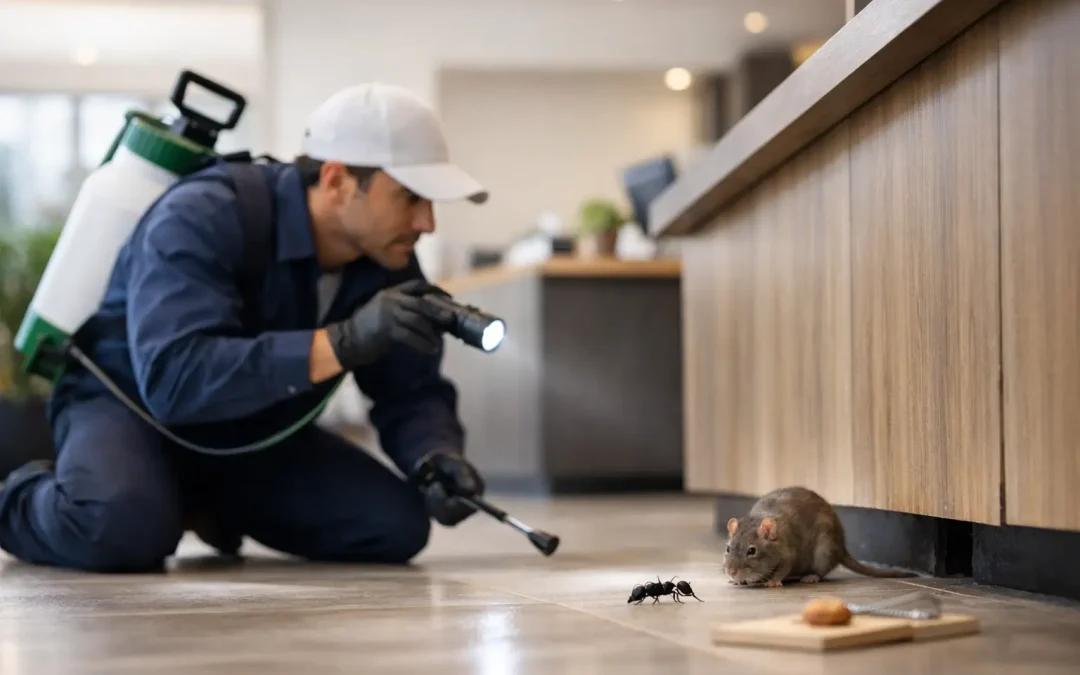
A single pest sighting in a commercial premises can quickly become more than a nuisance. For pest control Meath businesses need, the real issue is often the knock-on effect – failed audits, damaged stock, interrupted operations, staff concern and reputational risk that lingers long after the infestation itself is gone.
That is why effective commercial pest management is not just about removing rats, mice, insects or birds when they appear. It is about protecting hygiene standards, maintaining compliance, and reducing the chance of the same problem returning a few weeks later. For businesses in Meath, especially those handling food, healthcare, logistics or regulated goods, that difference matters.
Why pest control matters for Meath businesses
Commercial sites create ideal conditions for pests more often than managers realise. Deliveries bring in packaging and movement. Waste areas create food sources. Warm plant rooms, ceiling voids, kitchen spaces, drains and storage zones give pests shelter. Even a well-run building can develop a vulnerability if proofing is poor or monitoring is inconsistent.
For some sectors, the risks are immediate and visible. A café with flies around waste storage or a warehouse with rodent activity has an obvious hygiene issue. In other sectors, the impact is more technical. A pharmaceutical facility, care environment or distribution site may face audit concerns, documentation failures or non-compliance if pest activity is not managed properly and recorded in detail.
This is where many businesses make the wrong comparison. They look at pest control as a one-off reactive cost, when in practice it is often a hygiene and risk management function. The right service helps prevent disruption before it starts.
Common pest issues in commercial premises
The pest problems affecting Meath businesses vary by property type, industry and season. Rodents remain one of the most common concerns, particularly in warehouses, food environments, external service yards and buildings with frequent delivery traffic. Mice can enter through very small gaps, while rats are often linked to drainage defects, unmanaged waste or external harbourage.
Flying insects are another recurring issue, especially in warmer months or in premises with food handling, bins, drains or open-door traffic. Flies, moths and wasps can all create hygiene concerns and customer-facing problems. In hospitality, retail and care settings, even a minor flying insect issue can quickly affect confidence in the premises.
Crawling insects such as ants, cockroaches, bed bugs, silverfish and fleas are less common in every site, but when they appear, they usually require a more targeted response. Cockroaches and bed bugs in particular need fast action and careful treatment planning. Delays rarely improve the situation.
Bird activity can also create serious operational issues. Nesting and roosting around roofs, loading bays, signage and plant areas may lead to fouling, blocked gutters, slip hazards and contamination risks. In some premises, bird proofing is just as important as treatment.
Not every pest issue looks dramatic at first
One of the biggest commercial risks is assuming the problem is minor because it is not yet visible across the whole site. A few droppings in a storeroom, moth activity near stock, or occasional flies around a sink area may look manageable internally. In reality, these are often early indicators of a wider issue involving access points, sanitation gaps or hidden breeding areas.
What good pest control for Meath businesses should include
A professional commercial service should begin with inspection, not guesswork. Before treatment is proposed, the source of the problem needs to be understood properly. That means identifying pest type, pressure level, access routes, harbourage, contributing hygiene conditions and any structural vulnerabilities.
From there, the treatment plan should be proportionate to the setting. A small retail unit, a care home kitchen and a pharmaceutical warehouse do not need the same approach. The method, visit frequency, reporting standard and level of proofing all depend on the operating environment and the risk attached to that site.
For most commercial clients, the strongest approach combines several elements. Immediate eradication may be necessary where there is live activity. Ongoing monitoring is often required to make sure the issue is contained. Proofing work may be needed to block entry points. Hygiene recommendations may also form part of the solution, particularly where waste handling, storage practice or cleaning gaps are contributing to the infestation.
That broader approach is often what separates a short-term fix from a reliable long-term result.
Compliance and reporting are not optional in many sectors
For regulated businesses, pest control is not only about treatment outcomes. It is also about evidence. If a site is audited, inspected or assessed by clients, it must be able to show that pest risks are being managed in a structured, documented way.
This is especially relevant in sectors such as pharmaceuticals, catering, logistics, waste management and care settings. Here, pest control records may need to support internal compliance systems, hygiene audits or GDP-related documentation. A verbal assurance that a problem was dealt with is not enough.
Clear site reports, treatment records, trend analysis and practical recommendations all add value. They help businesses show due diligence, but they also improve decision-making. If rodent activity is repeatedly found in the same external area, for example, the right report should highlight that pattern and point to the underlying cause. Without that level of detail, businesses end up treating the symptom instead of removing the risk.
The cheapest option is rarely the safest one
A lower-cost contractor may seem attractive when the issue appears straightforward. But if reporting is weak, visits are inconsistent or the treatment does not account for the site’s compliance requirements, the cost can rise quickly through repeat infestations, failed inspections or operational disruption. In commercial pest control, value comes from reliability and technical competence, not just attendance.
Reactive call-outs versus planned prevention
There are times when an urgent call-out is the right response. If staff have seen rodents, a wasp nest is affecting customer access, or a catering site has active insect problems, immediate treatment matters. Fast attendance reduces exposure and helps prevent escalation.
However, businesses that only call when there is visible activity often end up dealing with more severe and more expensive problems. By the time pests are noticed by staff or customers, the issue may already be well established.
A planned service contract gives a different level of protection. Scheduled inspections, monitoring devices, trend reviews and proofing recommendations can identify issues earlier. This is particularly useful for sites with regular goods movement, food storage, high footfall or strict hygiene standards.
It also allows pest control to become part of a wider site management plan rather than an isolated emergency measure. That is a better fit for businesses that cannot afford recurring disruption.
Choosing the right provider for pest control Meath businesses need
The right provider should understand more than pest behaviour. They should also understand your environment, your operational pressures and the level of discretion required. For a homeowner, a fast and effective treatment may be the priority. For a commercial client, there is usually more at stake – staff confidence, customer experience, compliance performance and business continuity.
Look for a service that offers a proper survey, clear recommendations and treatments suited to your sector. Ask how reporting is handled. Ask whether proofing and hygiene-led prevention are included where relevant. Ask whether the provider is equipped to support sensitive environments where documentation and professional standards matter as much as the treatment itself.
For some businesses in Meath, a basic reactive service may be enough. For others, particularly in regulated or high-governance sectors, specialist support is the safer option. It depends on the site, the pest pressure and the consequences of getting it wrong.
A company such as Pest Pure Solutions reflects the standard many commercial operators now need – technical pest control backed by detailed reporting, discreet service delivery and broader hygiene support where required.
A practical response starts early
Most commercial pest problems do not begin with a dramatic event. They begin with a small gap under a door, unmanaged waste storage, a damaged drain cover, poor stock rotation or an unnoticed pattern in a quiet corner of the building. Left alone, those details create the conditions pests look for.
The most effective response is to act early, before the issue becomes visible to customers, auditors or senior management. When pest control is treated as part of hygiene, compliance and operational planning, businesses are in a far stronger position to protect their premises and keep standards where they should be.
Recent Comments