
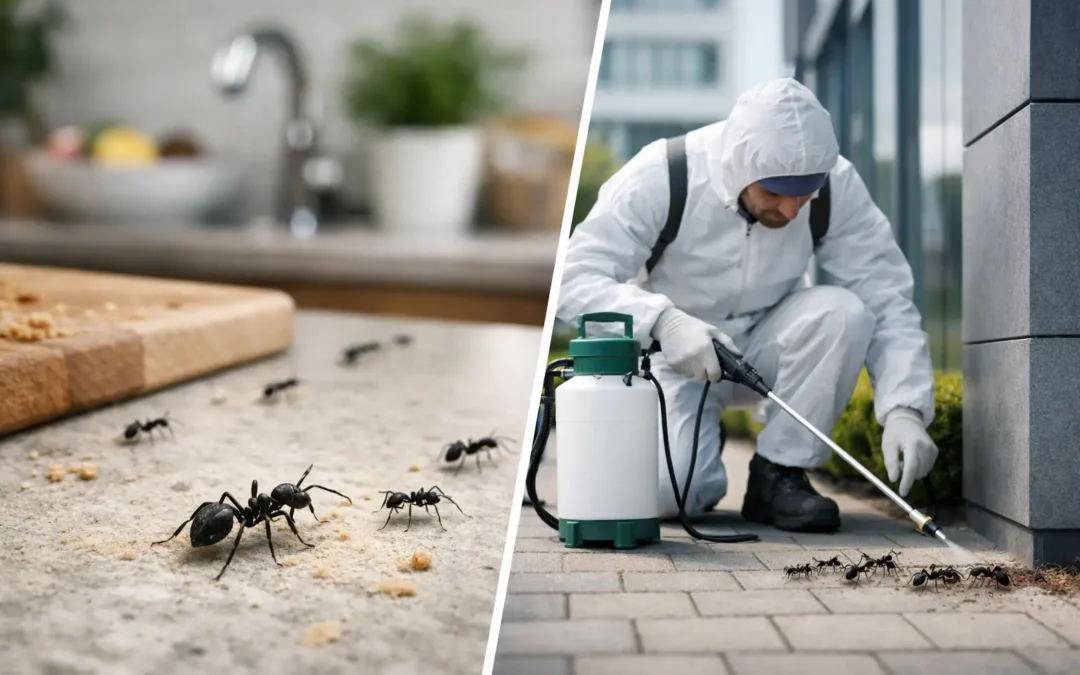
The first sign is usually small and easy to dismiss – a thin trail of ants along a skirting board, around a sink, or across a staff canteen floor. Then the trail returns the next day, and the next. Effective ant control Meath property owners can rely on starts with understanding why ants have appeared, where they are nesting, and why shop-bought treatments often only reduce activity for a short time.
Ants are a common problem in both domestic and commercial settings, especially in warmer months when colonies become more active. While a few visible ants may not seem serious at first, recurring activity often points to a larger nesting issue nearby. For homeowners, that can mean contamination of food areas and persistent nuisance. For businesses, it can quickly become a hygiene concern that affects staff confidence, customer perception, and compliance standards.
Why ant activity should not be ignored
Ants are drawn by food, moisture and shelter. Kitchens, utility rooms, bin storage areas, staff break rooms and wall voids all provide favourable conditions. Once worker ants locate a food source, they leave a scent trail for the rest of the colony. That is why a minor sighting can turn into a regular pattern very quickly.
The main issue is not usually the ants you can see. It is the colony supporting them. Many nests are hidden under paving, in cavity walls, beneath floors, behind tiles or around foundations. If the treatment only targets exposed ants, the nest remains active and the problem soon returns.
In commercial premises, even a low level ant presence matters. Food handling areas, healthcare settings, warehousing and regulated sites all need a prompt and controlled response. A visible infestation can raise questions about cleaning standards, building maintenance and pest prevention controls, even when the underlying cause is external.
Ant control Meath: what causes repeat infestations?
Repeat infestations usually happen for one of three reasons. The first is incomplete treatment. Aerosols and surface sprays may kill foraging ants, but they often fail to reach the queen and the deeper parts of the nest. The second is poor exclusion. If ants can enter through cracks, pipe gaps, door thresholds or damaged seals, new activity can continue even after initial treatment. The third is attractants that have not been addressed, such as sugary residue, overflowing bins, pet food, standing water or outdoor nesting close to the building.
Seasonality also plays a part. During spring and summer, ant colonies expand and foraging intensifies. Warm weather can make hidden activity much more noticeable. In some cases, winged ants appear indoors during swarming periods, which can be alarming for occupants and may suggest a nest within or very close to the structure.
That does not mean every infestation is severe, but it does mean the response should be proportionate. A one-off sighting near an external doorway is different from established trails in multiple internal rooms. The right approach depends on the species, nesting location, site use and the level of recurrence.
How professional ant control works
Professional ant control is not simply a matter of applying more product. It starts with inspection. The goal is to identify entry points, track ant movement, assess likely nesting areas and understand what is sustaining the activity.
In a home, that may involve checking kitchens, bathrooms, patios, external walls, drains and surrounding ground conditions. In a commercial site, the inspection is often broader. It can include food preparation zones, waste handling areas, staff welfare rooms, incoming goods points and the building perimeter. Where hygiene and audit requirements apply, the inspection also needs to support clear documentation and sensible preventive actions.
Treatment is then selected according to the site and the infestation. Gel baits are often effective because worker ants carry the active ingredient back to the colony. Residual treatments may be used in targeted locations where appropriate. Dust formulations can help in voids or inaccessible nesting points. The exact method matters because overapplication or poorly placed treatment can reduce effectiveness or create unnecessary risk.
This is where experience makes a difference. Ant behaviour is predictable in some ways, but site conditions vary. The same infestation pattern in a family home and in a pharmaceutical support area will not be handled in exactly the same way. Safety, discretion, record-keeping and treatment choice all need to match the environment.
What homeowners in Meath should look out for
In residential properties, ants are most often noticed in kitchens, near back doors, around windowsills and along patios or garden paths. They may be entering from outdoor nests under slabs or from structural gaps around pipes and brickwork. Sweet foods, crumbs, spills and warm indoor conditions make the problem worse.
Homeowners often try shop products first, and that is understandable. For very minor activity, a DIY response can sometimes reduce the problem. The trade-off is that visible reduction can create a false sense of control. If the colony remains active, ants usually return once the surface treatment wears off.
A more reliable result comes from treating the source and reducing the factors attracting them in the first place. Good hygiene helps, but cleanliness alone does not always solve the issue. Even well-kept homes can experience infestations when nests are established close to the property.
If ants are appearing repeatedly, spreading to more than one room, or re-emerging after previous treatment, it is sensible to arrange a professional inspection. That is especially true where young children, pets or vulnerable occupants are present and treatment needs to be handled carefully.
Ant control Meath businesses can depend on
For commercial premises, the standard is understandably higher. A few ants in a domestic kitchen are frustrating. A few ants in a food business, care setting, warehouse dispatch area or client-facing premises can become a business issue.
The response needs to be practical and documented. That means identifying root causes, applying suitable treatment, advising on proofing and hygiene corrections, and maintaining records where required. In regulated sectors, pest control is not just about removal. It supports due diligence, audit readiness and operational continuity.
Sites with frequent deliveries, external waste areas, drainage channels or older building fabric are often more vulnerable to ant ingress. In those environments, one-off treatment may not be enough. Ongoing monitoring and a planned pest management programme can be the better option, particularly where pest incidents carry reputational or compliance risk.
This is also where a broader hygiene-led service matters. Ants do not exist in isolation from housekeeping, waste management and structural maintenance. A professional provider should look at the full picture rather than treating a symptom in isolation.
Preventing ants from returning
Prevention is rarely glamorous, but it is what keeps ant activity under control after treatment. Food should be stored properly, spills cleaned promptly and internal bins emptied regularly. External bins should be positioned and maintained to reduce attraction around entry points.
It also helps to seal gaps around doors, windows, service pipes and cracks in masonry where practical. Damaged seals and thresholds are common entry routes. Outdoors, nests beneath paving or close to foundations may need attention if they are contributing to repeat indoor activity.
For commercial sites, prevention should be formalised. Cleaning schedules, staff reporting, waste handling, proofing checks and routine inspections all strengthen control. Where a site has compliance obligations, these measures should be recorded clearly and reviewed as part of the wider pest management plan.
When to call for professional help
The right time to call is usually earlier than people think. If ants are returning despite DIY treatment, if there are visible trails on consecutive days, or if the infestation affects a sensitive area, professional intervention is likely to save time and reduce disruption.
For businesses, speed matters even more. Waiting for the issue to worsen increases the chance of operational impact and may make the infestation harder to contain. A discreet inspection and targeted treatment plan can resolve the immediate problem while reducing the chance of repeat activity.
In Meath, where homes and commercial sites range from modern developments to older properties with more complex access points, ant problems are not always straightforward. The most effective response combines inspection, treatment, proofing advice and, where needed, ongoing monitoring. That is the standard professional providers such as Pest Pure Solutions aim to deliver.
If ants have started to appear more than once, the useful question is not how to kill the next trail. It is what is allowing the colony to keep sending them back.
Recent Comments