
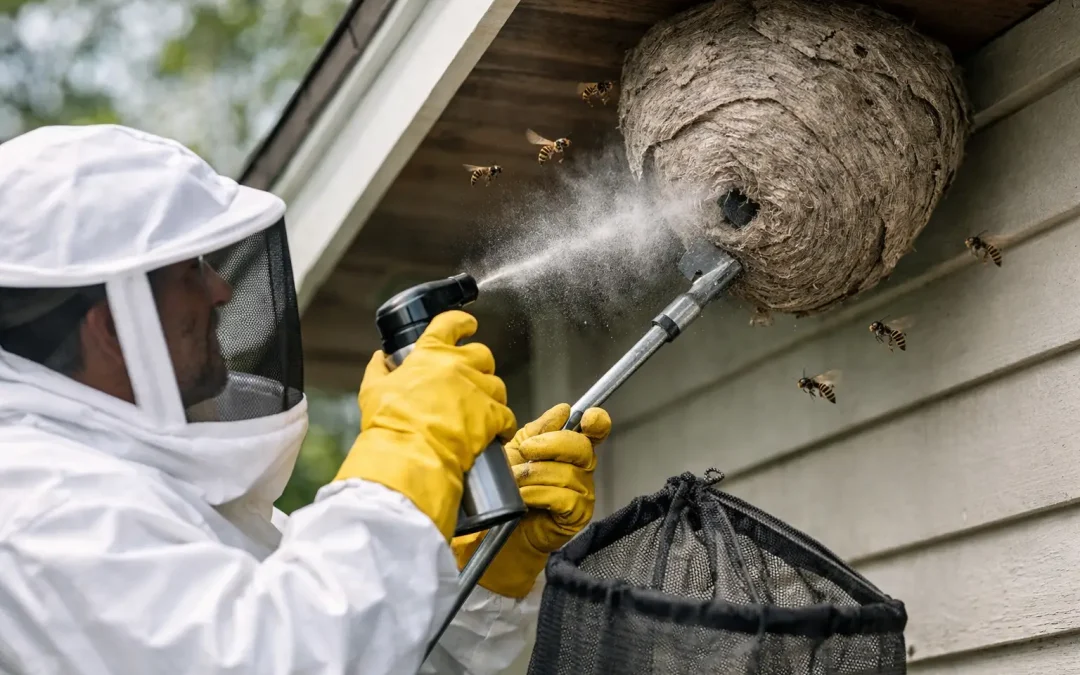
A wasp nest rarely starts as a major problem. In spring, it may be no bigger than a golf ball and easy to miss under eaves, inside a shed roof or in a wall cavity. By late summer, that same nest can hold thousands of wasps, turning a routine trip to the bin store or garden into a genuine safety issue. If you are looking up how to remove a wasp nest, the first thing to know is simple – the safest method depends on the nest’s size, location and activity level.
Wasps become aggressive when they believe the nest is under threat. That matters in homes with children, pets or anyone sensitive to stings, and it matters even more in workplaces where staff, visitors or customers may be exposed. In some cases, nest removal is straightforward for a trained technician. In others, attempting it yourself can make the problem worse very quickly.
How to remove a wasp nest without taking unnecessary risks
Before doing anything, confirm that it is active. You will usually see wasps flying in and out of a single entry point, often in a steady pattern during warmer parts of the day. If there is constant movement around rooflines, air bricks, loft vents, garden structures or wall gaps, assume the nest is live.
The next question is whether the nest is visible and accessible. A small exposed nest hanging from a shed ceiling is very different from a hidden nest inside a cavity wall. Hidden nests are often more dangerous because you cannot judge their size properly, and amateur treatment can drive wasps further into the building fabric.
If the nest is active, high up, difficult to reach, near doors or windows, or inside the structure of the property, professional treatment is the sensible option. The same applies if anyone at the property has a known allergy to stings. This is not just about convenience. It is about controlling risk.
When you should not try to remove a wasp nest yourself
There is a big difference between wanting a fast fix and choosing a safe one. Many people think the answer is a spray from a DIY shop, but that only works in limited situations and can be unreliable if the nest is mature or concealed.
You should not attempt removal yourself if the nest is in a loft, chimney, cavity wall, under roof tiles or behind cladding. You should also avoid DIY action if you need a ladder to reach it, if the nest is larger than a tennis ball, or if wasps are already showing defensive behaviour. Buzzing around your face, swarming near the entrance or reacting sharply to movement are all warning signs.
For commercial sites, the threshold for calling a professional is even lower. A wasp nest near entrances, loading areas, refuse zones, staff welfare spaces or external dining areas can create a health and safety issue very quickly. In regulated environments such as care, food handling, logistics or pharmaceutical settings, the risk is not only physical. It can affect audits, hygiene standards and day-to-day operations.
What professional wasp nest treatment involves
Professional treatment is designed to kill the colony at source rather than just disperse the visible insects. In most cases, an appropriate insecticidal treatment is applied directly into the nest or entry point. This allows worker wasps to carry the treatment deeper into the colony, where it can reach the queen and the remaining population.
The nest does not usually need to be physically removed straight away. That surprises some property owners, but it is often the correct approach. Once treated properly, the nest becomes inactive and naturally degrades over time. Immediate removal is only necessary in some situations, particularly where there is a hygiene concern, repeat access issue or visible nest material in an occupied space.
A qualified pest control technician will also assess why the nest formed there in the first place. That may include sheltered roof voids, unsealed access gaps, warm cavities or undisturbed outbuildings. In commercial environments, this inspection stage is particularly valuable because it helps reduce repeat incidents and supports a more preventative approach.
If you are considering DIY, be realistic about the limits
There are situations where householders try a shop-bought wasp powder or foam. If you do that, you need to be realistic about what can go wrong. Poor timing, incomplete application, incorrect identification or retreating too late can all lead to an angry colony and a worse access problem.
Never knock a nest down, block the entrance while it is active, burn it, flood it with water or strike it with an object. Those methods are dangerous and ineffective. Blocking the entry hole is especially risky with cavity nests, because surviving wasps may search for another route into the home or workplace.
Even when a treatment appears to work, activity may continue for a while. Returning foragers often come back to the entrance after treatment, and larger nests can remain active for a period before the colony fully collapses. That delay causes many failed DIY attempts, because people re-approach the nest too soon.
How to remove a wasp nest from a loft, wall or roofline
This is where many infestations move beyond a simple domestic nuisance. Lofts, wall cavities and roof spaces give wasps shelter, warmth and protection from weather. They also make safe access more difficult.
A loft nest may be visible from a hatch, but that does not make it low risk. Disturbance in a confined space can trigger defensive behaviour fast, and poor footing or insulation can add a separate safety hazard. Wall cavity nests are more complex again. You may only see wasps entering through a small hole in brickwork, soffits or around pipe penetrations, while the nest itself sits deeper inside.
Roofline nests around fascia boards, soffits and tiles are also best treated with care. Reaching them often requires working at height, and rushed DIY attempts can end with falls as easily as stings. In these cases, professional wasp control is not an overreaction. It is the practical choice.
What happens after treatment
After professional treatment, wasp activity usually drops significantly within 24 hours, although larger or more established nests can take longer to become fully inactive. You may still see occasional wasps returning to the area for a short time. That is normal.
It is best not to tamper with the nest or seal entry points immediately unless advised to do so after inspection. If there are surviving wasps inside a cavity, premature sealing can trap them indoors or force them elsewhere in the building.
Once the nest is confirmed inactive, the next step is prevention. Check for gaps around eaves, vents, pipe entries and damaged roof edges. Sheds and outbuildings should be inspected at the start of the warmer season, particularly if they are rarely used. Good property maintenance will not prevent every nest, but it does reduce the number of sheltered access points available.
Why speed matters with wasps
A small nest discovered early is easier to deal with than a mature colony in peak season. That is why delay often creates more cost and disruption than the treatment itself. For homeowners, that can mean losing use of a garden, attic or side access. For businesses, it can mean complaints, staff concern and unnecessary operational risk.
In Dublin and the surrounding counties, warmer periods through spring and summer are when nest activity builds quickly. If you have repeated wasp movement around the same area day after day, it is worth acting before the colony grows larger and more defensive.
Choosing the safest route
If you are weighing up how to remove a wasp nest, the key issue is not whether something can be done cheaply or quickly with an aerosol. It is whether the nest can be dealt with safely, fully and without creating a bigger problem inside the property.
For a clearly visible, very small and low-risk nest, some people will still attempt DIY treatment. But for anything concealed, elevated, established or close to occupied areas, professional help is usually the right decision. A trained technician can identify the species, treat the nest effectively and advise on prevention, which is especially important where hygiene standards, business continuity or vulnerable occupants are involved.
The right response to a wasp nest is not panic. It is prompt, informed action that protects the people using the property and deals with the source of the issue properly.
Recent Comments