
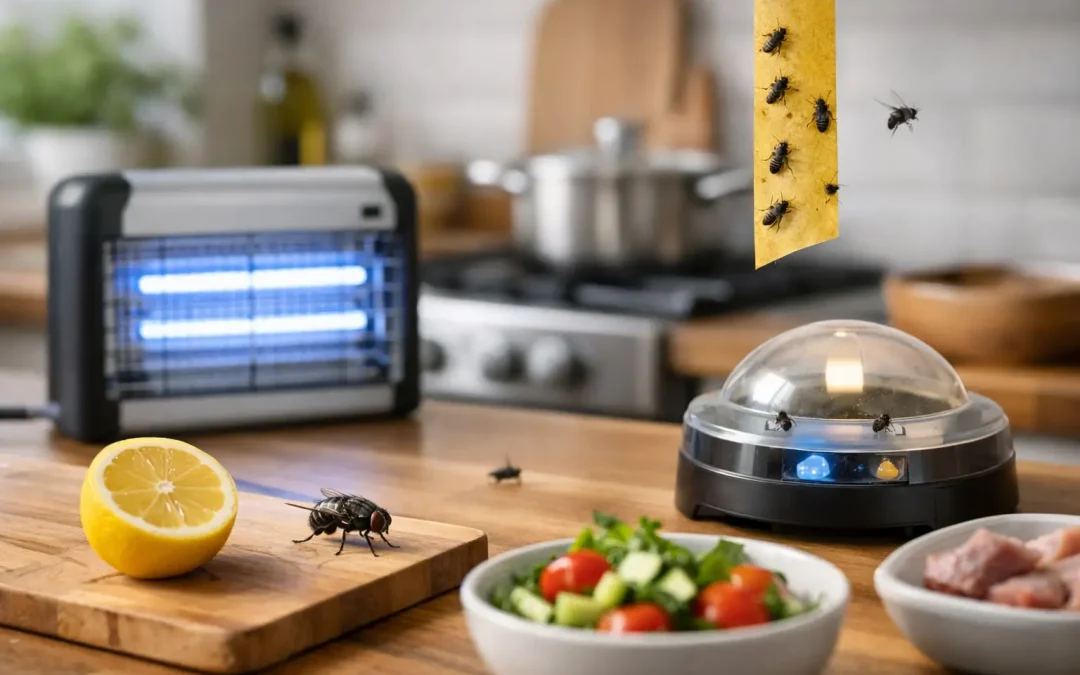
A few flies in a kitchen rarely stay as just a few. Once they find moisture, food residue and a suitable breeding point, numbers can build quickly – and in a domestic or commercial kitchen that creates an obvious hygiene risk. The best fly control methods for kitchens are the ones that deal with the source as well as the visible activity, because spraying at adult flies alone will not solve the problem.
For homeowners, that usually means finding where food debris, standing water or waste is attracting them. For cafés, restaurants, care settings and other food-handling sites, it means taking a stricter approach that protects hygiene standards, daily operations and compliance. The right response depends on which flies are present, how long the issue has been active and whether there is an underlying structural or sanitation problem.
Why kitchen flies are more than a nuisance
Flies are drawn to kitchens for predictable reasons. Heat, odours, damp areas, bins, spillages and organic build-up all create ideal conditions. Fruit flies are often linked to fermenting produce, sugary residues and drains. House flies are more likely to move between waste areas and food preparation spaces. Drain flies point to organic sludge inside pipework, gullies or floor drains.
That distinction matters. Different species behave differently, and control measures that work for one may have little effect on another. If the flies are coming from a damaged drain, an overflowing external bin store or a hidden void behind kitchen units, surface cleaning on its own will not be enough.
In commercial settings, there is also the reputational and regulatory side. A fly issue in a catering environment, care home or pharmaceutical support area can trigger complaints, failed inspections or concerns over hygiene management. Fast action is not just about comfort – it is about protecting standards.
Best fly control methods for kitchens start with identification
The most effective kitchen fly control begins by confirming what you are dealing with. Fruit flies are small, often seen hovering around fruit bowls, bottle storage, syrup residue, mop sinks and drains. Drain flies have a fuzzy, moth-like appearance and tend to rest near sinks, gullies and tiled wet areas. House flies are larger, more mobile and often linked to waste handling, external access points or nearby contamination.
Misidentification leads to wasted time. It is common for people to treat fruit flies as a general flying insect problem, when the actual source is a dirty drain line or residue beneath fixed equipment. In commercial kitchens, recurring activity near wash-up areas, bar stations or floor channels usually points to breeding material that needs to be physically removed, not masked.
If flies keep returning after routine cleaning, that is a sign the source has not been found.
Cleaning is essential, but it has to be targeted
General cleaning helps, but targeted cleaning is what reduces breeding conditions. Wiping worktops and emptying bins is only part of the job. Flies are often sustained by the residue people do not see straight away – sugary spills behind appliances, food splashback under counters, liquid in bin bases, grease around waste areas and organic build-up in drainage points.
In domestic kitchens, pay close attention to fruit storage, recycling containers, pet feeding areas and the space beneath freestanding appliances. In commercial kitchens, focus on floor-wall junctions, beneath prep benches, under refrigeration units, around dishwashing stations and any area where moisture and food debris collect together.
Drains need special attention. If fruit flies or drain flies are present, cleaning the drain cover is not enough. The internal sides of the pipework or trap may be coated with organic material that supports breeding. Mechanical cleaning is usually more effective than simply pouring chemicals down the sink, because the problem sits on the surfaces inside the system.
Waste control and stock handling make a major difference
One of the most overlooked fly control measures is better management of waste and perishables. Flies do not need a large volume of food to remain active. A leaking bin liner, overripe fruit, residue in bottles for recycling or food waste left overnight can be enough.
Bins should be lined, emptied regularly and cleaned at the base as well as the lid. External waste areas matter too. If outside bins are poorly managed or positioned near kitchen access points, flies can move in every time a door opens. For commercial premises, this is particularly important in warmer periods when activity increases and service doors are used more frequently.
Stock rotation also plays a role. Produce stored too long, spillages in dry goods areas and forgotten items in lower cupboards can all support fly activity. In food businesses, a disciplined approach to storage, cleaning schedules and waste transfer reduces the chance of a minor issue becoming an ongoing infestation.
Proofing and exclusion are part of the best fly control methods for kitchens
If flies can enter freely, cleaning alone will always be working against the problem. Kitchens often have more access points than people realise – back doors, poorly fitting windows, damaged screens, service penetrations, vents and gaps around pipework.
For homes, simple proofing such as maintaining window screens, keeping external doors closed where possible and sealing small gaps can reduce repeated entry. For commercial kitchens, exclusion needs to be more systematic. Door discipline, air movement, strip curtains or suitable screening may all be relevant depending on the layout and level of risk.
There is always a balance to strike. A busy catering site may need frequent deliveries, heat extraction and staff movement, so complete exclusion is rarely realistic. That is why practical proofing should be combined with sanitation and monitoring rather than treated as a standalone fix.
Traps and fly killers have a place, but they are not the whole answer
Many people start with sprays, sticky traps or plug-in units. These can help reduce visible adult activity, but they should be seen as support measures rather than primary control. If breeding continues in a drain, waste area or hidden food source, you may catch some flies while the population keeps renewing itself.
In domestic kitchens, discreet traps may help identify where activity is strongest. In commercial sites, professional flying insect control units can be useful where they are correctly selected, positioned and maintained. Placement matters. A unit in the wrong location may offer poor control or create a food safety concern if used near exposed food preparation areas.
This is where technical judgement becomes important. Not every device suits every kitchen. A small household problem and a recurring issue in a regulated commercial environment require very different standards of response.
When professional treatment is the right step
If flies are recurring despite cleaning and basic control measures, a professional inspection is usually the quickest route to a reliable fix. That is especially true when the source may be hidden in drainage, wall voids, structural gaps, external waste zones or neighbouring areas.
Professional treatment is not simply about applying insecticide. In many kitchen fly cases, the real value is in identifying the species, tracing the breeding source, assessing the sanitation and structural conditions, and putting in place a treatment plan that actually removes the cause. In commercial environments, documented visits, trend monitoring and practical recommendations are often just as important as the treatment itself.
For businesses in sectors with strict hygiene expectations, that support can protect more than the kitchen. It helps protect audits, staff confidence, customer perception and continuity of service. For homeowners, it provides reassurance that the issue has been dealt with thoroughly and safely.
In Dublin and surrounding counties, where a mix of residential properties, food businesses and high-governance workplaces creates very different risk profiles, the most effective approach is usually a tailored one rather than an off-the-shelf product solution.
Building a kitchen fly prevention routine
The strongest results come from consistency. Kitchens that stay fly-free tend to have a routine built around moisture control, drain hygiene, waste handling, stock checks and prompt attention to small signs of activity. One or two flies appearing near a sink or bin area should be treated as an early warning, not ignored until numbers rise.
For domestic households, a weekly check of drains, bin areas and hidden food debris can prevent a larger problem. For commercial kitchens, a more formal routine is sensible, with cleaning records, staff awareness, waste area controls and regular inspections built into normal operations.
Where the problem keeps returning, it is worth assuming there is an overlooked source rather than repeating the same surface-level treatment. That is often the point where a specialist service saves time, money and disruption.
A kitchen should be one of the cleanest, most controlled areas in any property. If flies are active there, the right response is not just to remove what you can see, but to correct the conditions that allowed them in the first place.
Recent Comments