
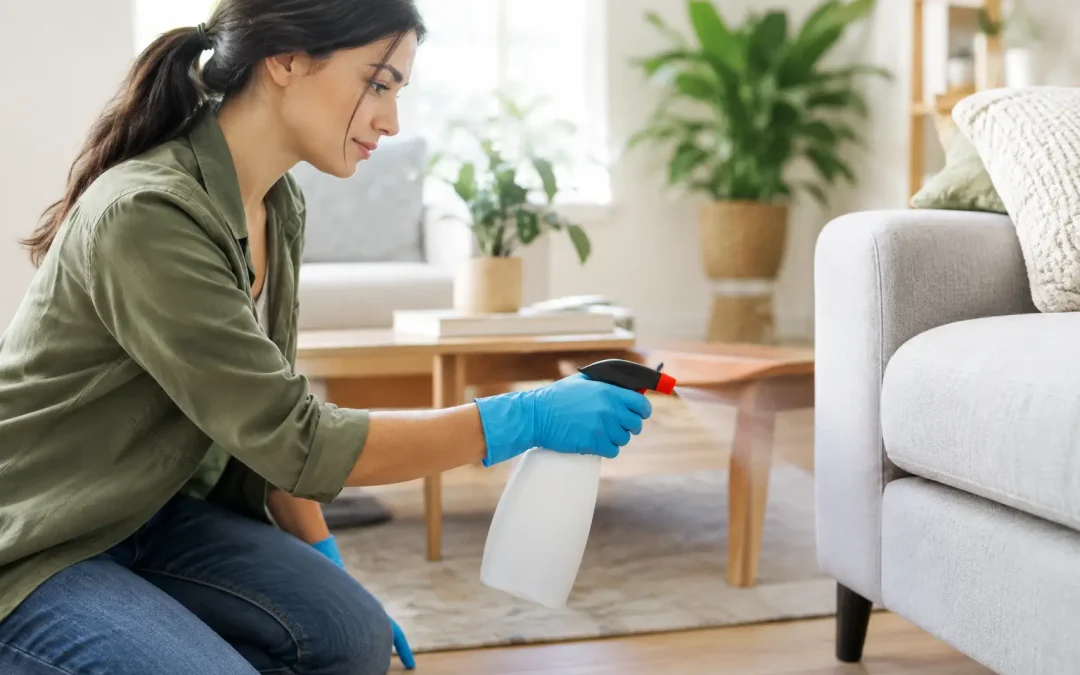
A mouse seen behind the kitchen kickboards or silverfish appearing in the bathroom can make a quick shop-bought spray seem like the obvious answer. But are pesticides safe indoors? They can be used safely and effectively when the product, placement, dose and aftercare are right for the pest and the property. Used casually or in the wrong location, they can create unnecessary risk without solving the infestation.
For homes, rented properties and workplaces, the goal should never be to use more chemical than necessary. Professional pest control starts with inspection, proofing and hygiene measures, then applies a suitable treatment only where it will have a clear purpose. That approach protects people, pets, food areas and the environment while dealing with the pest at its source.
Are pesticides safe indoors when professionally applied?
No pesticide is completely risk-free. Products designed to control pests are active substances, which is why their labels, instructions and legal approvals matter. Safety indoors depends on exposure: who could come into contact with the treatment, how much is used, where it is placed and whether the area is used as instructed afterwards.
A trained technician assesses these details before treatment. In a family home, that may mean considering crawling children, pets, fish tanks, food preparation areas and bedding. In a care home, catering kitchen, warehouse or pharmaceutical facility, it also means protecting vulnerable occupants, products and documented hygiene standards.
Professional use is not simply a matter of having access to stronger products. It is a controlled process. The technician identifies the pest, checks activity levels, chooses the least intrusive effective method and places treatment in targeted locations. They will also explain any precautions, such as keeping pets away from a bait station, ventilating a treated area if advised, or avoiding cleaning a specific surface immediately after application.
The treatment must match the pest
Indoor pesticide safety is closely linked to accurate identification. A treatment that is appropriate for one pest may be ineffective or unsuitable for another.
During winter in Dublin, Kildare, Wicklow and Meath, rats and mice are often the immediate concern. Rodents enter buildings for warmth, shelter and food, then travel through voids, under floors, behind units and along service routes. Rodent control may involve secured bait stations in inaccessible areas, but it should also include finding entry points and removing the food and harbourage that allow activity to continue. Leaving poison in an open or poorly chosen location is not responsible rodent control.
For indoor silverfish, the cause is often persistent moisture, undisturbed clutter or access through gaps around pipes and skirting. A targeted treatment can help where activity is established, but reducing humidity, repairing leaks and improving access for cleaning are equally valuable. Repeatedly spraying visible insects may not reach the places where they are hiding.
Bed bugs, cockroaches and fleas require similarly specific plans. Their life cycles, hiding places and behaviour differ, so a generic aerosol can delay proper treatment and spread activity further through a property. The right answer is not always a pesticide application. Sometimes trapping, removal, proofing, cleaning, heat-based measures or a combination of methods is safer and more effective.
What makes indoor treatments safer?
The safest treatment plan controls exposure as carefully as it controls pests. Several practical safeguards make a significant difference:
- Targeted placement: Products are applied to identified harbourage areas, cracks, voids or secured stations rather than broadly across rooms.
- Correct formulation: A gel, bait, residual treatment or non-chemical method may be more suitable than a spray, depending on the pest and setting.
- Clear preparation: Food, utensils, toys, pet bowls and other items may need to be removed or covered before certain treatments.
- Access control: Children, pets, residents, staff and visitors are kept away from treatment areas for the stated period.
- Follow-up action: Proofing, cleaning guidance and further inspections help prevent reinfestation, reducing the need for repeat pesticide use.
These controls are particularly relevant in sensitive locations. A food business must avoid contamination risks and maintain a clean, auditable environment. A care setting needs extra care around residents who may be more vulnerable. In commercial premises, treatment records and site-specific recommendations also support hygiene management and demonstrate that action has been taken responsibly.
Why DIY pesticide use can go wrong
Retail pest products can be appropriate for limited, low-level problems when used precisely according to the label. The difficulty is that many indoor infestations are not low-level by the time they are noticed. A rat seen in daylight, regular mouse droppings, recurring silverfish or insects emerging from several rooms usually point to a wider issue that needs investigation.
Common problems include using too much product, mixing chemicals, treating the wrong area, choosing a product for the wrong pest or applying spray near food and food-contact surfaces. Foggers and total-release aerosols can be especially poor choices for many indoor pest issues. They may not penetrate the harbourage where pests are hidden, while spreading pesticide residue across a much larger area.
Rodent poison also demands caution. It should never be left loose where children, pets or non-target wildlife can reach it. If there is concern that a child or animal has contacted or eaten a pesticide, follow the product label’s emergency guidance and seek urgent medical or veterinary advice.
There is another practical downside to indiscriminate spraying: it can make inspection harder. Some insects move deeper into walls, furniture or neighbouring areas after disruption. Rodents may avoid a treated area but continue using a different route. A short-term reduction in sightings is not necessarily proof that the infestation has been resolved.
Before a professional indoor treatment
Preparation instructions vary by treatment, so the technician’s advice should always take priority. In many cases, clients are asked to clear access to affected areas, store or cover food, remove pet bowls and keep children and pets out of the treatment zone. For a kitchen, this may involve clearing selected cupboards. For rodent work, access to utility areas, under-sink spaces and external entry points is often more useful than clearing an entire room.
Be open about who uses the building. Tell the technician about babies, pregnancy, asthma, allergies, pets, aquariums, vulnerable residents and any area where food, medicines or sensitive stock is kept. This is not a reason to avoid treatment automatically. It allows the plan to be adapted appropriately.
Commercial clients should also identify operational restrictions before the visit. Shift patterns, production schedules, delivery routes, cleanroom requirements and customer-facing areas can affect when and how a treatment is carried out. A tailored service reduces disruption while maintaining pest control and hygiene standards.
After treatment: follow the instructions, not assumptions
The most useful aftercare rule is simple: follow the written and verbal advice provided for that treatment. Re-entry times are not universal. They depend on the product, method, ventilation, surfaces treated and the type of premises. Do not assume that opening a window for a few minutes makes every treatment safe to re-enter, and do not clean away a targeted treatment before asking whether it needs time to work.
Where bait has been placed for rodents, do not move it. Let the provider know if it has been disturbed, damaged or accessed by a pet. Continue good housekeeping by keeping food in sealed containers, managing bins, cleaning spills and reducing clutter around utility spaces. If activity continues, report it promptly rather than adding extra products yourself.
For businesses, retain service reports, treatment details and corrective actions. This creates a clear record for internal hygiene procedures, inspections and compliance reviews, while helping the pest management provider assess whether control measures are working.
When to call a professional
Professional help is sensible when you are unsure which pest is present, sightings are repeated, there are signs in food areas or bedrooms, or there are children, pets or vulnerable people on site. It is also the better route where a business must protect stock, meet hygiene obligations or avoid disruption to customers and staff.
Pest Pure Solutions provides professional, discreet pest control for homes and commercial premises across Dublin and the surrounding counties. An inspection-led approach means the treatment is built around the property and the risk, rather than relying on a one-size-fits-all spray.
The safest indoor pesticide is the one that is genuinely needed, correctly selected and carefully controlled. Addressing access points, food sources and moisture alongside treatment gives a property the best chance of staying pest-free with less reliance on chemicals over time.
Recent Comments