
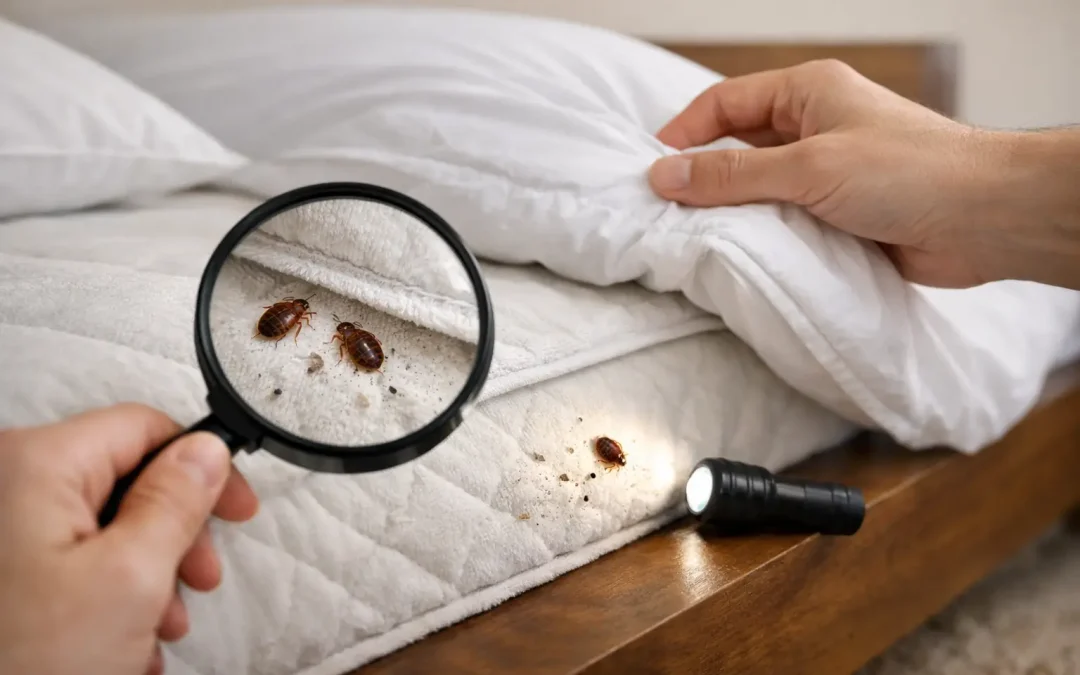
A bed bug problem is often discovered after several unexplained bites, a small blood mark on the sheet, or a dark spot near the mattress seam. So, are bedbugs visible? Yes, adult bed bugs can be seen by the naked eye. However, their small size, flat shape and habit of hiding in narrow cracks mean many infestations are missed until numbers have increased.
Knowing what to look for can help homeowners, landlords and accommodation providers act early. It also prevents a common mistake: assuming that visible insects are the only proof of bed bugs. In many cases, the evidence they leave behind is easier to find than the insects themselves.
Are bedbugs visible to the naked eye?
Adult bed bugs are visible without a magnifying glass. Before feeding, they are usually reddish-brown, oval and flattened, measuring around 4 to 7 mm long. A useful comparison is an apple seed, although bed bugs are generally narrower and flatter when unfed. After a blood meal, they become more swollen, longer and darker red-brown.
Young bed bugs, known as nymphs, are harder to spot. Newly hatched nymphs are tiny, often around 1 mm, and pale cream or almost translucent. Once they have fed, their abdomen may appear bright red. Eggs are smaller still – white, pearly and roughly 1 mm long – and can blend into light-coloured fabric, timber joints and mattress stitching.
Visibility therefore depends on the life stage, lighting and where the insects are hiding. Seeing an adult bed bug is a clear warning sign, but not seeing one does not rule out an infestation.
Why bed bugs are easy to miss
Bed bugs are not built for open spaces. They prefer to remain close to where people rest, then emerge mainly at night or when a room is quiet. They can squeeze into gaps around bed frames, skirting boards, headboards, bedside furniture and loose wallpaper. A crack wide enough for a credit card edge can provide a suitable harbourage.
Their colouring also helps them disappear against wood, dark fabrics and the underside of furniture. In a busy home, room or workplace accommodation setting, a single insect may be mistaken for a small beetle or simply overlooked. In early infestations, there may only be a few bugs and eggs spread across several hiding places.
Bed bugs do not jump or fly. They crawl, often travelling in luggage, clothing, second-hand furniture or soft furnishings. This is why a problem can arise in an otherwise clean and well-maintained property. Bed bugs are linked to access to a host, not poor housekeeping.
What visible signs should you check for?
A careful inspection is more useful than a quick look across the mattress. Start at the sleeping area and work outwards slowly. Use a torch and inspect seams, folds, screw holes and joins rather than only flat, open surfaces.
The most common signs include:
- Dark brown or black spotting on mattress seams, bedding, furniture or walls. These are often bed bug droppings and may look like ink dots.
- Small rusty or red smears on sheets and pillowcases, caused when a recently fed bug is disturbed or crushed.
- Pale shed skins, which nymphs leave behind as they grow.
- Tiny white eggs or eggshells in protected crevices.
- Live bed bugs, especially around the mattress piping, bed frame joints, headboard or nearby furniture.
A heavier infestation can also produce a distinctive sweet, musty smell. Smell alone is not a reliable way to identify bed bugs, but it can support other evidence when present.
The most useful places to inspect
Remove bedding and check the mattress seams, labels, handles and piping. Examine the base of the bed, including castors, feet, drawers and joints. If there is a headboard, inspect its rear surface and the wall fixings, as these sheltered areas are frequently overlooked.
Next, check bedside tables, the edges and undersides of drawers, upholstered chairs, curtain folds, picture frames, sockets and skirting boards close to the bed. In a flat, hotel room, care home bedroom or staff rest area, bed bugs may also be found around luggage storage, sofas and upholstered seating.
Avoid moving furniture from room to room while inspecting. This can spread insects or eggs into new areas. If you find suspicious signs, take a clear photograph where possible and keep the room in normal use until professional advice is available. Sleeping elsewhere can encourage bed bugs to follow their host and establish themselves in another room.
Are bites enough to confirm bed bugs?
No. Bed bug bites can be itchy, red and uncomfortable, but bites alone cannot confirm the cause. Reactions vary widely. One person may develop raised marks within hours, while another person in the same bed may show no reaction at all.
Bites are often found on exposed areas such as the arms, shoulders, neck, face or lower legs. They may appear in clusters or lines, but this pattern is not exclusive to bed bugs. Fleas, mosquitoes, allergic reactions and skin conditions can look similar.
The strongest evidence is a combination of bites and physical signs, such as droppings, shed skins, eggs or a live insect. If there is uncertainty, a professional inspection is the sensible next step. Correct identification matters because treatments for fleas, carpet beetles and bed bugs are not the same.
What to do if you see a bed bug
Finding one insect does not always reveal the full scale of the problem. Bed bugs reproduce quickly, and an apparently isolated sighting may be part of a wider infestation. Do not rely on aerosol sprays, essential oils or foggers as a stand-alone solution. These products can drive bed bugs deeper into cracks, make inspection harder and leave eggs unaffected.
Place any suspect insect in a sealed container or clear bag if you can do so safely. Wash affected bedding, clothing and washable fabrics at the highest temperature permitted by the care label, then dry thoroughly on a high heat where suitable. Items should be transported in sealed bags to reduce the chance of spreading insects through the property.
Vacuuming seams, bed frames and nearby edges can remove some visible bugs and debris, but it will not reliably reach all harbourages or eggs. Empty the vacuum contents into a sealed bag and dispose of it outside promptly. Do not discard furniture without advice, particularly from shared accommodation, as this may spread the issue or lead someone else to take an infested item home.
When professional treatment is the right response
Professional bed bug control is recommended as soon as there is confirmed evidence, repeated unexplained bites with relevant signs, or a risk of spread between rooms or properties. This is particularly important for landlords, hotels, care settings and businesses providing staff accommodation, where privacy, hygiene and continuity all matter.
An effective programme begins with a detailed inspection to identify harbourages and the likely extent of activity. Treatment may involve carefully selected insecticidal applications to cracks, joints and affected areas, alongside clear preparation instructions and follow-up visits where required. The exact approach depends on the property layout, infestation level, occupancy and whether vulnerable people or pets are present.
For commercial and regulated premises, documented findings and treatment records provide an additional layer of assurance. A discreet, planned response helps protect occupants while supporting hygiene standards and operational confidence.
Bed bugs are visible, but they are exceptionally good at staying out of sight. A calm, methodical inspection and early professional support give you the best chance of stopping a small problem before it becomes established.
Recent Comments