
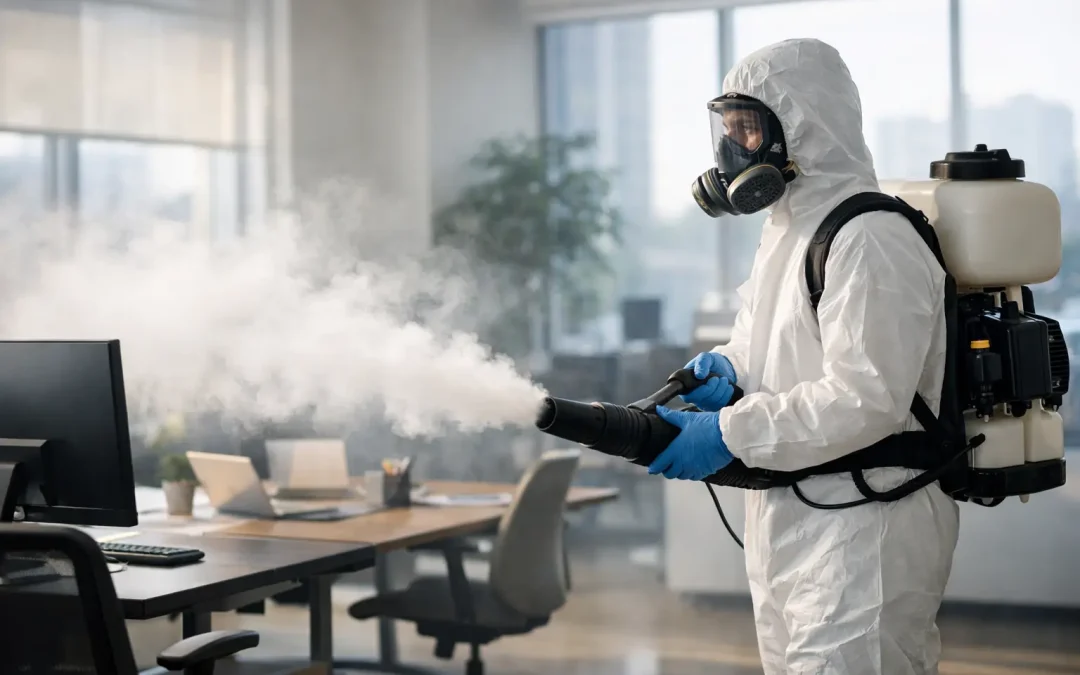
A confirmed illness, a high-traffic reception area or an outbreak concern can create immediate pressure to disinfect every part of a premises. Antiviral fogging for workplaces can be a useful part of the response, but it is not a substitute for routine cleaning, hand hygiene, ventilation or sensible infection-control procedures. Used at the right time and with the right product, it helps businesses reduce contamination on hard-to-reach surfaces while supporting a safer return to normal operations.
For facilities managers, business owners and compliance teams, the key question is not simply whether fogging is available. It is whether it is appropriate for the premises, the level of risk and the practical controls already in place.
What antiviral fogging does
Fogging uses specialist equipment to disperse a disinfectant solution as a fine mist or aerosol. The treatment is designed to settle across exposed surfaces, including desks, door handles, washroom touchpoints, shelving, workstations, staff areas and other locations that may be difficult to treat thoroughly by hand.
The term “antiviral” refers to the product’s tested effectiveness against specified viruses when it is applied in line with its label instructions. This matters. A disinfectant is only as effective as its approved use, concentration and contact time. Claims should never be assumed to apply to every virus, every surface or every situation.
A professional treatment starts with an assessment of the building and the reason for the service. This helps determine whether fogging is suitable, what areas need attention, how the premises should be prepared and how long the treated areas must remain unoccupied before re-entry.
When antiviral fogging for workplaces is suitable
Fogging is often considered after a suspected or confirmed infectious illness, particularly where a person has spent time in shared work areas. It can also support enhanced hygiene after a period of heavy footfall, during an outbreak concern, before reopening a site or where operational policies require an additional disinfection measure.
It is particularly relevant in environments where hygiene failures can have wider consequences. Care homes, catering premises, logistics sites, offices with hot-desking, waste facilities and regulated operations may all benefit from a planned response where cross-contamination is a concern.
However, it depends on the circumstances. A small, contained spill or a single visibly soiled surface is usually better dealt with through targeted cleaning and disinfection. Fogging is most valuable where there is a broader need to treat multiple exposed surfaces efficiently, rather than as a reflex response to every absence or routine cleaning task.
The treatment also has limits. Fog cannot reliably penetrate closed cupboards, covered surfaces, deep clutter or heavy dirt. If a surface is visibly dirty, it must be cleaned first. Organic matter such as food residue, grease and dust can reduce a disinfectant’s performance, which is why preparation is as important as the fogging itself.
Cleaning first, then disinfection
A dependable workplace hygiene programme follows a clear order: remove dirt, apply an appropriate disinfectant, allow the necessary contact time, then maintain the environment through daily cleaning and good staff practices.
Routine cleaning physically removes contamination from surfaces. Disinfection uses a chemical product to reduce microorganisms on a cleaned surface. Fogging is a method of applying disinfectant over a defined area, not a replacement for either stage.
Before treatment, staff should clear personal items where possible and remove or protect exposed food, crockery, sensitive equipment and documents. A professional technician will advise on any site-specific precautions, including the management of fire alarms, ventilation systems and equipment that should not be misted.
Following treatment, the space should remain vacant for the stated re-entry period. Once it is safe to return, adequate ventilation should be restored in accordance with the product instructions and the building’s operating procedures. High-touch surfaces may then be checked and, where required, wiped in line with the agreed method statement.
Why product choice and application matter
Not all fogging solutions are interchangeable. A professional provider should use products appropriate to the setting and provide clear information on safe application. The choice may be influenced by the surfaces present, the need for low-residue treatment, the building’s occupancy and the pathogen claims required by the client’s procedures.
Contact time is especially important. A disinfectant needs to remain on a surface for a specified period to achieve its stated performance. Applying too little product, using the wrong dilution or allowing it to dry too quickly can compromise the result.
Equipment matters as well. Different fogging technologies create different droplet sizes and coverage patterns. The correct approach depends on room layout, airflow, surface types and whether the priority is broad coverage of exposed touchpoints or a more controlled treatment of specific zones. More mist is not automatically better. Excess application can create unnecessary residue and does not compensate for poor cleaning or inadequate preparation.
For sensitive workplaces, the service should be delivered by trained technicians who understand chemical safety, exclusion zones and the practical realities of operating premises. This is particularly relevant where vulnerable residents, food handling, pharmaceutical controls or detailed audit requirements are involved.
Building fogging into a practical response plan
A one-off fogging treatment can provide reassurance after an incident, but a planned hygiene response is stronger. Facilities teams should know who authorises treatment, which areas are prioritised, how staff are informed and what records are retained.
For many organisations, this can be managed through a simple escalation process. When a concern is reported, the responsible manager identifies the affected spaces, restricts access if needed and arranges cleaning or enhanced disinfection based on the actual risk. Staff should not be asked to make technical decisions without guidance, nor should they be left uncertain about whether an area is safe to use.
Documentation is valuable, especially in high-governance sectors. A clear service report can record the date and time of treatment, areas covered, product used, technician details, re-entry guidance and any observations that require follow-up. These records support internal communication and can assist with hygiene, quality and compliance reviews.
At Pest Pure Solutions, antiviral sanitisation treatments can be tailored around how a premises operates, from a single office area to larger commercial sites requiring clear reporting and discreet scheduling. The aim is to support business continuity without creating unnecessary disruption.
What fogging cannot solve
Fogging should not be presented as a cure-all for workplace infection risk. It cannot correct poor handwashing facilities, overcrowded break rooms, inadequate ventilation, inconsistent washroom servicing or a lack of regular cleaning. It also cannot make an area safe if staff return before the required re-entry time or if product instructions are ignored.
Workplace infection control works best when the basics are managed consistently. Frequently touched surfaces need regular attention, washrooms require reliable servicing, shared equipment should be cleaned between users where appropriate, and employees need clear expectations around illness reporting and hygiene.
There is also a commercial consideration. Repeated emergency treatments may indicate that the underlying hygiene plan needs review. In a busy warehouse, care setting or food-related operation, scheduled cleaning audits, washroom hygiene controls and targeted disinfection can be more effective than relying on reactive fogging alone.
Choosing a professional provider
Before arranging a treatment, ask how the provider assesses suitability, what disinfectant will be used and what its approved claims are. You should also receive clear instructions on preparation, exclusion periods and re-entry. For commercial premises, request treatment records that fit your internal compliance requirements.
A credible provider will be open about the boundaries of the service. They will explain that effective fogging depends on clean surfaces, correct application and the wider controls operating in the workplace. That practical honesty is more useful than a blanket promise that a single treatment resolves every risk.
When a hygiene concern affects your premises, act proportionately and promptly. A properly planned antiviral fogging treatment can help restore confidence in shared spaces, while the everyday cleaning and hygiene measures behind it keep that confidence well founded.
Recent Comments