
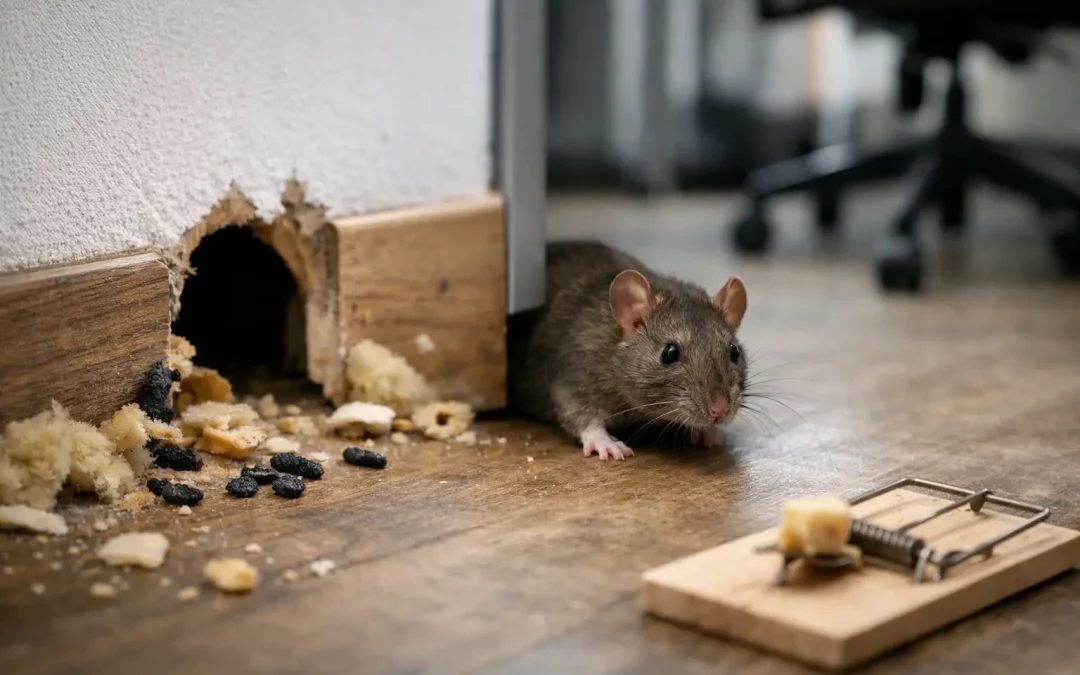
A rat problem rarely begins with seeing a rat in the middle of the kitchen. More often, it starts with a faint scratching sound behind a wall, a chewed food packet in a cupboard, or small dark droppings near a skirting board. If you are asking, what are signs of rats, early recognition can limit damage, protect hygiene and make treatment more straightforward.
Rats are cautious, mainly nocturnal animals. They tend to move along edges, behind stored goods and through quiet areas where food, water and shelter are available. Whether you manage a family home, a rental property, a café or a regulated commercial site, the key is to act on a pattern of evidence rather than wait for a clear sighting.
What Are the Main Signs of Rats?
Rat droppings
Fresh rat droppings are one of the clearest indicators of activity. They are usually dark brown or black, pellet-shaped and roughly 10-20mm long, often compared with a large grain of rice. You may find them beneath sinks, beside bins, in lofts, behind appliances, near food storage or along walls.
Fresh droppings look moist and dark. Older droppings become grey, dry and crumbly. Their age can help indicate whether activity is current, but it does not show how many rats are present. A small number of droppings in one location can still point to an active route that needs investigation.
Avoid sweeping or vacuuming droppings while dry, particularly in food areas or enclosed spaces. Disturbing contaminated material can spread dust and bacteria. Keep children and pets away, ventilate the area where possible, and arrange professional advice on safe cleaning and treatment.
Scratching, scurrying and movement at night
Rats are most active after dark, when a property is quiet. Homeowners may hear scratching in lofts, wall voids, under floorboards or behind kitchen units. In commercial premises, staff may notice sounds in ceiling voids, plant rooms, stock areas, service corridors or waste storage spaces before opening or after closing.
The sound alone is not proof of rats. Mice, birds, squirrels and plumbing issues can also create noise. However, repeated scurrying or scratching at similar times, especially alongside droppings or gnaw marks, is a strong reason to investigate.
Gnaw marks and damaged materials
A rat’s teeth grow continuously, so gnawing is normal behaviour. Look for fresh tooth marks on timber, plastic pipes, cable coverings, food packaging, bins, doors and stored materials. New gnawing may appear lighter in colour than the surrounding surface.
This is more than a cosmetic issue. Damaged electrical cables can create a fire risk, while gnawed water pipes may lead to leaks and costly repairs. In food, care and pharmaceutical environments, compromised packaging and contaminated stock can also create serious hygiene and compliance concerns.
Grease marks and worn runways
Rats prefer familiar routes and commonly travel close to walls. Their fur can leave dark, greasy smear marks around skirting boards, pipes, gaps, door frames and low-level edges. These marks are often most noticeable where rats repeatedly squeeze through a narrow access point.
You may also see worn tracks in dusty areas, such as lofts, basements, sheds and storage rooms. A professional inspection can distinguish old marks from active movement and identify where the route begins and ends.
Unusual smells
An established infestation can produce a stale, ammonia-like odour from urine, droppings and nesting material. The smell is often stronger in poorly ventilated spaces, including cupboards, lofts, voids and bin stores.
Odour should not be used as the only test. Damp, drains and spoiled food can cause similar smells. But when it is paired with other evidence, it can help locate the area where rats are feeding or nesting.
Less Obvious Signs of a Rat Infestation
Rats build nests from shredded paper, insulation, fabric, cardboard and other soft materials. Check undisturbed places such as under kitchen units, inside sheds, behind stored boxes and in loft insulation. A nest may look like a loose bundle of torn material, usually close to a concealed source of warmth and food.
Pets can also provide an early warning. A dog or cat that repeatedly stares, paws or sniffs at the same cupboard, wall, appliance or floor area may be responding to rodent activity. This does not confirm an infestation, but it is worth checking for physical signs.
Outside, burrows are a common clue. Rat burrow entrances are often 50-80mm wide and may appear beside foundations, under decking, around sheds, near compost heaps, in overgrown ground or close to drainage runs. Freshly moved soil, smooth edges and nearby droppings suggest recent use.
Rats, Mice or Something Else?
Rats and mice need different control approaches, so identification matters. Rat droppings are larger than mouse droppings, and rats usually make louder noises and cause more substantial gnaw damage. Rats are also more likely to create obvious burrows outdoors.
A single sighting can be misleading. Young rats can look similar to adult mice at a glance, while squirrels in a loft can sound surprisingly heavy. Rather than relying on size or noise alone, assess the full evidence: droppings, entry points, damage, tracks, nesting and the location of activity.
Why a Quick Response Matters
Rats can contaminate food preparation areas, stored stock and surfaces through urine, droppings and contact. They may carry pathogens and can introduce fleas and other parasites into a property. For households, this is a direct hygiene concern. For businesses, it can affect inspections, staff confidence, customer trust and operational continuity.
The risk is particularly significant in catering, care settings, logistics, waste handling and pharmaceutical operations. A rodent incident in these sectors requires more than placing bait. It needs documented monitoring, root-cause investigation, proofing recommendations and a clear record of corrective action.
Rats also breed quickly when conditions are favourable. Delaying action can turn occasional signs around a bin area or kitchen void into wider activity across the building.
What to Do If You Notice Signs of Rats
Start by removing readily available food and water. Store dry goods in sealed containers, clean crumbs and spills promptly, keep bins closed and avoid leaving pet food out overnight. Outside, clear fallen fruit where practical and keep waste areas orderly.
Next, look for obvious access points. Rats can exploit damaged air bricks, gaps around pipework, broken vents, poorly fitted doors and defects around drains. Do not block a suspected entry point until you understand whether rats are still inside, as this can drive activity into another part of the building.
Avoid relying on loose poison or unprotected bait, particularly where children, pets, wildlife or food are present. Incorrect use can create unnecessary risks and may leave a dead rodent in an inaccessible void, causing odour and fly activity. Traps and bait stations have a place, but their positioning, monitoring and follow-up are critical.
For a confirmed or suspected infestation, professional pest control provides a more reliable route to resolution. A proper survey should identify the species, likely entry points, food sources, harbourage areas and level of activity. Treatment can then be combined with proofing and hygiene measures, rather than simply addressing the rats that are visible.
For commercial sites, Pest Pure Solutions can provide tailored pest management programmes supported by monitoring and reporting suited to the premises and its compliance requirements. This helps move rodent control from a one-off reaction to practical prevention.
Preventing Rats From Returning
Successful rat control depends on removing the conditions that attracted them. This usually means improving waste management, sealing access points, reducing clutter, maintaining drainage and reviewing how food or stock is stored. In older properties, small structural defects can be enough to support repeat activity, so proofing is often as important as treatment.
Routine checks are worthwhile in high-risk areas: under sinks, behind appliances, lofts, bin stores, delivery bays, staff kitchens and external service areas. Businesses should include these checks within planned site inspections, particularly where goods, food or waste are handled.
The most useful rule is simple: treat unfamiliar droppings, fresh gnawing, recurring night-time noises or greasy wall marks as a reason to investigate promptly. A calm, evidence-led response protects your property before a discreet problem becomes a larger hygiene issue.
Recent Comments