
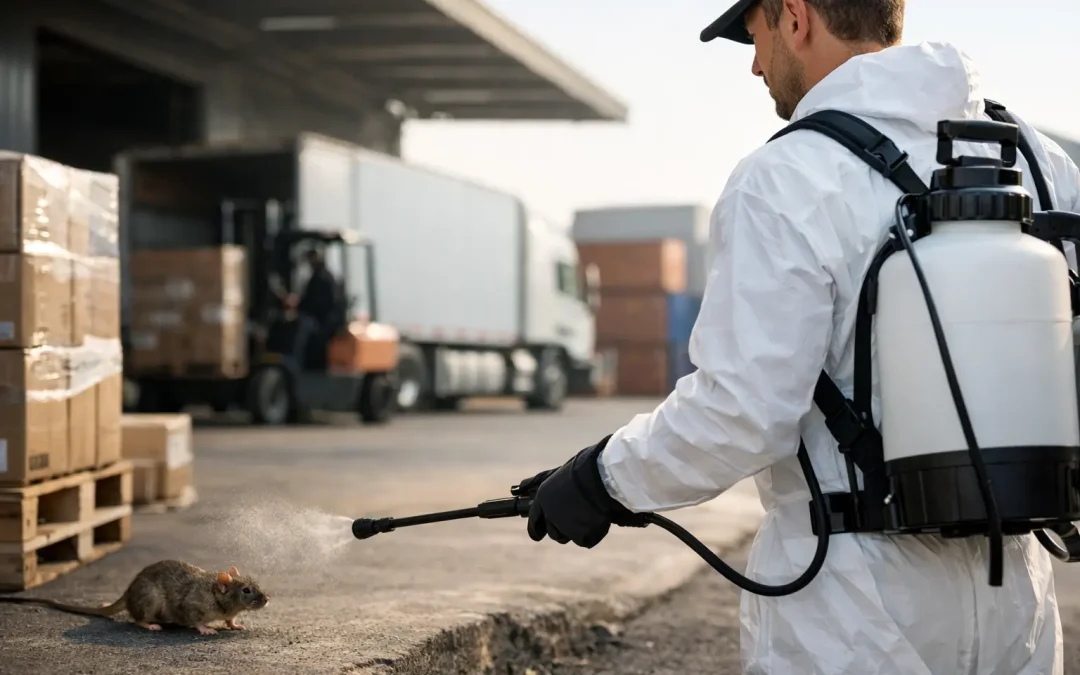
A pest sighting in a logistics site rarely stays a small problem for long. One damaged pallet, one contaminated loading bay or one failed audit can interrupt stock flow, delay dispatch and raise serious questions about hygiene standards. That is why pest control for logistics sites has to be treated as an operational safeguard, not a reactive call-out when something has already gone wrong.
Warehouses, distribution hubs and cross-dock facilities create ideal conditions for pests. Goods are moving constantly, roller doors open throughout the day, packaging accumulates quickly and external yards often provide harbourage close to the building. If food products, pharmaceuticals, retail stock or packaging materials are stored on site, the risk becomes even more sensitive. In these environments, pest activity can affect compliance, customer confidence and business continuity in equal measure.
Why logistics sites attract pest activity
The problem is not simply that pests find their way in. Logistics sites often give them multiple ways to survive once they arrive. Long perimeters, frequent vehicle movements and busy loading schedules mean access points are hard to control completely. Even well-managed facilities can have gaps around dock levellers, damaged cladding, poorly sealed service penetrations or doors left open during peak periods.
Rodents are a particular concern because they exploit both external and internal weaknesses. Yards with stacked pallets, unmanaged vegetation, skips or drainage lines can support harbourage close to the building. Once inside, they follow wall lines, racking voids and plant areas where disturbance is lower. Birds create a different issue. They may roost in canopies, roof voids and loading areas, bringing droppings, nesting materials and contamination risk with them.
Flying insects are often underestimated in logistics settings. They are drawn to lighting, waste areas and warm internal zones, especially where goods are held for longer periods. If the site handles packaged foods, returned stock or waste streams, flies and stored product pests can become an ongoing problem rather than a seasonal one.
What effective pest control for logistics sites looks like
Good pest management in a warehouse or distribution environment starts long before treatment. The strongest programmes are built around prevention, monitoring and documented control measures that match how the site actually operates.
That means understanding goods-in routes, dispatch patterns, vulnerable storage zones, external pressure points and hygiene routines. A small warehouse with limited stock rotation needs a different approach from a high-volume distribution centre with constant trailer movements. In both cases, the aim is the same: stop pests from establishing, identify risk early and keep evidence-based records of what has been checked, found and actioned.
A proper programme should include regular inspections of the building exterior, loading bays, waste compounds, staff welfare areas, plant rooms and internal stockholding spaces. Monitoring devices need to be positioned logically, not just placed to tick a box. If a device is inaccessible, poorly located or never reviewed properly, it adds very little value.
Proofing also matters. Treatment alone will not compensate for repeated access through damaged brushes, broken air curtains, gaps beneath doors or unsealed cable entries. In logistics sites, where movement is constant, even minor building defects can become repeat entry points. The most reliable results come from combining pest activity data with practical site improvements.
The operational risks behind a pest issue
For logistics operators, the direct damage caused by pests is only part of the problem. The wider impact is often more serious. A rodent incident can trigger stock checks, cleaning costs, disposal of affected materials and disruption to outgoing loads. If the site is part of a regulated supply chain, there may also be audit implications and formal reporting requirements.
This is especially relevant where goods are sensitive, sealed environments are expected, or hygiene governance is high. Pharmaceutical, healthcare and food-related logistics operations face obvious pressure here, but retail and general warehousing are not exempt. Customers increasingly expect clean, well-controlled storage conditions, and pest evidence can quickly become a reputational issue.
There is also a health and safety dimension. Bird fouling at entrances and loading areas creates slip hazards. Rodent activity around electrical systems can increase fire risk. Insect activity in staff kitchens, washroom spaces or break areas undermines hygiene standards and damages confidence among employees as well as visitors.
High-risk areas that need closer attention
Not every part of a logistics site carries the same level of risk. Loading bays and external doorways are usually the most exposed because they create repeated access opportunities throughout the day. Waste storage compounds, recycling areas and returned goods zones also deserve close attention, particularly where materials remain on site for any length of time.
Inside the building, quieter areas often present the greater issue. Back-of-rack spaces, service corridors, mezzanine voids, plant rooms and rarely disturbed corners can allow activity to develop before it is noticed. Staff areas should not be ignored either. Food debris in canteens, lockers and vending areas can support pests even when the warehouse floor itself is well managed.
Where sites operate across Dublin, Kildare, Meath or Wicklow, local surroundings can also influence pressure levels. Facilities near open land, waste operations, watercourses or dense urban activity may face different seasonal patterns and entry risks. That is one reason off-the-shelf schedules do not always perform well in real working environments.
Pest control for logistics sites and compliance
For many commercial operators, pest control is not judged only by whether pests are seen. It is judged by whether the programme stands up to inspection. Auditors, customers and internal compliance teams want to see evidence of trend analysis, site actions, service records and a clear understanding of risk.
This is where professional reporting becomes essential. A credible pest management programme should show what was inspected, what was found, what corrective actions were recommended and whether those actions were completed. If there is recurring activity in the same area, the reporting should reflect that pattern and prompt a site-level response.
In more tightly governed sectors, this level of detail is not optional. Bio-reports, site mapping, inspection notes and escalation procedures support due diligence and help managers show that pest risk is being actively controlled. A contractor who simply attends, replaces bait and leaves without meaningful records may appear cheaper, but that approach can become expensive during an audit or incident investigation.
Why reactive treatment is rarely enough
Emergency response has its place. If pest activity is visible, immediate action is needed to protect stock and reduce further spread. But logistics sites that rely only on call-outs usually end up dealing with repeat issues because the root causes remain in place.
A more effective approach is to combine rapid response with planned prevention. That may involve adjusting inspection frequency during seasonal peaks, improving hygiene controls around returned goods, proofing vulnerable loading areas or changing how external waste is managed. The right answer depends on the site. Heavy rodent pressure from surrounding land calls for a different strategy from recurring bird fouling beneath a canopy or moth activity linked to stored materials.
This is where technical knowledge matters. Pest control in logistics environments should not be reduced to routine visits with generic recommendations. It needs site-specific assessment, practical advice and service flexibility that reflects changing risk.
Choosing a specialist service partner
Facilities managers and operations teams usually need more than a treatment provider. They need a service partner who understands uptime, audit pressure and the cost of preventable disruption. That means clear communication, discreet attendance, consistent record keeping and sensible recommendations that can be implemented on a live site.
It also helps when pest control sits alongside broader hygiene support. In some environments, washroom services, sanitisation support, proofing measures and pest prevention all contribute to the same goal – protecting standards across the site. A joined-up approach is often more practical than trying to manage each issue in isolation.
Pest Pure Solutions works with commercial sites that need this level of control, including logistics environments where prevention, compliance and documented reporting are central to the service. The value is not just in removing the immediate problem. It is in reducing the chance of the next one.
Building a site that is harder for pests to exploit
The best logistics operations do not assume pest control begins and ends with the contractor visit. They treat it as part of routine site discipline. Doors are kept closed when not in use, waste does not sit longer than necessary, damaged proofing is repaired quickly and internal housekeeping supports monitoring rather than working against it.
That does not mean every pest issue is caused by poor management. Some sites face constant external pressure because of location, building age or the nature of incoming goods. Even then, there is a major difference between a site that understands its risk points and one that only reacts after sightings.
A well-run programme gives you that visibility. It shows where pressure is building, where controls are working and where practical changes will have the greatest effect. For logistics sites, that is what good pest control really means – fewer surprises, stronger compliance and a cleaner, more reliable operation day after day.
Recent Comments