
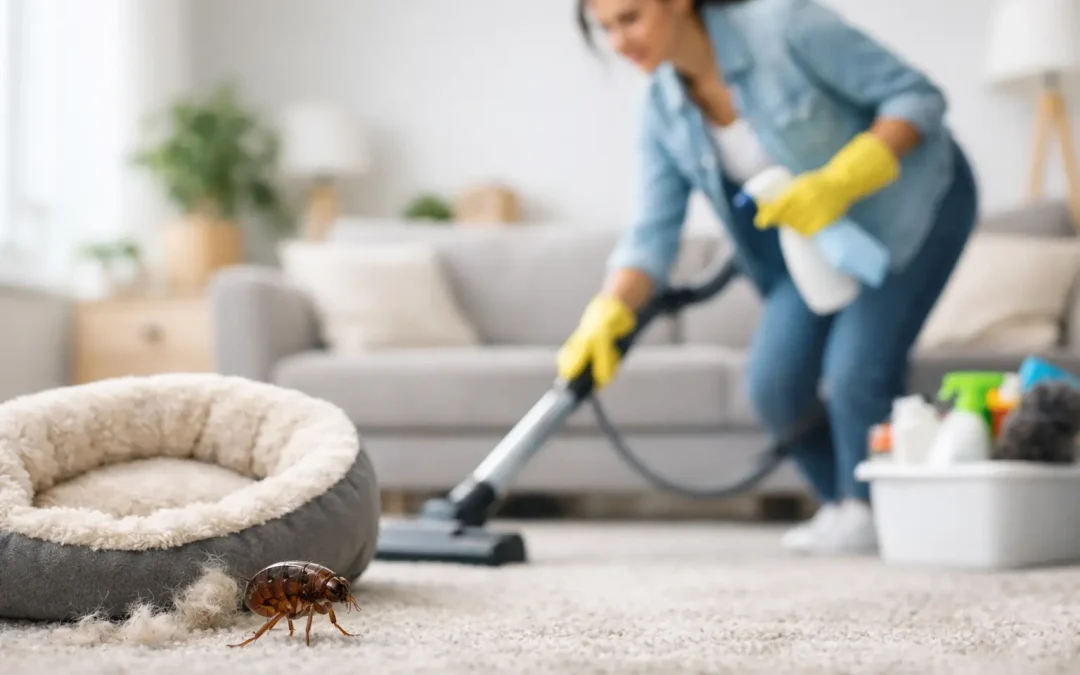
If you have started noticing itchy bites around your ankles, pets scratching more than usual, or tiny dark insects jumping from carpets or soft furnishings, speed matters. Knowing how to remove fleas from home properly is not just about getting rid of the insects you can see. It means breaking the full flea life cycle so the problem does not return a week later.
Fleas are persistent because most of the infestation is usually not on your pet or in plain sight. Eggs, larvae and pupae settle deep into carpets, rugs, upholstered furniture, pet bedding and cracks in flooring. That is why a quick spray in one room rarely solves the issue. Effective treatment needs a joined-up approach across pets, fabrics, floors and the wider property.
Why flea infestations are difficult to clear
Adult fleas are only one part of the problem. A female flea can lay eggs quickly, and those eggs can fall off into the home just as quickly. In warm indoor conditions, the flea life cycle can continue even when the weather outside is cold.
This is also why people often think treatment has failed when they still see fleas after cleaning or spraying. In many cases, immature stages are continuing to develop, and newly emerged adults are appearing after the first round of treatment. It does not always mean the product has not worked. It often means the infestation was already established.
Homes with pets are the most common setting, but fleas are not limited to pet owners. They can be brought in on clothing, second-hand furniture, or by previous animal activity in a property. Landlords and letting agents also see this after tenants move out, especially where soft furnishings and carpeted rooms are involved.
How to remove fleas from home step by step
The most reliable way to remove fleas from home is to tackle the source, the environment and the follow-up at the same time.
Start with the host
If you have dogs or cats, they must be treated using a flea product recommended by your vet or a qualified pet care professional. Treating the house without treating the animal usually leads to repeat activity, because adult fleas continue feeding and reproducing.
Different pets need different products, and some treatments safe for dogs are dangerous for cats. For that reason, avoid guessing. A proper pet treatment plan is part of the house treatment plan.
If the infestation is in a rental property, a vacant house or commercial accommodation where animals are no longer present, it is still important to identify whether the source was domestic pets, wildlife access or contaminated furnishings. Without that, the same conditions can allow fleas to return.
Vacuum thoroughly and repeatedly
Vacuuming is one of the most effective first steps because it removes eggs and debris, disturbs developing flea stages and encourages pupae to emerge. Focus on carpets, skirting edges, under beds, upholstered furniture, pet resting areas and gaps between cushions.
Do not just vacuum the middle of the room. Fleas concentrate in sheltered areas where pets rest or where vibration and warmth are low. Empty the vacuum immediately after use, seal the contents and dispose of them outside the property.
This is not a one-off task. Daily vacuuming for at least one to two weeks can make a real difference, especially after treatment has been applied.
Wash fabrics on a hot cycle
Pet bedding, throws, removable cushion covers, blankets and any washable soft items in affected rooms should be laundered on the hottest suitable wash for the fabric. If an item cannot be washed, tumble drying on a suitable heat setting can still help.
Where fabrics are heavily infested and difficult to clean properly, replacement may be more practical. That is particularly true for worn pet bedding with dense filling where eggs and larvae can remain protected.
Use an appropriate flea treatment for the home
To clear an established infestation, the environment often needs a targeted insecticidal treatment designed specifically for flea control. The best results usually come from products that address not only adult fleas but also the immature stages.
Application matters. Flea activity is often concentrated in lounges, bedrooms, stairs, under furniture and around pet sleeping areas, but treatment may need to cover more than one room. Missing adjoining spaces can lead to patchy control.
This is also where safety and effectiveness need to be balanced. Off-the-shelf products may help with a very minor issue, but they are often used too lightly, in the wrong places or without the follow-up needed to break the cycle. In homes with children, pets, vulnerable occupants or a heavy infestation, professional treatment is usually the more dependable route.
When DIY flea control is enough and when it is not
A very early infestation may respond to prompt action if you have identified it quickly, treated the pet correctly, washed affected fabrics and carried out repeated vacuuming alongside a suitable household treatment. Even then, patience is required.
If fleas are present in multiple rooms, the property has wall-to-wall carpet, bites are continuing after initial treatment, or the issue has returned more than once, DIY methods often become time-consuming and inconsistent. The same applies in multi-occupancy housing, care settings, hospitality spaces or any commercial premises where hygiene and reputation are under pressure.
In these cases, professional pest control is not just about stronger products. It is about inspection, identifying harbourage areas, choosing the correct treatment strategy and advising on the right preparation and follow-up. For commercial operators, it also supports due diligence where pest incidents need to be managed properly and discreetly.
How long it takes to remove fleas from home
This depends on the size of the infestation, the amount of soft furnishing in the property, whether pets are still present and whether all stages of the life cycle have been addressed. Some homes improve quickly within days, while others take several weeks to fully clear.
One of the most common concerns is seeing fleas after treatment. This can happen because pupae are resistant to many control measures until adults emerge. Activity after treatment does not always mean failure, but it does mean follow-up matters. Vacuuming, laundering and, where advised, repeat treatment are often part of the process.
Cold weather does not guarantee relief indoors. Heated homes and commercial buildings provide stable conditions for fleas to continue developing throughout the year.
Signs you need professional flea treatment
There are a few situations where expert help is the sensible option rather than the last resort. If you are being bitten in several rooms, if your pet has already been treated but flea activity continues, or if the infestation is affecting tenants, visitors, staff or customers, professional attendance is usually justified.
The same applies where there are young children, allergy concerns, vulnerable residents or a need for documented treatment in managed properties. Commercial environments, especially those with governance requirements, need a service that goes beyond a basic spray visit. Inspection notes, treatment records and practical prevention advice all matter.
For households and businesses in Dublin, Kildare, Meath and Wicklow, local response can also make a difference. Flea issues tend to escalate quickly once established, so a prompt inspection helps reduce the risk of a wider infestation.
Preventing fleas from coming back
Once the immediate infestation is under control, prevention becomes much easier than repeat eradication. Regular pet flea prevention is the main line of defence in domestic settings. Homes should also keep up consistent cleaning around pet areas, particularly soft furnishings and carpet edges.
If wildlife has had access to loft spaces, subfloors or outbuildings, those access points may need to be assessed and proofed. In rental homes, clear end-of-tenancy cleaning and inspection standards can reduce the chance of a new occupant inheriting an old problem.
For commercial premises, prevention is about more than cleanliness alone. Monitoring, housekeeping standards, structural checks and a responsive pest management plan help stop isolated issues becoming operational problems. That is especially relevant in care, catering, logistics and other environments where pest activity can undermine confidence quickly.
What a professional service should provide
If you bring in a specialist, you should expect more than a quick treatment and a generic leaflet. A proper service should include a clear assessment of the affected areas, practical preparation guidance, advice on pet coordination, and realistic expectations about what happens after treatment.
It should also account for the type of property. A family home, a managed block, a guest accommodation site and a regulated commercial setting all have different risk profiles. A dependable provider will adjust the treatment plan accordingly and explain any hygiene or re-entry requirements clearly.
Pest Pure Solutions approaches flea problems in the same way as any other serious pest issue – with a focus on effective eradication, hygiene protection and practical follow-through rather than short-term fixes.
Fleas are unpleasant, but they are manageable when the response is thorough. The sooner you deal with the source, the soft furnishings and the hidden stages of the infestation, the sooner your home starts to feel normal again.
Recent Comments