
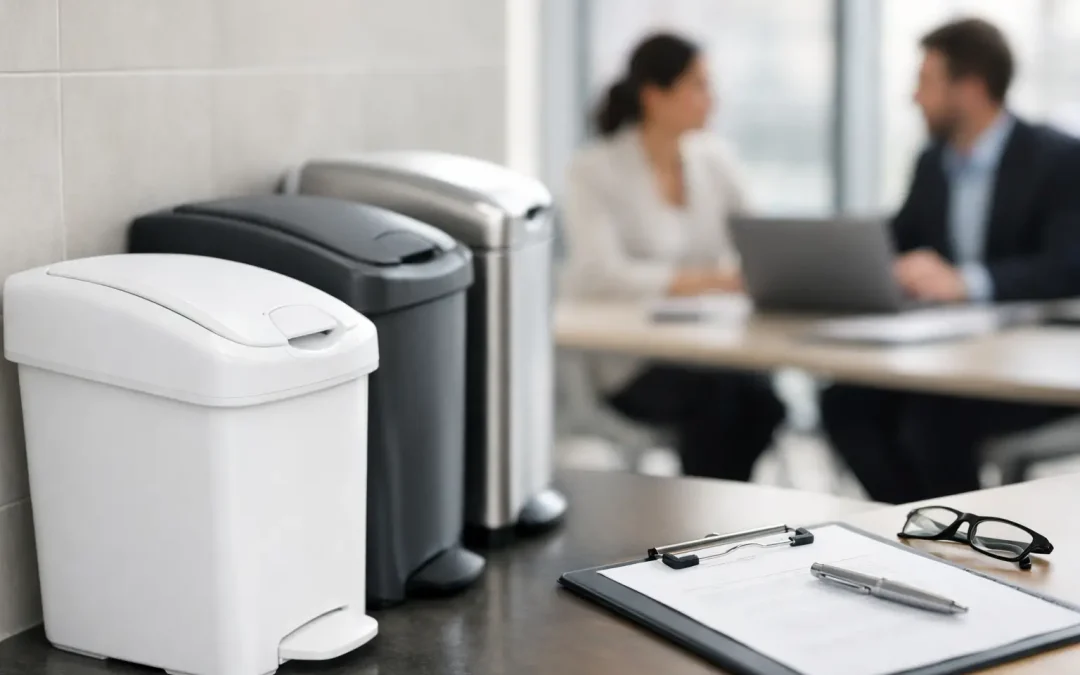
A washroom problem rarely starts with the obvious. It starts when a bin is missed, odours build up, consumables run short, or a contractor treats a sensitive hygiene service like a basic collection job. Choosing the right sanitary bin supplier is not just about placing a unit in a cubicle. It is about protecting hygiene standards, user comfort, and day-to-day confidence in your premises.
For many businesses, this sits quietly in the background until something goes wrong. Then it becomes very visible, very quickly. In offices, hospitality venues, healthcare settings, schools, care environments, and regulated commercial sites, sanitary waste disposal needs to be discreet, dependable, and managed properly. A poor service creates complaints. In some sectors, it also creates compliance concerns.
Why your sanitary bin supplier matters
A sanitary bin is a routine washroom essential, but the service behind it carries more weight than many facilities teams expect. Feminine hygiene waste has to be handled with care, collected on schedule, and disposed of through the correct waste stream. If any part of that chain is weak, the result can be unpleasant for users and risky for the business.
The most immediate issue is hygiene. Overflowing bins, damaged lids, staining, and lingering odours all point to poor servicing standards. That affects how staff, visitors, customers, and inspectors perceive the overall cleanliness of a building. People do not separate one neglected washroom detail from the rest of the site. They see it as a sign of how the premises are managed.
There is also the question of reliability. A contractor may look competitive on price, but if collections are inconsistent or support is difficult to reach, the saving disappears quickly. Facilities managers and business owners need services that happen when promised, with minimal chasing and clear accountability.
What a good sanitary bin supplier should provide
At a minimum, a supplier should provide suitable units, scheduled servicing, waste transfer handled correctly, and a discreet, professional approach on site. That is the baseline, not the premium option.
The better providers go further. They help you decide how many units are needed, where they should be placed, and how often they should be exchanged or serviced based on actual usage. A small office with limited footfall does not need the same schedule as a busy restaurant, care home, or large workplace. Good service starts with proper assessment, not guesswork.
Presentation matters too. The bins should be clean, functional, and suited to the environment. A washroom in a client-facing premises has different expectations from a staff-only back-of-house area, but both still need to meet the same hygiene standard. If the units look dated or poorly maintained, that affects the impression of the entire space.
A dependable supplier should also be able to integrate sanitary disposal into wider washroom services where needed. This is often more practical for businesses that also require air freshening, soap and paper consumables, or entrance mat services. Fewer contractors can mean simpler management, better visibility, and a more joined-up hygiene standard across the site.
How to assess a sanitary bin supplier
Service reliability
Reliability is the first point to test. Ask how collections are scheduled, what happens if a visit is missed, and how quickly issues are resolved. A supplier should be able to explain their service structure clearly. Vague promises are not enough, especially for sites where hygiene failures can escalate into complaints or audit findings.
It is also worth asking whether the service is designed around your premises or built around the supplier’s convenience. A supplier with operational discipline will usually be more consistent over time than one offering loose arrangements with little documentation.
Compliance and waste handling
Sanitary waste disposal is not simply a janitorial task. It involves controlled handling and proper disposal procedures. Commercial customers, especially those in care, food, pharma, logistics, and other governance-heavy sectors, should expect a supplier to understand this fully.
You may not need pages of paperwork for every site, but you do need confidence that the waste is being managed correctly and that service records are available where required. For some businesses, that is essential during audits or internal reviews. For others, it is simply part of responsible facilities management. Either way, a contractor should be able to demonstrate that the process is legitimate and well managed.
Discretion and professionalism
Washroom services should never feel intrusive. Engineers and service staff need to work professionally, discreetly, and with respect for the setting. This matters in every environment, but particularly in schools, healthcare premises, care homes, hospitality, and shared workplaces.
A supplier’s people are part of the service quality. If they arrive late, leave areas untidy, or handle waste in a visible or careless way, that undermines trust. Professional standards are not separate from hygiene standards. They are part of them.
One size does not fit every premises
This is where many buying decisions go wrong. Businesses compare suppliers on unit price alone, as if every site has the same washroom usage and the same risk profile. They do not.
A low-traffic office may need a straightforward, scheduled service with limited intervention. A busy catering site, public venue, or healthcare environment may require a more responsive arrangement and closer monitoring. Female washrooms with higher occupancy, changing usage patterns, or longer opening hours often need more attention than standard schedules suggest.
The right sanitary bin supplier should be prepared to assess your site properly and adapt the service frequency if use increases. If a contractor insists on a rigid package that does not reflect actual conditions, that usually leads to either overpaying or under-servicing.
Price matters, but value matters more
Cost is a fair concern. No facilities manager wants to overcomplicate a routine service, and no small business wants to pay for extras it does not need. But the cheapest option often becomes expensive when service quality falls.
Missed collections, odour complaints, poor customer support, and avoidable washroom issues all consume time. In some settings they also damage reputation. A supplier that charges slightly more but delivers consistently, communicates clearly, and handles hygiene correctly is usually the better operational choice.
This is especially true for businesses where cleanliness forms part of the customer experience or compliance culture. In those environments, sanitary disposal should be treated as part of the broader hygiene system, not a box-ticking exercise.
When combined hygiene support makes sense
Many organisations benefit from working with a provider that understands hygiene beyond a single washroom service line. A supplier that also deals with washroom presentation, odour control, pest risk, and site hygiene standards can often spot issues earlier and manage them more effectively.
That joined-up approach is useful because washroom hygiene does not exist in isolation. Overflowing bins, neglected consumables, poor cleaning routines, and pest activity can all overlap. In commercial settings, particularly those with high footfall or strict standards, separate suppliers can leave gaps in responsibility.
This is where an experienced hygiene-led operator can add value. For businesses across Dublin and the surrounding counties, having one dependable service partner for sanitary disposal and related washroom support can reduce administration and improve consistency across the premises.
Questions worth asking before you appoint a supplier
Before making a decision, ask practical questions rather than broad sales questions. How often will the bins be serviced? What records are provided? Who do you contact if there is a missed visit or urgent issue? Can the service be adjusted if site usage changes? Are the staff trained to work in sensitive or regulated environments?
The answers should be straightforward. If a supplier avoids detail, that is usually a warning sign. Hygiene services work best when expectations are clear from the outset.
It is also sensible to consider how the provider handles the wider relationship. Are they responsive during the quotation stage? Do they understand your premises, sector, and usage level? Do they speak in practical terms, or rely on generic claims? A contractor that takes the time to understand the site before proposing a service is generally more likely to deliver one properly.
Choosing with confidence
A sanitary bin supplier should make washroom hygiene easier to manage, not harder. The right provider offers dependable collections, professional on-site conduct, proper waste handling, and a service schedule that fits the building rather than a standard template.
For commercial customers in particular, this is about more than convenience. It is about protecting hygiene standards, supporting compliance, and maintaining confidence in the workplace or customer environment. And for any business, however large or small, that kind of reliability is worth choosing carefully.
If your current arrangement feels reactive, inconsistent, or too basic for the standards your premises need to maintain, it may be time to ask for a service that is built around hygiene first.
Recent Comments