
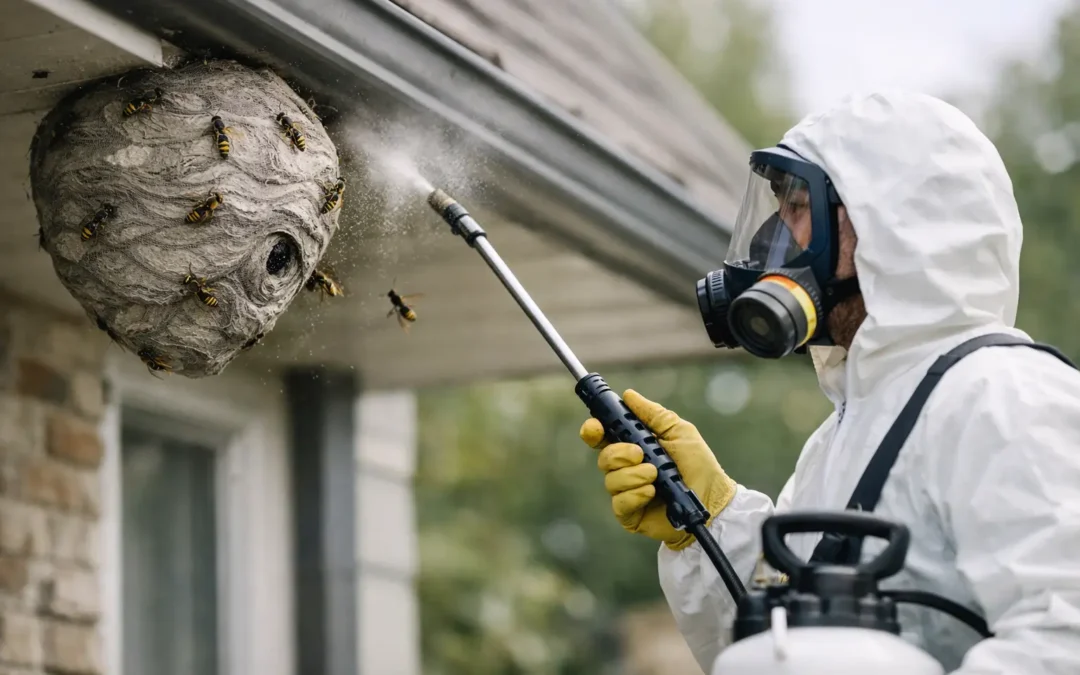
A wasp nest rarely starts as a major problem. In early summer, it may look like harmless papery growth under the eaves, in a shed roof, or tucked into a wall cavity. A few weeks later, you have steady wasp traffic, rising aggression around doors and bins, and a real safety issue for children, staff, customers, or anyone with an allergy. That is why the wasp nest removal Dublin property owners often need is best handled quickly, before the nest grows and the risk increases.
For homeowners, the main concern is usually safety around the house and garden. For commercial sites, the problem can escalate faster. A visible nest near entrances, outdoor seating, loading areas, waste storage, or staff access points can affect hygiene standards, customer confidence, and day-to-day operations. In both cases, the right response is not simply to get rid of insects. It is to deal with the nest properly, reduce immediate risk, and prevent the problem from returning in the same spot.
When a wasp nest becomes more than a nuisance
Wasps are most active during the warmer months, and nests can expand rapidly through summer. What begins with a small number of worker wasps can become a large colony in a matter of weeks. The issue is not only the number of insects present, but where they are nesting and how close they are to regular activity.
A nest in a tree at the far end of a large garden may be manageable for a short period if it poses no direct threat. A nest in a loft, wall cavity, air vent, shop frontage, or school play area is different. In those situations, people are more likely to disturb the colony without realising it. Once disturbed, wasps can become defensive very quickly.
This is where professional judgement matters. Not every nest presents the same level of urgency, and treatment should reflect the location, the size of the nest, the accessibility of the area, and who may be exposed. A domestic call-out and a treatment plan for a catering premises or care setting are not identical, even if the pest is the same.
Why DIY treatment often makes the problem worse
It is understandable that many people first consider a shop-bought spray. On the surface, it looks quicker and cheaper. In reality, DIY treatment is often where a manageable issue becomes a more serious one.
The main problem is access. Wasps commonly build nests in difficult areas such as soffits, loft insulation, chimney voids, cavity walls, and rooflines. Spraying the visible entrance does not always reach the nest properly. In some cases, it only agitates the colony and drives wasps further into the building fabric.
There is also the personal safety risk. Attempting to remove or knock down a nest can trigger a swarm response. Even one or two stings can be distressing. For someone with a known allergy, or an unknown sensitivity, it can become a medical emergency.
For business premises, DIY treatment also raises a professionalism issue. If staff members are trying to manage wasps near customers, food preparation areas, or delivery points, that creates avoidable risk. A proper pest control response is safer, more controlled, and easier to document where records matter.
Wasp nest removal Dublin properties usually need
Effective wasp nest removal Dublin homes and businesses rely on begins with inspection, not guesswork. A technician needs to confirm the nest location, identify access points, assess the level of activity, and decide whether a single treatment is likely to resolve the issue or whether follow-up action may be needed.
The treatment itself depends on where the nest is situated. Exposed nests can sometimes be treated directly. Hidden nests in wall voids or roof spaces may require treatment at the point of entry so the worker wasps carry the insecticidal product back into the nest. That is often the most effective route because it targets the colony rather than just the insects you can see.
In many cases, the nest does not need to be physically removed immediately after treatment. Once the colony has been eliminated, an inactive nest may be left in place if removal would cause unnecessary damage to the structure. Where removal is practical and appropriate, it can be carried out safely after treatment has taken effect.
This matters because people often assume the job is only done once the nest is taken away. In practice, the priority is to stop the infestation at source, make the area safe again, and reduce the chance of repeat nesting.
What homeowners should do while waiting for treatment
If you suspect a nest on your property, the best first step is simple – keep away from it. Do not block the entry hole, do not spray random products into cracks or vents, and do not try to inspect the nest closely. Wasps are especially reactive to vibration and disturbance.
Keep children and pets away from the area and, if possible, close nearby windows until treatment has been arranged. If the nest is near a doorway or side passage used regularly, use an alternative route where you can. Calm, limited movement around the site is far safer than repeated attempts to check whether the wasps are still active.
If anyone in the household has a history of severe reactions to stings, the urgency increases. In that case, prompt professional attendance is not simply convenient. It is the sensible course of action.
Commercial premises need a faster, more controlled response
For commercial operators, a wasp problem is rarely just about discomfort. It can affect hygiene perception, staff welfare, customer experience, and compliance expectations. In sectors such as food handling, care, logistics, waste processing, and regulated environments, a visible pest issue can quickly become an operational concern.
A nest near bins, roller doors, canteens, courtyards, or goods-in areas tends to attract complaints early because those are high-traffic spaces. The challenge is that temporary avoidance is not always realistic. Staff still need access, deliveries still need to arrive, and customer-facing areas still need to operate safely.
That is why the response has to be practical as well as technically correct. Treatment should be discreet, suitable for the site, and backed by clear advice on immediate precautions. Where a business requires service records, risk-based recommendations, or broader pest prevention support, that should form part of the solution rather than an afterthought.
For some sites, the nest itself is only one part of the problem. Poor waste containment, gaps around cladding, damaged vents, and unsealed roof voids can all encourage repeat activity. Addressing the immediate infestation without looking at why the site attracted wasps in the first place leaves the door open to another incident next season.
How to reduce the chance of wasps returning
No company can promise that a queen wasp will never attempt to build near your property again. What can be done is to make the site less attractive and reduce easy nesting opportunities.
For domestic properties, that often means repairing damaged soffits, sealing gaps around pipe entries, fitting fine mesh to vents where appropriate, and keeping bins shut properly during warmer months. Sweet food and drink left outside will not create a nest, but they do attract worker wasps and increase nuisance activity around patios and doors.
For commercial premises, prevention usually needs a wider view. Waste handling routines, external cleaning standards, building maintenance, proofing works, and site-specific monitoring all play a part. The right approach depends on the nature of the premises. A warehouse, pharmacy unit, care home, and café do not face identical risks, so the control plan should not be identical either.
This is one of the key differences between a basic pest treatment and a professional pest management service. One deals with the visible issue. The other helps reduce repeat disruption.
Choosing a professional service with confidence
When arranging wasp treatment, speed matters, but so does competence. You need a provider that can assess the problem properly, apply treatment safely, and give clear aftercare advice. For businesses, professionalism also means discretion, reliable attendance, and reporting that stands up when internal records or audits require it.
A reputable specialist should explain what they have found, how the treatment works, and whether any follow-up is likely to be needed. They should also be realistic. For example, wasp activity may continue for a short period after treatment as returning workers come back to the nest site. That does not necessarily mean the treatment has failed. It usually means the process is still working through the colony.
Pest Pure Solutions supports both homeowners and commercial clients with professional pest control that is responsive, safe, and tailored to the environment involved. That matters when the same pest issue can carry very different consequences depending on the site.
If you have noticed a steady stream of wasps entering the same point in a roofline, wall, shed, or external structure, it is worth acting before peak activity turns a localised nest into a wider hazard. Early treatment is usually simpler, safer, and less disruptive for everyone who uses the property.
Recent Comments