
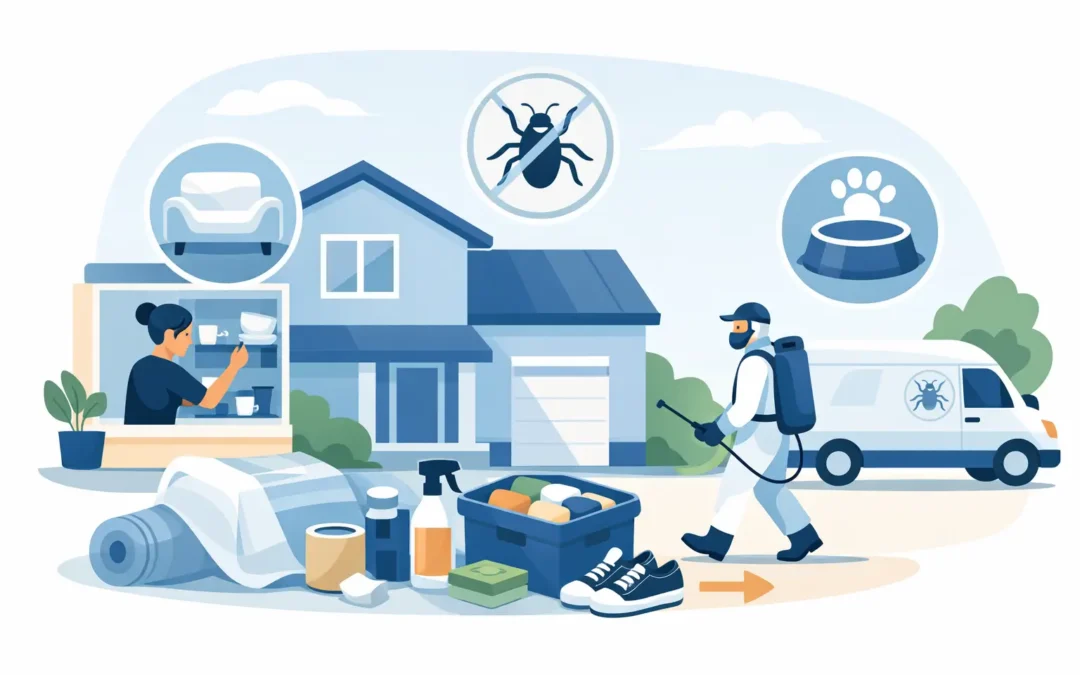
When a pest technician is booked, the treatment itself is only part of the job. Knowing how to prepare house for pest control properly can make the visit safer, quicker and more effective, whether you are dealing with mice in the loft, ants in the kitchen or bed bugs in a bedroom.
Good preparation gives the technician clear access to inspection points, reduces the risk of contamination and helps treatment reach the places pests actually use. It also lowers the chance of repeat activity caused by clutter, food residue or blocked entry points being missed. In homes and rented properties alike, those details matter.
Why preparation matters before any pest treatment
Pest control is rarely a one-size-fits-all service. The steps needed before treatment depend on the pest, the layout of the property and whether the problem is active in one room or spread across several areas. A wasp nest treatment, for example, involves different preparation from a rodent proofing visit or a bed bug programme.
That said, the principle stays the same. A well-prepared house allows the technician to inspect thoroughly, apply treatment accurately and give practical advice based on real conditions in the property. If access is limited, surfaces are heavily cluttered or food and pet items are left exposed, the result may be slower and the treatment may need more follow-up.
How to prepare house for pest control room by room
In most domestic properties, the kitchen is the first priority. Clear worktops, put away exposed food and store dry goods in sealed containers where possible. Small appliances do not always need to be moved, but anything sitting in an area with clear pest activity should be checked. Sweep up crumbs, clean spills and empty bins if they are full. This is particularly relevant for ants, cockroaches, flies and rodents.
Bathrooms and utility rooms should also be accessible. Remove laundry from the floor, clear around pipework and make sure the technician can inspect under sinks, behind appliances and around service entry points. These damp, sheltered areas often support silverfish, drain flies and rodent access routes.
In living rooms and bedrooms, preparation depends heavily on the pest involved. For general insect or rodent work, the main aim is to provide access to skirting boards, corners, radiators and any suspected harbourage points. Move light furniture if possible, but do not drag heavy items alone if it creates a safety risk. In bed bug cases, the preparation is more detailed and usually includes stripping beds, bagging bedding and reducing bedroom clutter so all likely hiding places can be inspected.
Lofts, garages and under-stairs cupboards are often overlooked, yet they are common locations for mice, rats, stored product insects and wasp nesting. If these spaces are relevant to the infestation, make sure they can be entered safely and that obvious obstructions are removed in advance.
Food, utensils and household items
One of the most common questions is whether everything needs to be removed from the kitchen. Usually, no. The sensible approach is to protect what could come into direct contact with treatment or inspection activity. Put away crockery, cutlery and food preparation items if they are left out. Open food should be sealed and stored in cupboards, the fridge or another protected area.
Children’s items deserve the same attention. Feeding equipment, toys that are regularly mouthed and pet bowls should be lifted from treatment areas unless the technician advises otherwise. This is not about alarm. It is simply good hygiene practice.
If treatment is focused on external areas, loft voids or inaccessible cavities, the level of internal preparation may be minimal. If treatment is focused on kitchens, bedrooms or soft furnishings, more careful preparation is usually needed. The technician should explain what applies to your case before arrival.
Pets, children and vulnerable occupants
Any professional pest control visit should take account of the people and animals in the property. Before the appointment, make the technician aware of pets, young children, pregnancy, respiratory conditions or any other factors that could affect access or treatment planning.
On the day, keep pets out of the treatment area and remove pet food, bedding and water bowls where instructed. Fish tanks need particular care because some products and aerosols can be unsuitable around aquatic life. Covering or temporarily relocating them may be advised depending on the treatment.
Children should not be allowed to play in active treatment areas while the work is being carried out. If an elderly or vulnerable person is present, it may help to arrange for them to stay in another part of the house until the technician confirms the area is safe for normal use again. Clear communication matters more than guesswork.
Cleaning before and after treatment
It is sensible to clean before the visit, but not in a way that removes evidence of the pest problem. Vacuuming floors, wiping food spills and reducing general dirt helps. Deep cleaning directly over droppings, insect trails or nest material just before the appointment can make inspection harder if the technician has not yet seen the activity.
After treatment, follow the instructions given for that specific pest. This is where many households accidentally reduce effectiveness. For example, washing treated skirting boards too soon, vacuuming up residual insecticide immediately or moving bait stations can interfere with results. In some situations, a short period of limited disturbance is exactly what allows the treatment to keep working.
For bed bugs, fleas and some crawling insects, laundering clothing and bedding at the correct temperature may form part of the control plan. For rodents, improved cleaning and better food storage support the treatment but do not replace proofing and monitoring. It depends on the pest and the treatment method used.
Access is often the difference between a quick job and a repeat visit
If you want to know how to prepare house for pest control in the most practical sense, think about access first. Technicians need to inspect where pests enter, travel and hide. That may include behind white goods, under sinks, inside boiler cupboards, around loft hatches, beside external doors and along perimeter walls.
You do not need to empty the house, but you should make key areas reachable. If there are known signs such as droppings, gnaw marks, insect sightings or scratching sounds in a certain location, mention them clearly and keep that area open for inspection. The more accurate the access and background information, the more targeted the treatment can be.
In managed properties or rented homes, it also helps if the right person is available to provide access to meter cupboards, service risers, bin stores or shared external areas when relevant. Delays in access can affect both diagnosis and treatment timing.
What not to do before a pest control visit
Do not apply shop-bought sprays or powders just before the appointment unless you have been told to do so. These products can disrupt pest behaviour, scatter infestations or interfere with professional treatment plans. This is especially common with bed bugs, cockroaches and ants, where partial treatment can push activity into new hiding places.
Do not seal obvious entry points too early if pests are still active inside and the technician has not inspected them. Blocking a gap without understanding the route can trap pests indoors or force them into another part of the property. Proofing is important, but timing matters.
It is also best not to move heavily infested items from room to room. If a mattress, upholstered chair or storage box is affected, ask for guidance first. Relocating items can spread pests beyond the original area.
Preparing for different types of pest issues
Rodent work usually calls for access to kitchen kickboards, utility rooms, lofts, garages and external perimeter points. Remove clutter from these areas and note any recent sightings, noises or droppings.
For ant, cockroach or silverfish treatment, focus on kitchens, bathrooms, pipe entries and warm appliance spaces. Reduce moisture, clear surfaces and make sure cracks, corners and service routes can be checked.
For bed bugs or fleas, preparation is more labour-intensive. Bedding, clothing and soft furnishings may need to be bagged, washed or isolated according to the technician’s instructions. Bedrooms usually need the most attention, and clutter reduction is essential.
For wasps, birds or external pest issues, the key is often safe access to gardens, sheds, rooflines, eaves or loft spaces. Keep children and pets clear of the area and avoid disturbing nests or roosting points yourself.
A professional provider such as Pest Pure Solutions will normally tailor these instructions to the pest, property and level of infestation rather than relying on generic advice.
The best preparation is accurate information
House preparation is not about making the property look perfect. It is about helping the treatment work. If you can tell the technician when the problem started, where activity is worst, what you have already tried and whether pets or vulnerable occupants are present, that information is as useful as any cleaning or tidying.
A well-prepared visit saves time, supports safer treatment and improves the chance of resolving the issue without unnecessary disruption. If you are unsure what to move, what to clean or what to leave alone, ask before the appointment. Clear advice at the start often prevents a much bigger problem later.
Recent Comments