
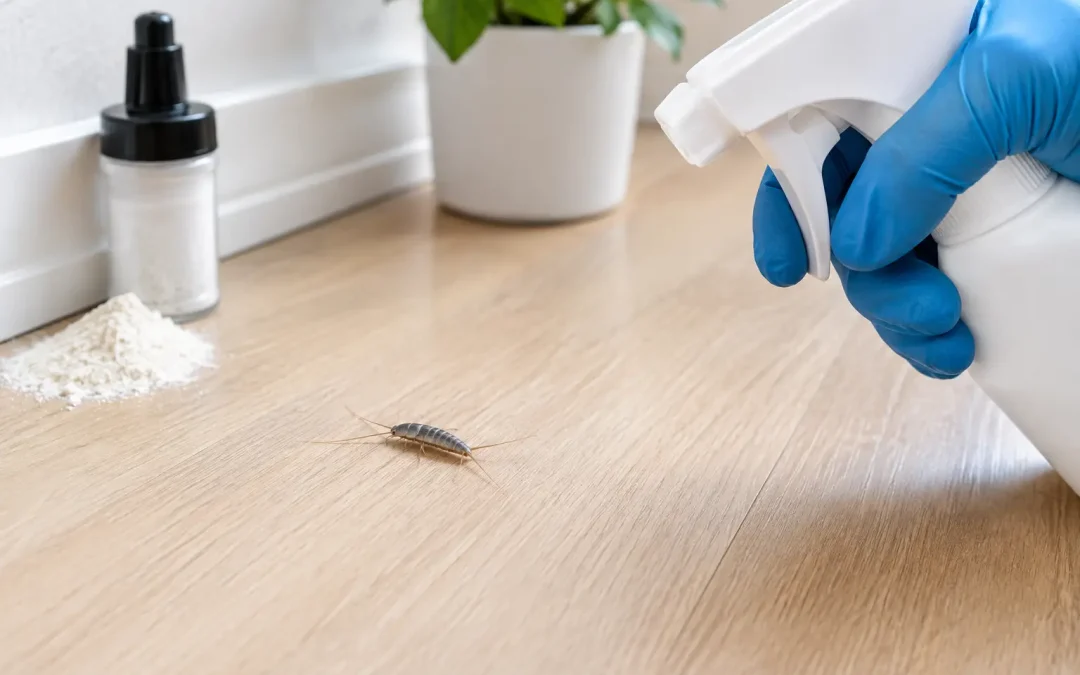
Silverfish are often first noticed at the worst possible moment: a quick movement across a bathroom floor, inside a kitchen cupboard, or among stored paperwork. The best silverfish treatment methods do more than kill the insects you can see. They identify the damp, harbourage and food sources allowing the population to remain active.
For homeowners, silverfish can make an otherwise clean property feel unhygienic. For businesses, especially care, catering, pharmaceutical, logistics and storage sites, repeated activity can raise questions about building condition, hygiene standards and pest-management controls. Effective treatment is therefore a combination of inspection, targeted control and practical prevention.
Why silverfish keep returning
Silverfish prefer dark, undisturbed and humid areas. Bathrooms, utility rooms, kitchens, basements, airing cupboards and voids around pipework are common locations. They feed on more than crumbs. Starches, paper, book bindings, wallpaper paste, cardboard, fabrics, dead insects and some adhesives can all support them.
That is why a quick spray around a skirting board may give short-term reassurance but fail to solve the issue. Silverfish can retreat into narrow cracks, gaps beneath fitted units, wall voids and floor edges, emerging mainly at night. Their eggs are also concealed in sheltered areas, so treatment needs to account for the life cycle rather than only the insects present during an inspection.
Moisture is often the main driver, but not always. A dry property can still support silverfish where there is plentiful paper storage, cluttered cupboards or concealed plumbing defects. The right approach depends on where activity is found, how long it has been present and whether there are building or hygiene issues contributing to it.
Best silverfish treatment methods for lasting control
Detailed inspection and identification
A professional inspection is the starting point for reliable control. Silverfish can be confused with other small, fast-moving household insects, and the location of activity matters as much as the insect itself. An experienced technician will assess likely harbourage, signs of excess moisture, access points around services and the materials that may be providing food or shelter.
In a commercial environment, the inspection should also consider the areas most vulnerable to product contamination, stock damage or audit concerns. A treatment plan for a small office washroom will not be the same as one for a large food preparation area, archive room or care setting.
Moisture reduction and repairs
Reducing humidity makes a property less favourable for silverfish and supports every other control measure. Ventilate bathrooms and kitchens after use, repair leaking pipes or seals promptly, and avoid leaving wet towels or damp cleaning materials in enclosed spaces. Where condensation is persistent, the underlying ventilation or insulation issue may need attention.
Dehumidifiers can be useful in basements, utility rooms and other areas with ongoing damp conditions, but they are not a complete treatment on their own. If silverfish are established in cracks and voids, moisture control should be paired with direct pest treatment and proofing.
Targeted residual insecticide treatment
Professional residual treatments are applied precisely to the cracks, crevices and harbourage points silverfish use. This may include floor-wall junctions, pipe entry points, behind appliances, beneath units and along inaccessible edges where insects travel. The purpose is to create control in the places silverfish hide and move, rather than treating open surfaces unnecessarily.
The treatment selected and its application will depend on the property, the level of activity and who uses the area. Homes with young children or pets, and commercial premises with strict hygiene requirements, need a carefully planned approach. A professional technician can advise on preparation, treated-area access and any short-term precautions required.
Avoid using multiple shop-bought aerosols in the same area before an inspection. Overapplication can be unpleasant indoors, may drive insects deeper into voids and can make it harder to understand where activity is originating. Foggers are also rarely a dependable answer for silverfish because they do not reliably reach the protected harbourage where the insects spend most of their time.
Dust treatment for inaccessible voids
Where activity is linked to dry wall voids, service penetrations or other inaccessible gaps, an appropriate insecticidal dust may be used by a trained technician. Dust formulations can remain effective in suitable protected spaces and are particularly useful where a liquid treatment would not be appropriate.
This is not a DIY job. The product, quantity and placement must be controlled, particularly around electrical services, food-handling areas and occupied premises. Correct application is what makes a targeted treatment effective without compromising safety or hygiene.
Proofing and housekeeping improvements
Proofing does not replace treatment, but it reduces future harbourage and limits movement between rooms. Seal cracks around skirting boards, pipework and fitted furniture where practical. Replace damaged silicone around baths, showers and sinks, and address loose wallpaper or deteriorating grout that creates sheltered gaps.
Good storage also makes a real difference. Keep paperwork, books and cardboard boxes off damp floors, remove unnecessary clutter from cupboards, and use clean, sealed storage for vulnerable materials. In commercial settings, stock rotation, cleaning schedules and orderly storage make inspections more effective and reduce places for pests to remain unnoticed.
When a follow-up visit is needed
A single treatment may be sufficient for light, localised silverfish activity where moisture has been addressed quickly. More established infestations often require a follow-up visit. This allows the technician to assess whether activity has reduced, treat newly active areas and check that repairs or housekeeping actions have been completed.
The time needed for results can vary. You may still see occasional silverfish shortly after treatment as insects leave their hiding places or encounter treated surfaces. Consistent sightings after the advised treatment period, particularly in new rooms, should be reported so the plan can be adjusted.
For commercial clients, planned service visits offer a practical way to maintain standards year-round. Clear treatment records, inspection findings and recommended corrective actions help site managers demonstrate that pest risks are being managed properly. This is especially valuable where hygiene, customer confidence and compliance are closely linked.
What homeowners can do before professional treatment
Preparation helps a treatment reach the areas that matter. Clear the floor edges in affected rooms, remove items from beneath sinks where possible, and make cupboards accessible. Do not deep-clean the exact cracks or edges immediately after a residual treatment unless instructed, as this can remove the product before it has had time to work.
It is also helpful to note where and when silverfish are seen. Activity near a shower room may point towards humidity, while sightings in a loft conversion, store room or cupboard may indicate a different harbourage issue. Photographs can help with identification, but there is no need to handle insects or disturb suspected nesting areas.
Choosing a professional silverfish service
Choose a pest-control provider that begins with inspection and explains the treatment method clearly. You should understand what has been found, what work will be carried out, any preparation needed and what prevention measures are recommended afterwards. For businesses, ask for service documentation suited to the site’s governance and hygiene obligations.
Pest Pure Solutions provides professional silverfish treatment for homes and businesses across Dublin and the surrounding counties, with tailored treatment plans based on the property and level of activity. Where recurring issues are linked to moisture, building gaps or storage practices, the aim is to address those conditions alongside the immediate infestation.
Silverfish are rarely a sign that a property is unclean, but persistent sightings are a reason to act. Dealing with harbourage early, correcting damp conditions and using a properly targeted treatment can protect the comfort, condition and hygiene of the space long after the insects have disappeared.
Recent Comments