
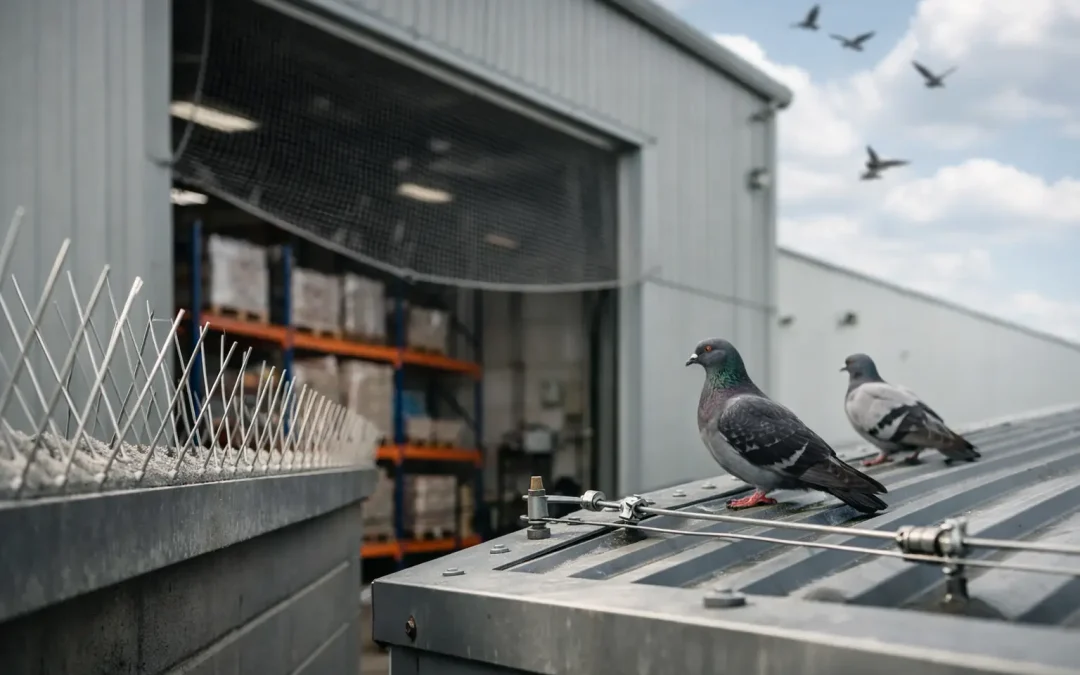
A pigeon roosting above a loading bay can create a problem far beyond the visible droppings on the ground. In a busy distribution or storage facility, bird proofing Dublin warehouses is about protecting stock, staff access routes, food safety controls and the evidence needed to demonstrate proper site management during an audit.
Warehouses offer birds exactly what they need: height, shelter, warm roof voids, ledges, exposed steelwork, loading doors and regular access to food waste. Once pigeons, gulls or smaller birds establish a nesting or roosting area, the issue can spread quickly across canopies, gutters, racking, plant rooms and delivery yards. A professional approach deals with the current activity while preventing birds from returning to the same vulnerable points.
Why warehouse bird activity needs early action
Bird droppings are not simply an appearance issue. They can contaminate packaging, pallets and stored goods, create slip hazards around entrances, block gutters and damage building finishes over time. Nesting materials can also obstruct drainage, affect ventilation equipment and increase fire risk where debris builds around electrical plant or roof-level equipment.
For logistics, catering, pharmaceutical and other controlled environments, the operational consequences can be more serious. A bird sighting near stock or an active loading area may trigger internal investigations, additional cleaning, product checks and customer concerns. If evidence of repeated bird activity is visible, it can raise questions about pest management controls and site hygiene standards.
The right response depends on the building, the species involved and how the warehouse operates. A simple ledge protection system may be enough for a small, low-level roosting point. A large distribution centre with open loading doors, high steelwork and external waste areas may need a phased programme combining exclusion, proofing, cleaning and ongoing monitoring.
Start bird proofing Dublin warehouses with a site survey
Effective proofing should not begin with a one-size-fits-all product. A detailed survey identifies where birds are landing, nesting, feeding and entering, as well as the routes staff and vehicles use around the premises. This matters because treating the most obvious ledge while leaving nearby roof access or food sources untouched often moves the problem rather than solving it.
A professional survey will assess rooflines, parapets, canopies, signage, guttering, roller shutters, loading bays, vents, service penetrations and external plant. It should also consider the surrounding environment. Nearby food outlets, waste compactors, standing water, neighbouring roofs and unused sections of land can all influence bird pressure at a warehouse.
The survey should establish whether the activity is occasional or established. Fresh droppings, feathers, nesting material, bird noise at particular times of day and repeated activity in the same location are useful indicators. It should also identify any access constraints, including work at height requirements, vehicle movements, fragile roofing and areas where food, medicines or sensitive goods are handled.
For regulated sites, clear findings and recommendations are especially valuable. They provide a record of the risk, the control measures selected and the reason those measures are appropriate for the premises.
Choosing the right bird-proofing method
The best method is the one that prevents landing or entry without creating a maintenance, safety or visual problem. In most warehouse settings, humane exclusion is preferable to relying on deterrents alone. Birds are persistent and can become accustomed to measures that do not physically prevent access.
Netting for enclosed or high-risk areas
Bird netting is often suitable for open-sided loading canopies, roof voids, service yards, covered walkways and internal areas where birds have gained access. Correctly installed netting creates a physical barrier while allowing light and airflow to remain largely unaffected.
Its effectiveness depends on specification and installation. The mesh size must suit the bird species, fixings must be secure, and the system must be tensioned correctly to avoid gaps or sagging. Poorly fitted netting can trap birds, fail quickly or create an untidy appearance. It should also be installed with future inspection and maintenance in mind.
Spikes and wire systems for ledges
Anti-perching spikes and tensioned wire systems can work well on narrow ledges, signs, lighting units, pipework and roof edges. They are not suitable for every surface, particularly broad areas where pigeons can simply land between rows or beside an incomplete installation.
Spikes are a practical option where the issue is limited to predictable landing points. Wire systems can be less visually prominent on some buildings, but both require accurate placement and secure fixings. The goal is to remove the available perch, not to leave birds with enough room to continue roosting.
Protecting access points and service openings
Open vents, gaps beneath roof cladding, damaged soffits and unprotected service openings can allow smaller birds into warehouse interiors or roof spaces. Mesh, brush strips, purpose-made guards and repairs to damaged fabric can close these routes.
This type of proofing has to be carefully planned. Ventilation, drainage, fire safety and maintenance access cannot be compromised. A competent contractor will assess the function of each opening before recommending an exclusion method.
Deterrents and habitat management
Visual deterrents, sound devices and gel-based systems may have a role in limited circumstances, but they should not be viewed as a complete solution for an established warehouse problem. Their results vary with species, site layout and the level of existing bird pressure.
Better housekeeping makes any proofing system more effective. Waste must be contained, spillages cleared promptly, and staff welfare or smoking areas kept free from exposed food. Where standing water, unmanaged vegetation or accessible waste attract birds near the building, addressing these conditions reduces the pressure on the proofing itself.
Installation must work around warehouse operations
Bird control work at a warehouse needs to be planned around dispatch schedules, vehicle routes, staff safety and the protection of goods. This is particularly important at loading bays, where a system that interrupts forklift movements or restricts driver visibility is not an acceptable solution.
Work at height may require specialist access equipment, permits and exclusion zones. Installation should be scheduled to minimise disruption, with clear communication for site teams. Where proofing is being fitted above stored products or operational areas, appropriate protection and post-work cleaning should form part of the method statement.
Nesting seasons also need consideration. Wild birds and active nests are protected by law, and work cannot lawfully disturb or destroy an active nest without the appropriate basis or licence. A survey before installation helps identify these constraints and allows works to be timed correctly. This is one reason why waiting until the problem is severe can limit the options available.
Cleaning and disinfection after bird activity
Proofing prevents future access, but existing droppings and nesting debris still need safe removal. Dry sweeping or disturbing contaminated material can create airborne dust and spread contamination. The area should be assessed, cleaned using suitable controls and, where required, disinfected before normal activity resumes.
The cleaning standard should match the risk. A lightly affected external ledge is different from a contaminated loading canopy above palletised stock or an internal roof void near production activity. Photographic records and treatment reports can support hygiene documentation, particularly where site managers need evidence for customer or audit requirements.
Pest Pure Solutions can combine bird proofing with professional cleaning, disinfection and ongoing pest management reporting, giving commercial sites a practical route from immediate control to preventative hygiene management.
Monitoring keeps bird-proofing controls effective
No proofing system should be treated as fit-and-forget. Storm damage, building works, corrosion, accidental impact and changes to site operations can all create new access points. A new waste arrangement or a frequently open roller shutter can also alter bird behaviour.
Regular inspections should check for fresh droppings, damaged mesh, loose fixings, birds attempting to nest, gutter blockages and activity around external waste areas. For warehouses working to strict hygiene or quality procedures, these checks can be incorporated into a scheduled pest control programme with clear site reports and actions recorded.
The most cost-effective time to act is usually when bird activity is localised. A small amount of fresh droppings on a canopy, a few pigeons using a sign, or nesting material near a vent are early warnings. Addressing them promptly protects the building before the issue reaches stock areas, disrupts operations or becomes a recurring compliance concern.
A well-planned bird-proofing programme should leave warehouse managers with fewer reactive clean-ups, safer access routes and clear confidence that the site is being protected properly.
Recent Comments