
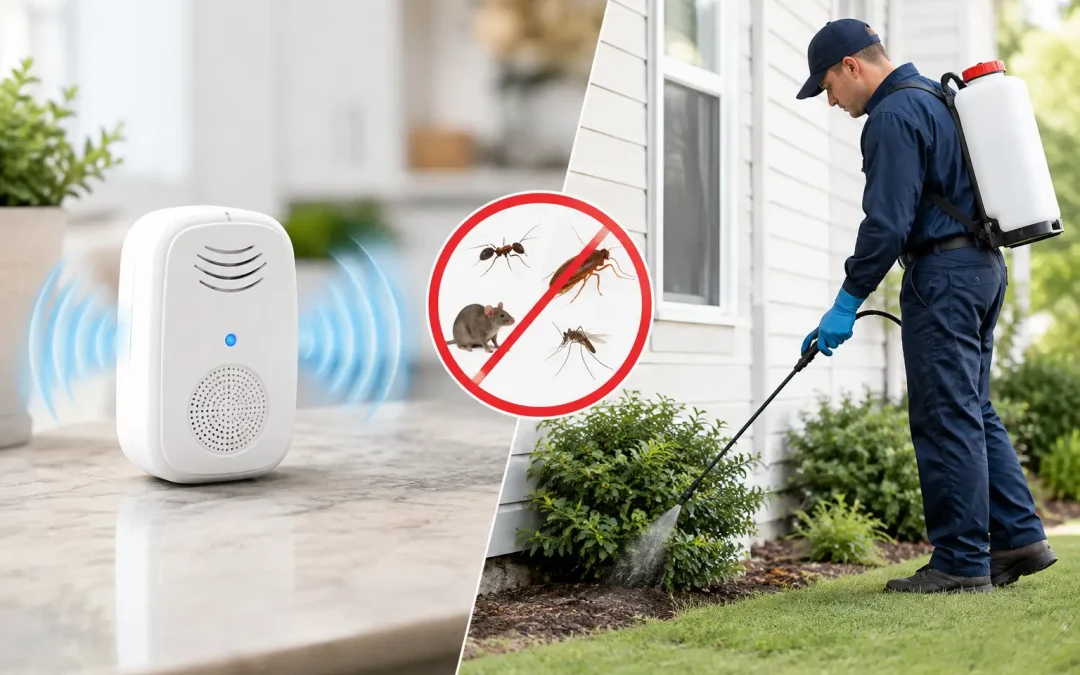
A mouse seen beneath a kitchen unit, scratching in a ceiling void or droppings found in a stock room can make an ultrasonic plug-in sound like a quick answer. The choice between ultrasonic repellents versus professional control is not simply about convenience, however. It is about whether the source of the problem is identified, the pest is removed safely and the property is protected from a repeat infestation.
For a minor concern, it can be tempting to try a retail repellent first. Yet pests do not respond in the same way to sound, and an active infestation often requires more than an attempt to drive animals away. Homes, rental properties and commercial premises each carry different hygiene, safety and reputational risks. The right response depends on the pest, the scale of activity and what is at stake if the problem continues.
How ultrasonic repellents are meant to work
Ultrasonic repellents are plug-in devices that emit high-frequency sound, generally marketed as a way to deter rodents and sometimes insects. The theory is that the sound creates an uncomfortable environment, encouraging pests to leave the area.
Their appeal is understandable. They are readily available, require little set-up and do not involve handling traps or treatment products. For householders who are worried about children or pets, a device also appears less intrusive than conventional pest control methods.
The difficulty is that a plug-in unit only affects the space immediately around it, if it has any effect at all. Ultrasonic sound does not travel effectively through walls, floors, cupboards, furniture or stored goods. A mouse nesting behind a kitchen plinth, a rat moving through a drain route or a cockroach harbouring inside equipment is unlikely to be addressed by a device placed in the open.
Pests may also become accustomed to an unfamiliar noise, especially where food, shelter and warmth are readily available. A property with accessible food waste, gaps around pipework or a damaged air brick still offers rodents a strong reason to remain.
Ultrasonic repellents versus professional control: the key difference
The main difference is that ultrasonic devices aim to discourage pest activity, while professional pest control identifies and manages the conditions allowing that activity to continue. Repelling a pest from one room is not the same as resolving an infestation.
A professional inspection looks for evidence that is easy to miss: droppings, rub marks, gnawing, insect harbourage points, entry gaps, nesting material and food sources. The treatment plan is then based on the species involved, the location of activity and the risks in that particular property.
For rodents, this may involve targeted control measures alongside proofing work to close access points. For insects, it may involve a species-specific treatment, sanitation advice and follow-up visits where the life cycle makes this necessary. Bed bugs, fleas, cockroaches and moths, for example, require different approaches. One universal deterrent cannot reliably deal with them all.
Professional control also creates accountability. The treatment is assessed, recorded and reviewed rather than left to hope that a device has changed the pest’s behaviour. This matters particularly where an infestation is ongoing, widespread or close to food preparation areas, vulnerable residents or valuable stock.
Where plug-in repellents can fall short
Ultrasonic devices are often used after the first signs of rodents. Unfortunately, that is the point at which delay can allow a small issue to grow. Mice reproduce quickly, can contaminate food and surfaces, and may damage insulation, cables and stored materials. Rats can create more serious hygiene concerns and may exploit hidden entry routes around drains, outbuildings and service penetrations.
The same concern applies to insect problems. A wasp nest in summer needs careful assessment and treatment, not a sound device. Ant activity may point to a route into the building or a nearby nest. Cockroaches and bed bugs are highly unlikely to be resolved by ultrasonic products, because they hide in narrow, sheltered spaces and require a precise treatment programme.
There is also a practical limitation in larger premises. A warehouse, care home, catering kitchen or logistics site has multiple rooms, voids, loading areas and service routes. Even if a unit affected one corner of the building, it would not provide meaningful site-wide protection or demonstrate that a pest risk has been managed.
Safety is more than avoiding treatment products
A common reason for choosing an ultrasonic repellent is the perception that it is the safest option. Reducing unnecessary exposure to treatment products is sensible, but safety also means preventing contamination, property damage and pest-related health risks.
Professional pest control is designed around that wider view. A trained technician considers where treatments can be used, whether children, pets, residents or staff may be present, and how food, medicines or sensitive materials should be protected. The aim is proportionate control, not unnecessary treatment.
Householders should also check whether an ultrasonic device may disturb pet rodents or other animals with sensitive hearing. A product being sold for domestic use does not automatically mean it is appropriate for every household.
The cost question: cheap device or lasting solution?
An ultrasonic unit is usually less expensive upfront than a professional visit. That comparison can be misleading if the device delays effective action. Replacing contaminated food, repairing gnawed wiring, losing stock or dealing with a larger infestation can cost far more than resolving the issue early.
For homeowners, professional help is particularly worthwhile when there are repeated signs of activity, droppings, noises in walls or ceilings, damage to food packaging, or uncertainty about the pest involved. A clear inspection and treatment plan removes guesswork and helps prevent the same issue returning.
For landlords and property managers, a prompt response can protect tenants, limit damage and provide a documented record of what was found and done. This is valuable when pest activity may affect several flats or shared areas.
Why commercial premises need a documented approach
In regulated and high-governance sectors, pest control cannot rely on an unverified deterrent. Businesses in pharma, care, catering, logistics, waste handling and similar environments need a programme that supports hygiene standards, audits and operational continuity.
A professional service can include site inspections, tailored treatment plans, traditional in-person monitoring, proofing recommendations and detailed reporting. Records should show findings, actions taken, recurring risks and recommendations for prevention. This gives managers evidence that pest risks are being actively managed rather than merely addressed after a complaint or failed inspection.
For a food business, one rodent sighting can damage customer confidence and trigger serious hygiene concerns. In a care setting, discretion and safety are equally important. In a warehouse, pest activity can compromise stock and packaging. The correct programme should reflect the building, its operations and the consequences of a pest incident.
When professional control is the sensible choice
A retail device may be something a householder tries before there is clear evidence of an infestation, but it should not replace an inspection where activity is suspected. Professional control is the sensible next step when signs persist, pests are seen repeatedly, there is evidence of nesting or breeding, or the property includes food handling, vulnerable occupants or compliance obligations.
Seasonality also matters. Rodent enquiries often rise in autumn and winter as mice and rats seek warmth and food indoors. Wasp and ant activity is more common during spring and summer, when early action can prevent disruption around homes and outdoor areas. Bed bugs and silverfish can occur at any time of year, so waiting for a seasonal change is rarely a solution.
Pest Pure Solutions approaches each case with inspection, safe treatment and practical prevention in mind. For properties across Dublin and the surrounding counties, that means focusing on the cause as well as the visible pest activity.
A quiet plug-in may offer reassurance, but reassurance is not the same as control. When a pest problem affects hygiene, comfort, property or business continuity, a proper inspection gives you a clear route from suspicion to a safer, more protected premises.
Recent Comments