
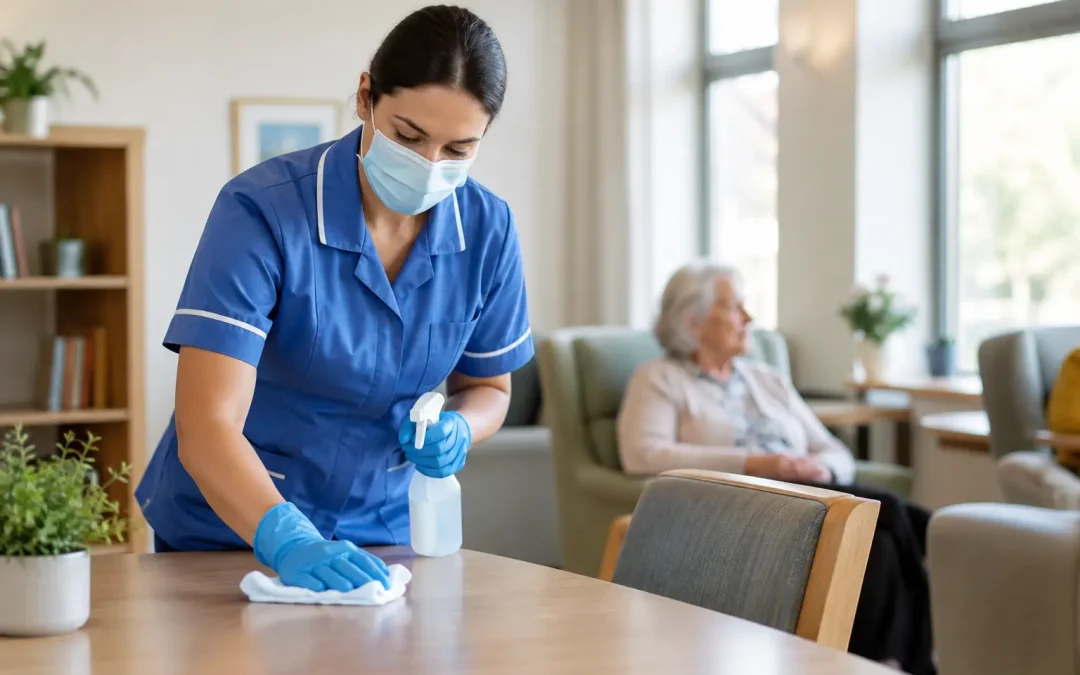
A reported illness within a care setting creates an immediate operational challenge. Managers must protect residents and staff, maintain confidence among families, and demonstrate that sensible hygiene controls have been put in place without delay. This sanitisation case study shows how a structured antiviral sanitisation response can support those priorities following a suspected viral contamination concern.
The site details have been anonymised, but the approach reflects the practical standards required in care environments across Dublin and the surrounding counties. It is not a substitute for clinical advice, routine cleaning, or infection-control procedures. It is a specialist hygiene measure designed to reduce contamination risk on appropriate surfaces and provide a documented response.
The situation: a high-risk shared environment
The care home had experienced a rise in reported illness affecting a small number of residents and staff. While the clinical response was managed by the relevant healthcare professionals, the home’s management team needed additional sanitisation support for shared and high-contact areas.
The challenge was not simply to treat as much of the building as possible. A care home has occupied bedrooms, communal lounges, dining areas, staff facilities, corridors and washrooms, all with different levels of use and different access requirements. Residents’ wellbeing, dignity and daily routines had to be respected throughout.
The management team also required clear records. In a regulated environment, being able to show what was assessed, which areas were treated, when work was completed and what follow-up measures were advised is as valuable as the treatment itself.
Sanitisation case study: assessment before treatment
A professional sanitisation treatment starts with an on-site assessment. Before any product is applied, the technician reviews the affected and shared areas, identifies high-touch points, considers occupancy, and agrees a treatment sequence with the site manager.
In this case, attention focused on communal touchpoints that could contribute to surface contamination. These included door handles, handrails, lift buttons, reception points, dining furniture, washroom touchpoints, staff-room surfaces and frequently handled equipment. Individual rooms were considered separately, with access arranged around care needs and cleaning schedules.
This assessment stage prevented two common errors. The first is treating sanitisation as a blanket exercise with no regard for how a building is used. The second is assuming a specialist disinfection service can compensate for weak daily cleaning. It cannot. Effective hygiene protection depends on both: thorough routine cleaning and an appropriate targeted treatment when risk circumstances justify it.
The care home was also advised that heavily soiled surfaces must be cleaned before disinfection. Dirt, food residue and organic material can reduce the effectiveness of some disinfectant products. This is why cleaning and sanitisation should be planned as connected stages rather than competing tasks.
A planned treatment around resident safety
The work was organised in phases to minimise disruption. Shared areas were treated at agreed times when occupancy was lower, while access to bedrooms was coordinated carefully with staff. The team used the selected antiviral sanitisation product in line with its label instructions, including required contact times and appropriate application methods.
Ventilation, re-entry arrangements and the protection of sensitive areas were discussed before treatment began. In care settings, practical details matter. A technically sound treatment is of little value if it creates avoidable distress, interrupts medication rounds, or prevents residents from accessing essential spaces for longer than necessary.
The service was delivered discreetly and with clear communication to the manager on duty. This allowed staff to understand which areas had been completed and when they could return to normal use.
Why documentation mattered as much as the treatment
Following treatment, the care home received service records confirming the scope of work. The documentation recorded the areas addressed, the treatment date, the product information required for site records, and relevant recommendations for ongoing hygiene control.
For a care home, this evidence serves several purposes. It supports internal infection-control records, helps management brief staff and provides a clear account of the response should questions arise from stakeholders or inspectors. It also gives the site a practical reference point when reviewing whether additional treatment is needed.
A good report should be specific enough to be useful. A vague statement that a building was “sanitised” does not show which areas were included, how the work was planned, or what limitations applied. Clear reporting protects the customer and helps maintain accountability across cleaning, facilities and care teams.
The outcome: a controlled, practical hygiene response
The immediate outcome was a completed sanitisation programme that fitted around the home’s operations and gave management a documented hygiene response at a time of heightened concern. High-contact communal areas had been addressed, staff had clear re-entry guidance, and the site had records to support its wider control measures.
Just as importantly, the treatment was positioned correctly. It was one part of a broader response involving routine cleaning, hand hygiene, waste handling, staff procedures and appropriate healthcare guidance. No sanitisation provider should suggest that a single treatment guarantees the prevention of illness or replaces established infection-control processes.
This distinction builds trust. Care providers need practical support, not exaggerated claims. Where risk remains elevated, repeat treatment may be appropriate, particularly in areas with high footfall or frequent contact. In other circumstances, improved cleaning schedules and a focused treatment of selected areas may be sufficient. The right approach depends on the nature of the concern, occupancy levels, site layout and the measures already in place.
What commercial sites can take from this case
The lessons extend beyond care homes. Catering premises, logistics facilities, offices, education settings and regulated workplaces can all face hygiene incidents that require a prompt, professional response. The priorities are usually similar: assess the actual risk, treat the relevant areas safely, keep disruption manageable and leave the client with meaningful records.
For commercial operators, speed should not mean guesswork. A rushed treatment with no assessment may miss the areas that matter most. Equally, closing an entire site when a phased approach would work can create unnecessary operational cost. A professional provider should explain the options clearly and recommend a proportionate course of action.
For homeowners, the same principles apply on a smaller scale. Following illness in the household, a landlord turnover, a pest-related contamination concern or an incident involving bodily fluids, professional sanitisation can be considered alongside thorough cleaning. The treatment should be chosen for the issue at hand, not sold as a one-size-fits-all solution.
When to arrange professional sanitisation
Specialist sanitisation is most useful when there is a defined hygiene concern, a high-risk environment, a need for documented treatment, or an area that requires a controlled response beyond normal cleaning. It can also provide reassurance after a contamination event where families, staff, customers or regulators need confidence that action has been taken responsibly.
Pest Pure Solutions provides antiviral sanitisation and disinfection services with an operational focus on safe application, clear communication and practical reporting. For care homes and other regulated premises, the service can be tailored around occupancy, access restrictions and internal hygiene procedures.
When hygiene concerns arise, the best next step is not to overreact or delay. Establish what has happened, maintain the site’s normal cleaning and infection-control measures, and arrange an informed assessment of the areas that need attention. A measured response protects people, supports continuity and gives management a clear record of action taken.
Recent Comments