
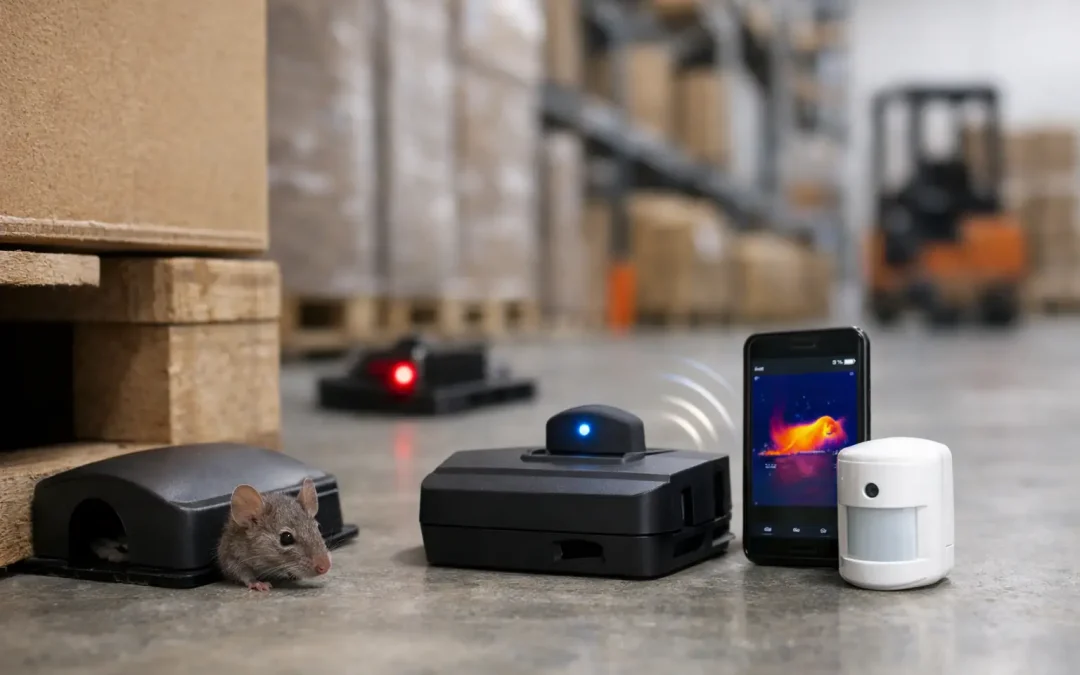
A single gnawed carton beneath a racking bay can be the first visible sign of a much wider rodent problem. In a warehouse, rodents have space to travel unseen, warmth around plant areas and frequent access to food residues, packaging and nesting material. Choosing the best rodent monitors for warehouses is therefore less about buying one type of device and more about building a monitoring programme that shows where activity is occurring, how serious it is and what action is required.
For logistics, catering, pharmaceutical and other high-governance sites, this evidence also supports hygiene controls, audit readiness and business continuity. A monitor that is not positioned correctly, inspected on schedule or recorded properly provides very little protection.
What a warehouse rodent monitor needs to do
A rodent monitor is a controlled inspection point. It is used to identify signs of mice or rats before contamination, product loss or structural damage becomes significant. Depending on the monitor selected, evidence may include droppings, feeding marks, footprints, hair, captured rodents or disturbed material.
Warehouses create different risks from offices or domestic properties. Loading doors may be opened repeatedly throughout the day. Pallets, cardboard and stored goods can obscure runs. Floor drains, service penetrations and external vegetation can all provide access or cover. For this reason, the most effective arrangement combines external protection with carefully located internal monitoring points.
The right choice depends on the species risk, the goods being stored, the presence of food or sensitive products, site traffic and the standards a business must meet. In most facilities, a combination of monitor types is safer and more informative than relying on one solution throughout the building.
Best rodent monitors for warehouses
Tamper-resistant external bait stations
Lockable external bait stations are usually positioned around the outside perimeter, particularly near loading bays, waste compounds, drain runs, plant rooms and likely entry points. Their primary role is to indicate rodent pressure before animals enter the building, while also forming part of a wider preventative control plan.
A quality station should be durable, secured against unauthorised access and fixed in place so it cannot be moved by weather, site activity or pests. It must be clearly numbered and included on a site plan. This makes each inspection traceable and allows patterns to be identified over time.
External stations are valuable, but they are not a substitute for proofing. If repeated activity is found at one point, the response should include inspection of nearby gaps, damaged doors, vegetation, waste controls and drainage. Monitoring identifies the pressure. Proofing removes the opportunity.
Non-toxic monitoring blocks
Non-toxic monitoring blocks are a strong choice for internal warehouse use, especially where food, pharmaceuticals, medical supplies, packaging or other sensitive stock is present. They provide an attractive material for rodents to investigate and gnaw, without introducing a rodenticide into the internal environment.
Their value lies in the evidence they create. Fresh gnawing, displacement or activity around a monitored point can indicate that rodents are moving through a particular area. This enables a technician to investigate early, rather than waiting for stock damage or a sighting.
These blocks are particularly useful along wall-floor junctions, near personnel doors, beneath racking where accessible, around service risers and in quieter storage zones. They should be used inside secure, tamper-resistant stations where appropriate. Open placement is rarely suitable in a busy warehouse because monitors can be disturbed by forklifts, cleaning teams or stock movement.
The limitation is straightforward: a non-toxic block confirms interest or activity but does not capture the animal. It should be part of an inspection-led programme that escalates quickly where evidence is found.
Mechanical mouse traps in secure stations
Mechanical traps can be highly effective for internal mouse monitoring and control when fitted inside purpose-designed, lockable stations. They provide clear evidence of capture and allow prompt removal, which is important in sites where hygiene and product protection are priorities.
They are often most appropriate where there is confirmed internal mouse activity, rather than as the sole monitoring method across a large warehouse. Mice tend to travel close to walls and use protected routes, so trap placement needs to reflect actual behaviour rather than a neat grid on a floor plan.
The key trade-off is servicing frequency. A captured mouse needs to be removed promptly, and the station reset and recorded. Mechanical traps are therefore most effective when backed by scheduled visits and a clear process for reporting activity between services. They also need protection from dust, moisture and accidental disturbance in operational areas.
Multi-catch traps for high mouse-pressure areas
Multi-catch traps can be useful in enclosed, sheltered areas where mouse activity is suspected, such as staff facilities, suspended ceilings, electrical cupboards, partition voids and behind fixed equipment. They can provide a useful indication of movement where several mice may be using the same route.
They are not suitable everywhere. In dusty, exposed or high-traffic warehouse areas, a secure monitoring station with a non-toxic block or mechanical trap may be more practical. Any use of multi-catch equipment must be accompanied by regular inspections, humane pest management practices and thorough record keeping.
Tracking dust and detection patches
For difficult-to-confirm activity, tracking materials or detection patches can help establish rodent movement. Fine tracking dust may reveal footprints, while suitable detection surfaces can show passage through a gap, void or service route. These options are especially useful during an investigation when droppings have been found but the route is unclear.
They are specialist tools, not a replacement for fixed monitors. Their main benefit is diagnostic: they help a trained technician pinpoint the route that requires proofing, cleaning or further control measures. Care is needed to ensure any material used is appropriate for the environment and does not create a contamination risk.
Placement matters more than quantity
Installing more stations does not automatically create better protection. A large warehouse needs enough coverage to assess risk, but monitors must be positioned where rodents are likely to travel and where they can be inspected safely.
Mice generally move close to walls, beneath racking and through small openings around pipes, cables and doors. Rats may use external boundaries, drains, waste areas and sheltered routes before entering through defects in the building fabric. Inspection points should reflect these different behaviours.
Start with the perimeter. Loading docks, roller shutters, pedestrian doors, waste storage, drainage, plant areas and adjoining land should all be assessed. Inside, priority areas often include goods-in, goods-out, canteens, locker rooms, cleaners’ stores, electrical rooms, voids and any location where damaged stock or droppings have previously been found.
Stations should never obstruct escape routes, forklift lanes or housekeeping access. They should be secured, numbered and recorded on an up-to-date site plan. If racking is rearranged or a warehouse layout changes, the monitoring plan must change with it.
Records turn monitoring into control
For regulated businesses, a station on its own is not enough. Inspectors, customers and internal quality teams may need evidence that the site understands its pest risks and responds appropriately. A professional monitoring programme should include a clear site plan, service records, activity findings, corrective actions and recommendations for proofing or hygiene improvements.
Trend analysis is particularly valuable. One isolated sign may result from a door being left open during a delivery. Repeated activity at the same loading bay, however, points to a persistent vulnerability. A good report distinguishes between these situations and sets out practical next steps.
Records should also show that monitors were checked at an appropriate frequency. The correct schedule depends on risk. A warehouse storing sealed non-food goods may need a different service level from a catering distribution centre, care setting or pharmaceutical facility. Increased checks may be necessary after building works, flooding, nearby construction, a waste-management issue or evidence of fresh activity.
Do not overlook hygiene and proofing
Rodent monitors are an early-warning measure, not a complete pest management solution. If a monitor shows activity, investigate why rodents are able to use the site. Common causes include damaged brush strips on loading doors, gaps around service pipes, overflowing bins, standing water, poorly stored food, excessive cardboard and external vegetation against the building.
Good housekeeping reduces harbourage and makes inspection easier. Keep stock raised and accessible for checks where possible, clear spillages promptly, manage waste carefully and avoid creating undisturbed storage pockets along walls. These measures support monitoring and reduce the likelihood that rodents will settle on site.
Where an infestation is suspected, the response should be proportionate and documented. Pest Pure Solutions can assess warehouse risks, install suitable monitoring points and provide service reporting tailored to operational and compliance requirements across Dublin and the surrounding counties.
The best monitor is the one that gives reliable evidence in the right location and leads to timely corrective action. When every finding is investigated, recorded and used to strengthen proofing and hygiene, rodent monitoring becomes a practical safeguard for stock, staff and the reputation of the business.
Recent Comments