
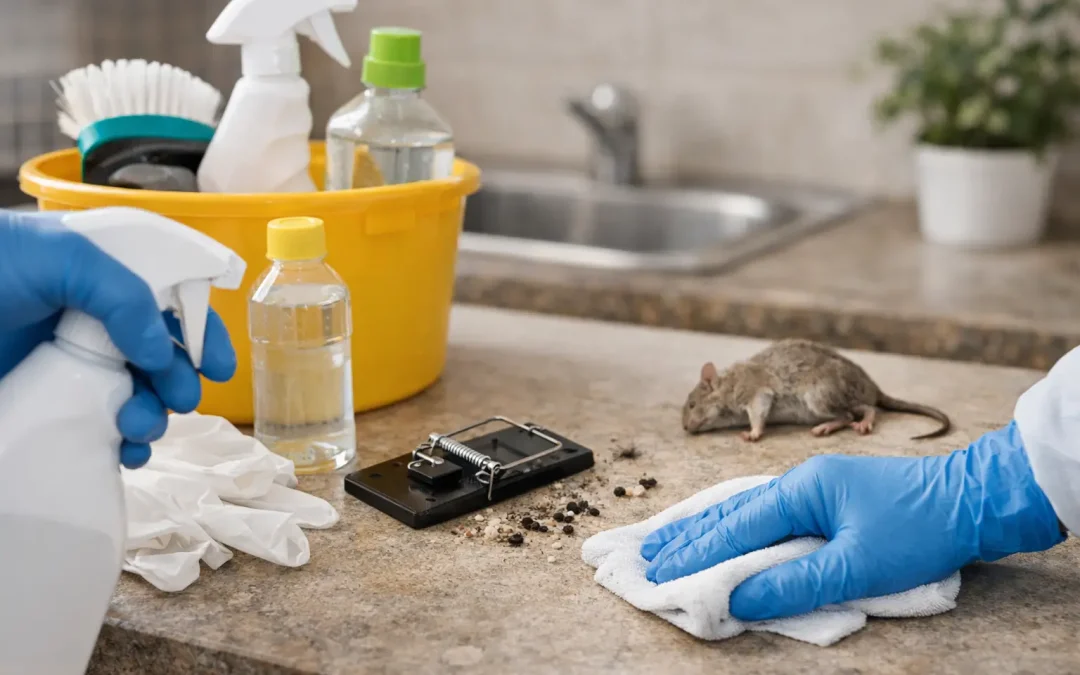
A mouse infestation can leave more behind than visible damage. Droppings, urine trails, nesting material and contaminated food surfaces can create a genuine hygiene concern, particularly in kitchens, lofts, storage areas, care settings and food-handling premises. Knowing how to sanitise after mice means removing contamination without disturbing it into the air, then addressing the conditions that allowed rodents in.
The key point is simple: do not sweep or vacuum dry mouse droppings. Dry cleaning methods can break up contaminated material and spread fine particles around the room. A controlled clean, using suitable protective equipment and disinfectant, is safer and more effective.
Before You Sanitise After Mice, Make the Area Safe
Start by confirming that rodent activity has stopped or is being professionally controlled. Cleaning before mice have been removed can mean repeated contamination and may also disturb bait stations, monitoring points or proofing work.
Open doors and windows where practical and leave the area to ventilate for around 30 minutes before beginning. Keep children, pets and anyone not involved in the clean away from the room. In a commercial premises, restrict access and follow your site’s hygiene, health and safety, and incident-reporting procedures.
Wear disposable gloves as a minimum. Where there is a larger amount of droppings, an enclosed space such as a loft, or evidence of nesting, wear suitable respiratory protection such as an FFP2 or FFP3 mask, along with eye protection and disposable coveralls if required. The level of PPE should reflect the volume of contamination and the environment. A few droppings in a ventilated utility room are not the same as extensive activity in a dusty roof void or food store.
Do not eat, drink or touch your face while cleaning. If you have cuts on your hands, cover them fully before putting on gloves.
The Safe Method for Cleaning Mouse Droppings and Urine
Prepare a household disinfectant or a suitable virucidal and bactericidal disinfectant according to the manufacturer’s instructions. The product must be appropriate for the surface being treated. Some disinfectants can damage natural stone, untreated timber, delicate fabrics or certain food-preparation surfaces, so check the label before use.
Spray droppings, urine marks and nesting material until thoroughly wet. Do not soak electrical fittings or equipment. Leave the disinfectant in place for the stated contact time – this is the time the product needs to work properly. Rushing this stage can reduce the effectiveness of the clean.
Once wet, lift the material with disposable paper towels or wipes. Place it straight into a plastic bag, seal it, then place that bag inside a second bag before disposing of it with normal household waste, unless local site procedures require another method. Do not compress the bag or shake contaminated material.
Wipe the surrounding area with fresh disinfectant, working from cleaner areas towards the most contaminated points. Pay close attention to edges, cupboard corners, pipe routes, shelving, skirting boards and the space behind appliances. Mouse urine is not always obvious, so sanitise nearby hard surfaces rather than treating only the visible droppings.
After cleaning, remove gloves carefully without touching their outer surfaces. Dispose of single-use PPE, wash reusable eye protection where applicable, and wash hands thoroughly with soap and warm water.
Never Vacuum or Sweep Dry Contamination
A vacuum cleaner, brush or dry duster is unsuitable for fresh mouse droppings and nesting debris. These methods can disperse dust and contamination, especially in confined spaces. Once the area has been disinfected and all visible contamination removed, a standard clean of the surrounding floor may be appropriate. However, where there is heavy contamination, seek professional advice before using cleaning equipment that may become contaminated itself.
Cleaning Different Areas of the Property
The right cleaning method depends on where mice have been active and what they may have contaminated.
Kitchens and Food Storage Areas
Discard any food stored in open packaging, cardboard boxes, paper bags or thin plastic wrapping that shows signs of rodent access. This includes food with bite marks, droppings nearby, damaged packets or staining. Clean tins, jars and sealed containers before returning them to cupboards.
Wash and disinfect worktops, cupboard interiors, handles, kickboards and the floors around appliances. Food-contact surfaces should be rinsed afterwards where the disinfectant instructions require it. Do not overlook toaster cupboards, pan drawers, under-sink areas and the void behind cookers or fridges, as these are common mouse routes.
Bedrooms, Living Rooms and Soft Furnishings
For washable bedding, clothing or curtains exposed to mouse contamination, use the warmest wash permitted by the care label and dry completely. If droppings are present, wet and lift them first rather than shaking the item outdoors.
Soft furnishings, carpets and upholstered items need a more cautious approach. Light, localised contamination may be cleaned once droppings have been safely removed. If a mouse has nested within a sofa, mattress, carpet edge or stored textiles, professional assessment is often the sensible option. The cost of specialist cleaning or disposal may be lower than the risk of leaving contamination within material that cannot be properly disinfected.
Lofts, Garages and Sheds
These areas often contain insulation, stored possessions and dust, which can make cleaning more difficult. Avoid moving boxes or insulation until visible droppings have been treated with disinfectant. Cardboard that is heavily contaminated is usually best disposed of rather than wiped down.
If rodents have contaminated loft insulation, there is a noticeable odour, or droppings are widespread, arrange a professional clean. Large-scale removal can disturb contaminated dust and may require controlled waste handling, specialist PPE and a structured disinfection process.
Do Not Forget Dead Mice and Nesting Material
A dead mouse should be sprayed with disinfectant, left for the required contact time, then lifted with paper towels or a disposable scoop. Double-bag it before disposal. Clean the immediate area and nearby surfaces afterwards.
Nesting material may contain droppings, urine and parasites. Treat it in exactly the same way: wet it first, lift it without shaking, double-bag it and disinfect the area beneath. Avoid reusing cloths, brushes or gloves that cannot be reliably cleaned.
When a Professional Sanitisation Service Is Needed
A careful household clean is often suitable after a small, contained mouse issue. Professional sanitisation is advisable when contamination is extensive, has affected food production or care environments, involves a loft or ventilation area, or follows a long-standing infestation.
For commercial premises, the threshold should be lower. Rodent activity in catering, pharmaceutical, logistics, waste, care home or regulated environments can affect audit readiness, product safety and business continuity. A professional service can combine rodent control, proofing, targeted disinfection and documented reporting so there is a clear record of the issue, corrective action and ongoing prevention.
Pest Pure Solutions provides this joined-up approach for homes and businesses across Dublin and surrounding counties, particularly where hygiene controls and discreet handling are essential.
Sanitising Is Only Effective if Mice Cannot Return
Cleaning removes the immediate hygiene risk, but it does not solve the entry point. Inspect around pipes, air bricks, utility routes, doors, damaged vents, roof edges and gaps beneath kitchen units. Mice can enter through surprisingly small openings, so minor defects can matter.
Store dry food in hard, sealed containers, clear crumbs promptly, keep refuse secure and reduce clutter in storage spaces. In commercial settings, include proofing checks, waste management and monitoring in the corrective-action plan. Where baiting or trapping has been carried out, continue inspections until activity has stopped and the source has been identified.
A clean property should not simply look free of droppings. It should be disinfected, protected against re-entry and monitored closely enough that any new activity is found before it becomes another hygiene issue.
Recent Comments