
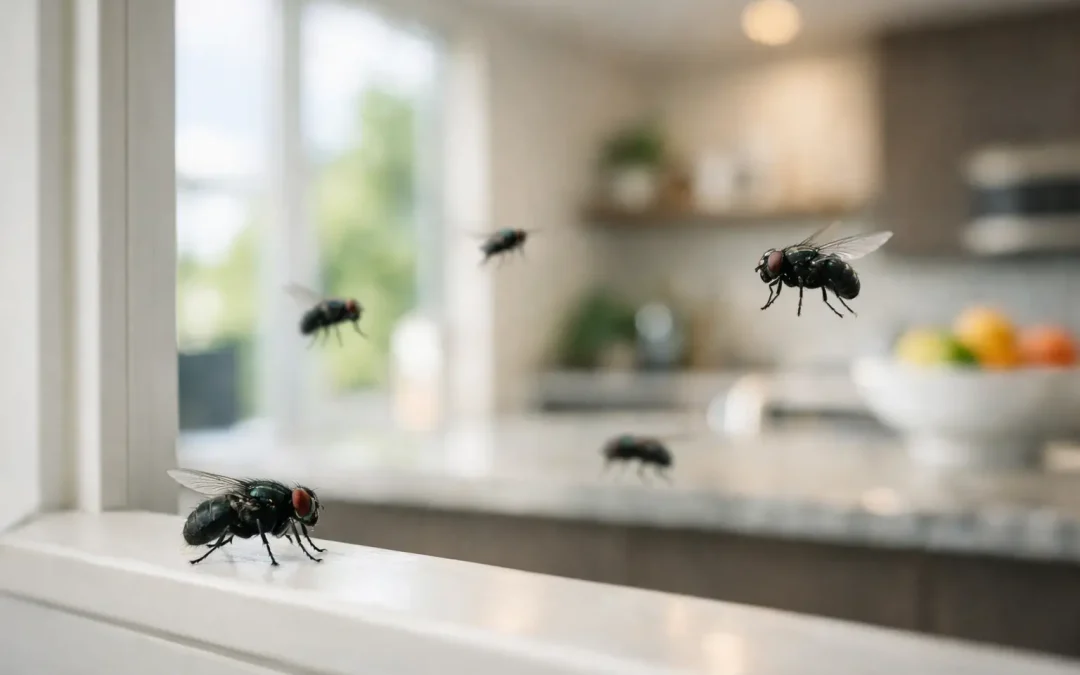
You wipe down the worktops, empty the bins, open a window for ten minutes, and somehow there are flies back again by the afternoon. If you have been asking why do flies keep appearing, the answer is usually less about bad luck and more about access, moisture, food sources, or a hidden breeding point nearby.
In homes, that might mean a bin area, drains, pet waste, overripe fruit, or a dead rodent in a void. In commercial premises, especially catering, care, logistics, and waste-handling environments, repeat fly activity can point to a hygiene breach, a structural issue, or an unmanaged external pressure. Either way, flies rarely appear without a reason.
Why do flies keep appearing even after cleaning?
Cleaning helps, but it does not always remove the source of the problem. Adult flies are only one part of the issue. If eggs or larvae are present in organic matter, drains, spillages, or waste storage areas, you can remove the visible flies and still see more emerge within days.
This is why recurring activity often feels so frustrating. The room may look clean, but flies respond to what is available at a much smaller level – residue under appliances, liquid in the bottom of a food caddy, sugary build-up around bottle storage, or damp organic matter in a gully. Even a small amount can be enough to support breeding.
There is also a timing issue. In warmer weather, fly life cycles speed up. That means a minor source can turn into a persistent nuisance very quickly, particularly in kitchens, bin stores, utility rooms, or commercial back-of-house areas.
The most common reasons flies keep appearing
The first and most obvious cause is food waste. Houseflies and bluebottles are strongly attracted to decomposing organic material. Domestic bins, external wheelie bins, recycling containers, and food preparation areas all create opportunities if they are not sealed or cleaned thoroughly.
The second common cause is moisture. Drain flies, sometimes mistaken for fruit flies or small moth-like insects, breed in the organic film that builds up inside sinks, floor drains, and pipework. Spraying the adult flies will not solve that. The breeding material needs to be removed.
A third cause is access. Flies regularly enter through open doors, damaged insect screens, gaps around windows, vents, roller shutters, and loading areas. This is especially relevant for businesses with frequent deliveries or customer footfall, but it also affects homes during warmer months when doors and windows stay open longer.
Then there is the possibility of something hidden. Dead pests in lofts, wall cavities, chimney voids, or under floorboards can attract blow flies. If large flies suddenly appear around one room or window, particularly when there is no obvious food source, a carcass should be considered.
Finally, external conditions matter. Properties near takeaway units, farms, stables, communal bins, waste sites, or standing water may face higher fly pressure. In parts of Dublin, Kildare, Meath, and Wicklow, the surrounding environment can play a bigger role than many property owners realise.
Different flies point to different problems
Not all flies are the same, and identifying the type often tells you where to look.
Houseflies usually indicate accessible food waste, general hygiene attraction, or open entry points. They are common in kitchens, bin areas, and food handling spaces.
Fruit flies are smaller and are attracted to fermenting materials. In homes, they often gather around fruit bowls, alcohol residues, drains, and food waste caddies. In commercial settings, they can build up around bar areas, cellar spaces, and sugary residues that are easy to miss during routine cleaning.
Drain flies are fuzzy, slow-flying, and commonly found near sinks or gullies. Their presence strongly suggests organic build-up and moisture in drainage systems.
Bluebottles and greenbottles are more likely to be associated with decomposing meat, waste, or a dead animal. A sudden spike in these larger flies often points to a localised source that needs investigation.
This matters because treatment should match the species. A general aerosol may kill a few adults, but if the source remains active, the problem will continue.
Why flies keep appearing in homes
In domestic properties, fly problems often start in ordinary places. Kitchen bins, food recycling, pet feeding areas, and utility rooms are frequent sources. During summer, even short delays in taking rubbish outside can increase activity.
Homes with young children or pets may also have more hidden attractants than expected – food dropped behind furniture, nappy bins, pet litter, or residues around feeding stations. None of this means a home is unclean. It means flies are highly efficient at locating organic material.
Another issue is overconfidence in visible cleanliness. A spotless kitchen surface does not rule out residues under the cooker, beneath integrated units, or inside drain traps. If flies are gathering around a window, they may simply be moving towards light after emerging from a concealed breeding site elsewhere in the room.
For landlords and tenants, recurring flies can also indicate a maintenance issue rather than a cleaning issue. Poorly sealed bins, broken vents, damaged window frames, or drainage faults can all contribute.
Why flies keep appearing in businesses
For commercial premises, recurring flies are not just unpleasant. They can affect hygiene standards, audits, staff confidence, customer perception, and in some sectors, regulatory compliance.
Catering sites, care homes, pharmaceutical environments, logistics depots, and waste operations all face different risks. In a kitchen, the concern may be food contamination. In a care environment, it may be hygiene and resident wellbeing. In warehousing or distribution, open dock doors and high traffic can allow repeated ingress even where internal housekeeping is strong.
This is where a more technical approach is needed. The question is not only why do flies keep appearing, but where they are breeding, how they are entering, and what controls are failing. Sometimes the answer lies in sanitation practices. Sometimes it is proofing, drainage, external waste management, or a lack of monitoring.
For high-governance sites, sporadic spraying is rarely enough. Fly management should be documented, risk-based, and linked to the layout and use of the building.
What you can check before calling a professional
There are sensible first checks that can help reduce activity. Empty internal bins regularly and wash them out, especially food waste caddies. Check under and behind appliances for spills or trapped debris. Clean sink overflows, plugholes, and floor drains thoroughly, not just the visible surfaces.
You should also inspect windows, vents, and door seals for gaps. If flies increase at certain times of day, note where they collect. That pattern can help identify an entry point or breeding location.
Outside, look at bin storage, standing water, and pet waste. If external bins are close to doors or windows, relocating them may help. For businesses, review cleaning around compactors, bottle storage, grease areas, and delivery entrances.
Still, there is a limit to what basic checks can achieve. If fly numbers keep returning, the source may be structural, hidden, or more established than it first appears.
When professional fly control is the right step
If you are seeing flies daily, noticing them in one particular area, or dealing with repeat activity after cleaning, professional inspection is usually the fastest way to resolve the issue properly.
A trained technician will look beyond the obvious. That includes identifying the species, locating breeding material, assessing proofing weaknesses, and deciding whether treatment, sanitation advice, drain work, monitoring, or exclusion measures are needed. In some cases, more than one measure is required. That is especially true in commercial properties where internal and external pressures overlap.
Professional treatment is also worth considering sooner if the site handles food, cares for vulnerable people, stores sensitive goods, or is subject to inspection. In those settings, delay can turn a manageable issue into a hygiene or compliance problem.
Pest Pure Solutions supports both homeowners and commercial operators with practical fly control that focuses on the source, not just the visible insects. That distinction matters when the problem keeps coming back.
Why quick fixes often fail
Most shop-bought fly products are designed for immediate knockdown. They can reduce visible numbers, but they rarely deal with eggs, larvae, organic build-up, or access points. As a result, the relief is temporary.
There is also a risk of treating the wrong area. If the flies are breeding in a drain, a window spray will do very little. If they are entering from outside, indoor traps alone will not stop the pressure. And if a dead pest is present in a cavity, the flies may continue until that source is removed.
That is why repeat fly activity should be treated as a sign to investigate, not just spray again.
Flies keep appearing for a reason. Once that reason is identified, the problem becomes far more manageable, and in many cases fully preventable with the right combination of hygiene, proofing, and targeted treatment.
Recent Comments