
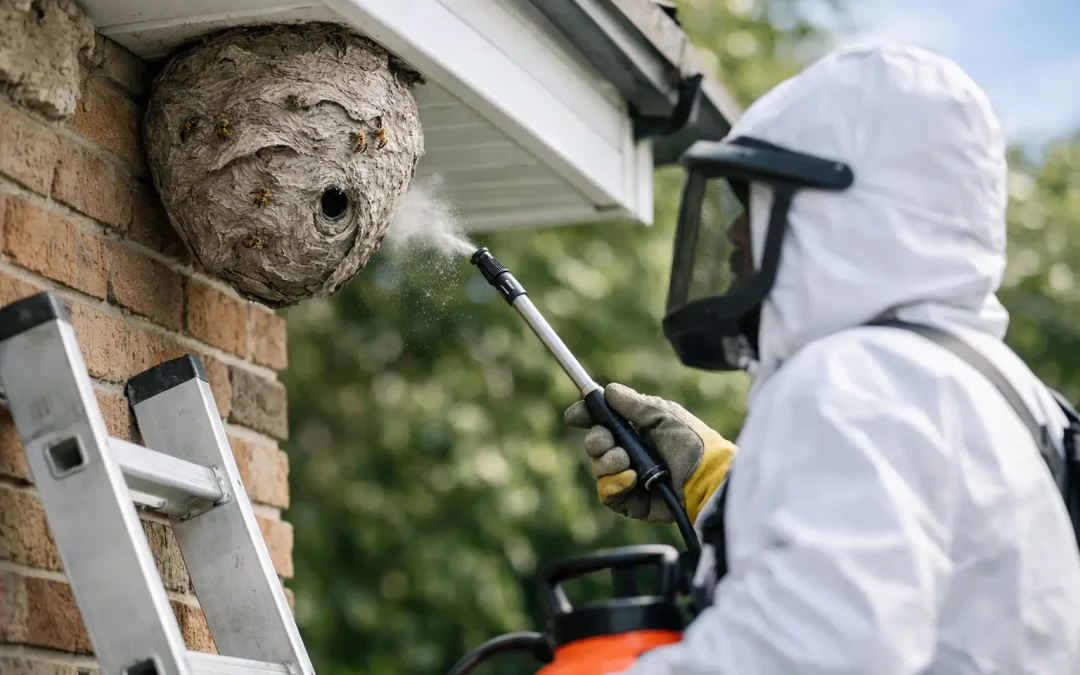
A wasp nest usually becomes a serious problem the moment you notice where it is. Over a doorway, inside a roof space, beside a play area, or close to a loading bay, it stops being a nuisance and starts becoming a safety risk. If you are looking for wasp nest removal Kildare, speed matters, but so does choosing the right treatment.
Wasps are highly active in warmer months, and a nest that seemed small a week ago can become much busier very quickly. For homeowners, that can mean children avoiding the garden, pets getting too close, or repeated activity around eaves, sheds, vents, and attic spaces. For commercial premises, the issue is often bigger – staff safety, customer experience, hygiene concerns, and disruption to day-to-day operations.
When a wasp nest needs professional treatment
Not every flying insect problem is a wasp nest, and not every nest presents the same level of risk. That said, once regular wasp traffic is visible around a fixed point on your property, it is sensible to treat it as an active infestation until proven otherwise.
A nest commonly needs professional attention when wasps are entering and leaving through roof tiles, soffits, wall cavities, air bricks, garden outbuildings, or fascia gaps. You may also notice a low humming sound in enclosed spaces such as lofts or voids. In some cases, the nest itself is visible and hangs from a beam or sheltered corner. In others, the nest is hidden and the insect movement is the only obvious sign.
The level of danger depends on location, nest size, species behaviour, and how close people need to get to the access point. A small nest high in a distant tree may pose less immediate risk than one concealed beside a front door. The main issue is not simply the number of wasps – it is the chance of disturbance. Once wasps feel threatened, they can become aggressive in defence of the nest.
Why DIY wasp nest removal often goes wrong
People often try to deal with nests using shop-bought sprays, blocking the entrance, or knocking down visible structure. These approaches can make the problem worse.
If the treatment does not reach the nest properly, surviving wasps may remain active and agitated. If an entry point is sealed too early, wasps may search for another route and end up moving further into the building fabric. That can create a more complicated infestation in wall voids, loft insulation, or internal ceiling areas.
There is also the safety issue. Working at height on ladders, reaching into confined roof spaces, or approaching a nest without proper protective equipment carries obvious risk. Even a nest that appears quiet during the day can become dangerous if disturbed. For anyone with an allergy to stings, the margin for error is especially small.
Professional treatment is not just about killing visible wasps. It is about identifying the nest access point correctly, applying the right product in the right place, and reducing the likelihood of further activity.
Wasp nest removal Kildare for homes and businesses
The best approach to wasp nest removal Kildare depends on the setting. In a domestic property, the priority is usually immediate safety and restoring normal use of the home and garden. In a commercial environment, the response may also need to consider staff exposure, visitor access, hygiene controls, and business continuity.
For example, a nest above a domestic patio is unpleasant, but a nest near a care home entrance, food handling area, warehouse door, or waste zone can quickly become an operational issue. In regulated settings, pest incidents are rarely just maintenance problems. They can affect audits, internal reporting, and public confidence.
That is why professional pest control should be practical as well as responsive. Treatment needs to be discreet, effective, and suited to the property layout. Where necessary, the visit should also identify why wasps selected that location in the first place, particularly if the site has recurring activity.
What to expect from a professional wasp treatment
A proper wasp control visit starts with inspection. The technician confirms whether the issue is an active nest, identifies the likely species behaviour, and assesses the safest treatment route. This matters because a visible cluster of wasps is not always the full story. A nest may be hidden deeper in the structure, with only one narrow access point in use.
Treatment is then applied directly to the nest area or the active entry point using appropriate professional products. The aim is to transfer the treatment through nest activity rather than simply scatter the insects on the surface. In many cases, visible activity reduces significantly after treatment, but a short period of residual movement can still occur.
It also helps to know what not to do after treatment. Disturbing the area too early, attempting to remove nest material immediately, or sealing access points before activity has fully ceased can interfere with results. Good advice after the visit is part of the service.
For some properties, especially larger sites or buildings with multiple voids, follow-up may be appropriate. It depends on access, construction, and whether there is evidence of more than one nest.
Common places wasps nest around properties
Wasps are opportunistic. They look for sheltered, protected spaces with limited disturbance and easy access outdoors. In homes, that often means attic spaces, soffits, sheds, garages, wall cavities, and under roof edges. In commercial premises, nests may appear around service yards, rooflines, storage structures, plant areas, and loading points.
Older buildings can be more vulnerable because small gaps in brickwork, timber, vents, and roofing details give wasps straightforward entry routes. Newer buildings are not immune, especially where external cladding, ducting, or boxed-in spaces create warm sheltered voids.
The challenge is that the actual nest may not sit where the insects are most visible. Wasps can travel in and out through a small opening and build deeper inside. That is why surface spraying near a few visible insects often fails.
Preventing another wasp problem
Prevention is never an absolute guarantee, because wasps are part of the outdoor environment and new queens look for nesting sites seasonally. Still, some properties are clearly more attractive to them than others.
Once a nest has been treated, it is worth checking for small structural entry points around eaves, fascia boards, vents, gaps around pipework, and damaged roof areas. Bin management also matters, particularly for commercial sites and shared residential areas, as food residue and sugary waste can attract foraging wasps.
For businesses, prevention should go beyond one-off treatment. Sites with repeated insect pressure may benefit from a broader pest management plan that includes inspection schedules, proofing advice, reporting, and support that stands up to compliance scrutiny. That is especially relevant where hygiene standards and documented controls are expected.
For homeowners, the most useful step is often early action. A newly noticed nest is usually easier and safer to manage than one left to develop for several more weeks.
When to call immediately
Some situations should not be left for later. If wasps are entering a loft or wall cavity close to bedrooms, gathering around a main entrance, stinging occupants, or appearing in areas used by children, vulnerable adults, or pets, prompt professional attention is the sensible option.
The same applies to commercial premises where customers or staff are exposed, especially in food service, healthcare-related settings, logistics, waste handling, and other high-traffic environments. A delayed response can turn a manageable issue into a more disruptive one.
Pest Pure Solutions supports both domestic and commercial clients with professional pest control that prioritises safety, discretion, and effective treatment. In wasp cases, that practical response is often what matters most.
A wasp nest does not usually improve if left alone during peak activity. The safest route is to identify the risk early, avoid disturbing it, and arrange treatment that deals with the source properly so the property can be used normally again.
Recent Comments