
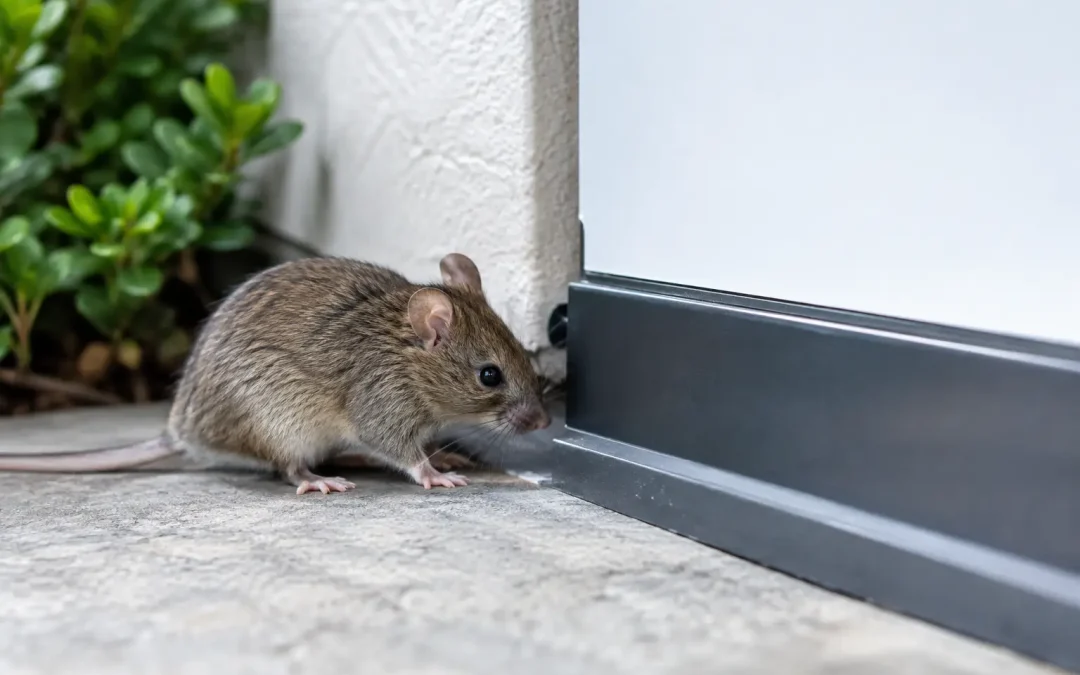
A mouse proofing example is most useful when it shows what happens beyond placing bait or traps. A mouse can enter through a gap no wider than a pencil, then move unseen through wall voids, beneath kitchen units and above suspended ceilings. For a home or business, effective proofing means finding those routes, closing them with suitable materials and removing the conditions that allow rodents to stay.
During winter, mice actively seek warm, dry buildings with reliable food. A single sighting in a kitchen, store room or staff area may indicate an entry point nearby, but it does not identify the full extent of activity. Proofing should therefore form part of a considered rodent-control plan, not a quick cosmetic repair.
Mouse Proofing Example: From Inspection to Exclusion
Consider a typical semi-detached house where scratching has been heard beneath the kitchen floor and small droppings have appeared in the cupboard under the sink. The occupier has cleaned thoroughly and removed accessible food, yet the signs return. An inspection reveals three contributing issues: a gap around the waste pipe where it passes through the external wall, a damaged air brick close to ground level and a poorly fitting rear door with a visible gap at the threshold.
None of these openings needs to be large. The pipe gap gives mice direct access into the kitchen void, while the air brick offers a sheltered route beneath the floor. The door gap allows easy entry during the night, particularly where bins or pet food are kept near the back of the property.
The proofing work should address each vulnerability in a way that preserves the building’s function. The pipe penetration can be sealed with a durable rodent-resistant material, finished neatly so that it does not crack or pull away. The damaged air brick requires an appropriate protective mesh that maintains ventilation rather than blocking it. The rear door may need a correctly fitted brush strip or threshold seal.
This is also the point at which treatment and proofing meet. If mice are currently active inside, sealing every route immediately can trap activity within the structure or simply divert it to another weak point. A professional will assess the level of infestation, place treatment where justified, and plan the proofing sequence around the building and the evidence found.
Start With Evidence, Not Assumptions
Mice do not always use the route that appears most obvious. Their movement is often concentrated along edges, behind stored items, through service voids and around plumbing. A proper inspection looks for fresh droppings, rub marks, gnawing, nesting material, disturbed insulation and tiny grease marks along regular travel routes.
Outside, attention should be given to utility penetrations, damaged vents, broken bricks, gaps beneath cladding, loose soffits and openings around garages or sheds attached to the property. Drainage defects can also create access routes, especially where a damaged cover, redundant pipework or poorly sealed connection leads towards the building.
Inside, the focus is commonly on kitchens, boiler cupboards, utility rooms, understairs storage, loft spaces and areas behind appliances. A mouse may be using a void that cannot be seen from the room itself, so the inspection should consider how the building is constructed rather than relying on surface-level checks alone.
For businesses, the same principle applies on a larger scale. A warehouse may have gaps around loading-bay doors, damaged brush seals, holes around incoming services and cluttered storage against internal walls. In a care setting, catering operation or pharmaceutical facility, these findings need to be recorded clearly, prioritised by risk and followed through with corrective action. Proofing is not merely maintenance in these environments. It supports hygiene standards, protects stock and helps prevent disruption to operations.
Choosing Materials That Mice Cannot Defeat
Expanding foam on its own is rarely an effective long-term mouse-proofing material. It may make a gap look closed, but mice can gnaw through many soft materials quickly. Similarly, loosely packed wire wool may be pulled apart, corrode or leave an opening at the edges.
The right solution depends on the location, the size of the gap and whether ventilation, drainage or fire protection must be retained. Durable mesh, metal plates, purpose-made door seals and correctly applied mortar-based repairs are often more reliable options. The finish matters as much as the material: a small unsealed edge can defeat an otherwise sound repair.
There are trade-offs. Sealing a vent completely can cause moisture and ventilation problems, while closing an opening around essential pipework without suitable access can make future repairs difficult. In commercial premises, modifications may also need approval from site management or consideration of food safety, fire safety and building requirements. Effective proofing is precise work, not a case of filling every visible hole.
Door and loading-bay protection
Doors are a frequent weak point because they move, wear down and are often left open during busy periods. External doors should close flush to the frame, with no daylight visible at the threshold or sides. Roller shutters and loading bays require particular attention, as their size and daily use make them vulnerable to damage.
A door brush or seal is only useful if it is correctly fitted and remains intact. Regular checks are worthwhile, especially after deliveries, building works or periods of severe weather.
Pipework, vents and service entries
Pipe and cable penetrations are among the most common access points in homes and commercial buildings. They are often hidden behind cupboards, appliances or external equipment, which means damage can go unnoticed. Each opening should be assessed for the likely route behind it, then sealed with an appropriate rodent-resistant solution while preserving any required ventilation or access.
Remove the Reasons Mice Stay
Proofing reduces entry, but it is less effective when food, water and harbourage remain freely available. In a domestic kitchen, this may mean keeping dry goods in sealed containers, cleaning crumbs behind appliances and avoiding overnight pet food. Outdoor bins should have secure lids and be kept as tidy as practical around the base.
In commercial settings, waste handling, stock rotation and cleaning routines are central to prevention. Spilled ingredients beneath shelving, unsealed food deliveries, overflowing bins or accumulated packaging can support ongoing rodent activity even after entry points have been repaired. Storage should be raised where possible and kept away from walls sufficiently to allow cleaning and inspection.
Clutter deserves attention too. Cardboard, unused equipment and crowded store rooms create quiet nesting areas and make evidence harder to spot. The aim is not an empty building. It is a building where cleaning, inspection and early intervention remain possible.
When Professional Mouse Proofing Is the Better Option
A small, obvious gap at the base of a garden shed may be a straightforward household repair. Repeated signs inside a kitchen, activity in a loft, droppings near food storage or evidence in several parts of a property call for a more thorough assessment. This is particularly true where children, pets, vulnerable residents or food preparation areas are involved.
Commercial sites benefit from professional support when the property is complex, when proofing recommendations need to be documented or when an incident could affect audits, hygiene controls or customer confidence. A structured inspection can distinguish between an isolated defect and a wider building-integrity issue. It also provides a clear basis for assigning repairs and checking that they have been completed properly.
Pest Pure Solutions provides professional rodent inspections, treatment and proofing support for homes and businesses across Dublin and surrounding counties. The approach is tailored to the property, the evidence present and the practical controls needed to prevent a repeat problem.
Keep Proofing Effective Through Winter
Mouse proofing is not a one-off task to forget once the immediate signs disappear. Buildings change with weather, repairs, deliveries and everyday wear. A door seal may loosen, a new cable installation may leave a gap, or outdoor storage may be moved against a wall and create fresh cover for rodents.
Make seasonal checks part of normal property care, particularly before and during colder weather. Look around external walls, doors, air bricks, pipe entries and storage areas, then act promptly on any fresh evidence of mice. The most reliable result comes from combining sound proofing with good hygiene and professional treatment where activity is established – keeping the property less inviting long after winter has passed.
Recent Comments