
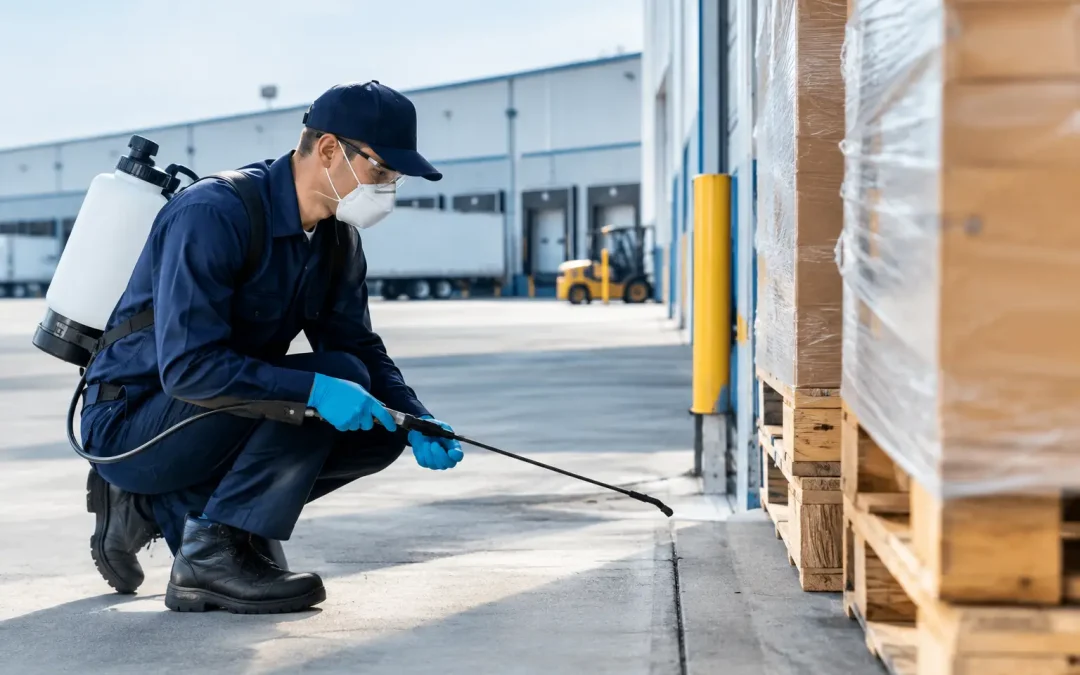
A single rodent sighting beside a picking area, flies around returned goods, or birds nesting above loading bays can quickly become more than a maintenance issue. This logistics depot pest management guide explains how depot managers can reduce pest pressure, protect stock and maintain the documented hygiene controls expected in high-governance supply chains.
Logistics sites create ideal conditions for pests. Goods arrive from multiple locations, roller doors open repeatedly, external yards provide cover, and food residues can enter through staff areas, damaged consignments or waste handling. The right approach is not simply reacting when a pest is seen. It is an organised prevention and treatment programme based on regular inspection, proofing, hygiene and clear reporting.
Why logistics depots face particular pest risks
A depot is constantly changing. Pallets move, racking is reconfigured, returns accumulate, and contractors or drivers may access areas outside the usual working pattern. These conditions can conceal early pest activity and create routes into the building.
Rodents are a major concern from autumn through winter, when mice and rats look for warmth, shelter and reliable food. They can travel along service voids, beneath loading doors, through damaged cladding and around drainage points. In a warehouse, even a small gap around a pipe or cable entry can be enough for mice to gain access.
During spring and summer, flying insects, ants and wasps become more active. Open loading bays, compactor areas and staff break spaces can attract flies and wasps, while ants may enter through cracks in floors and external walls. Birds can also create persistent issues around canopies, rooflines and loading areas, contaminating surfaces with droppings and blocking gutters with nesting material.
The risk level depends on the site. A sealed distribution facility handling non-food products will have different controls from a depot managing food ingredients, medical supplies, pharmaceutical products or temperature-controlled goods. However, every operation needs a plan that reflects its stock, layout, waste streams, surrounding environment and audit obligations.
Start with a site-specific pest risk assessment
An effective logistics depot pest management guide starts with a thorough survey, not a standard list of treatments. A competent inspection should identify evidence of activity, likely entry points, harbourage areas and the practical factors allowing pests to persist.
Inspectors should pay close attention to loading docks, dock levellers, roller shutters, perimeter doors, roof voids, plant rooms, staff kitchens, vending areas, locker rooms, waste compounds, external drains and vegetation along the building line. Internal racking, seldom-moved pallets and quarantine or returns areas also need checking. Pest activity is often discovered behind stored materials rather than in open aisles.
The assessment should establish whether the problem is active, occasional or seasonal. Droppings, gnaw marks, rub marks, nesting material, insect activity and bird fouling all provide useful evidence. Just as importantly, it should identify the reason the pest has access to the site. Treating rodents without repairing damaged door seals, for example, may reduce activity temporarily but will not prevent reinfestation.
For regulated operations, inspection findings should be recorded in a clear format that supports internal review and external audits. A detailed bio-report can show what was found, what action was taken, the status of recommendations and where site management support is required.
Make responsibility clear
Pest control is most effective when it is shared between the service provider and the depot team. The provider manages inspection, treatment, monitoring points and technical recommendations. Site management must ensure that maintenance defects, cleaning concerns and storage issues are addressed promptly.
A recommendation that remains open for months can become the weak point in an otherwise well-managed programme. Assign each action to a named person, set a completion date and retain evidence of the repair or improvement. This is particularly valuable where hygiene, GDP compliance or customer audits require proof that issues are being controlled rather than merely noted.
Prevent access before relying on treatment
Proofing is one of the strongest long-term controls available to a logistics depot. It reduces the need for repeated intervention and protects the building between service visits. The aim is to remove the routes pests use to enter, shelter and feed.
Door brushes and seals should sit correctly against the floor, especially at loading bays and personnel doors. Damaged mesh, gaps around utility penetrations, broken air bricks and cracks in external walls require repair with suitable materials. Roller shutters deserve regular attention because they are exposed to impact, wear and frequent opening.
Outside, keep vegetation cut back from walls and avoid allowing stacked pallets, redundant equipment or packaging to build up against the structure. These areas give rodents cover and create convenient routes to entry points. Waste containers should remain closed, positioned sensibly and cleaned routinely. If compactors or bins are located close to loading activity, their condition and collection frequency may need review.
Good proofing has a trade-off: some changes can affect ventilation, access or fire safety. For that reason, alterations should be planned with the facilities team and carried out in a way that does not compromise the building’s operational or safety requirements.
Control food, waste and hidden harbourage
Pests do not need a large food source to establish themselves. Crumbs in a break room, leaking drinks containers, damaged food consignments or residue around waste bins may be enough to support mice, flies or ants.
Cleaning schedules should focus on places that receive less attention during busy shifts. Under vending machines, behind fridges, around lockers, beneath racking ends and inside waste storage areas are common problem points. Returns should be assessed quickly, particularly if packaging is compromised or goods have been stored elsewhere for a long period.
Pallet management matters as well. Keeping stock raised, allowing safe access for inspection and avoiding long-term accumulation of unused materials makes evidence easier to spot. A clean, organised depot does not guarantee that pests will not enter, but it makes the site far less attractive and allows early signs to be acted on before they become an operational issue.
Use a planned service schedule, not just emergency call-outs
Emergency treatment has a place when active pests threaten stock, hygiene or staff confidence. But a reactive-only approach is rarely sufficient for a depot with regular deliveries, open bays and strict customer requirements.
A planned programme should include routine in-person inspections, documented checks of agreed control points, treatment where evidence supports it, and trend review. Visit frequency should reflect risk. A site beside waste operations, open land or food premises may need closer attention than a low-traffic warehouse with limited external exposure.
Seasonality should also influence the plan. Rodent inspections often need greater focus as temperatures fall. Fly, wasp and ant prevention should be strengthened before and through warmer months, particularly around entrances, welfare areas and waste handling. Bird proofing may be required at any time of year where ledges, canopies or roof structures are being used for perching or nesting.
Treatment should always be proportionate to the species, level of activity and site sensitivity. In depots handling regulated products, pest control measures must be carefully managed to protect people, stock and the wider operation. A professional provider will explain the treatment, required precautions and any actions needed from staff.
Train staff to spot problems early
Warehouse and transport teams are often the first people to notice a concern. They may see a mouse near a dock, fresh bird droppings on a canopy, insect activity around a bin or damage to packaging. Staff need a straightforward route for reporting this information quickly.
Brief pest awareness training can help employees distinguish between a one-off sighting and evidence that needs urgent escalation. It should also reinforce practical habits: keeping doors closed when not in use, reporting damaged seals, managing food only in designated areas and avoiding the storage of personal snacks in lockers or workstations.
The objective is not to make every employee a pest technician. It is to ensure that the people closest to daily operations understand why prompt reporting protects hygiene, customer confidence and business continuity.
Keep records ready for review
For many logistics operators, the value of professional pest management is as much about evidence as treatment. Audit teams and customers may want to see the service schedule, site plans, inspection records, treatment details, trend observations and completed corrective actions.
Records should be current, legible and relevant to the actual site. Generic paperwork that does not reflect the building layout or known risks offers little reassurance. A tailored reporting process helps managers demonstrate that pest control is actively managed as part of the depot’s wider hygiene and quality system.
Pest Pure Solutions provides professional pest control programmes for logistics facilities across Dublin and surrounding counties, combining site inspections, practical proofing advice, treatment and compliance-focused reporting. For sensitive operations, a Certified Field Biologist-led approach can provide added technical support and detailed bio-reports.
The best time to address pest risk is before stock is affected, a customer raises a concern or an audit exposes an unresolved issue. A regular review of doors, waste, storage practices and inspection findings gives a depot team the confidence to keep operations moving while protecting the standards their clients expect.
Recent Comments